

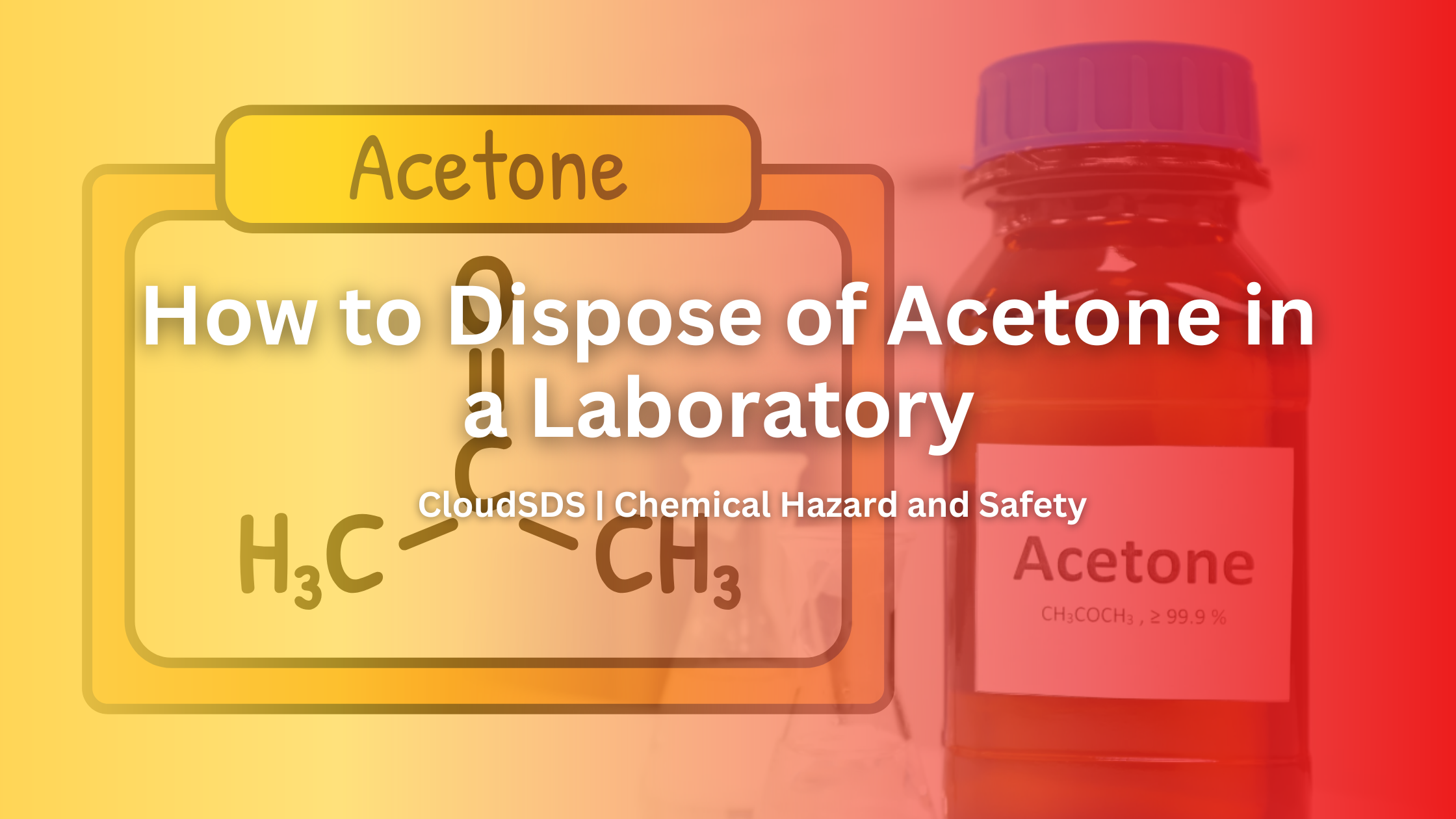
How to Dispose of Acetone in a Laboratory
Acetone is one of the most widely used solvents in academic, pharmaceutical, biotech, and industrial laboratories due to
What Happens If Acetone Is Disposed of Incorrectly?
Acetone disposal often gets misunderstood because its everyday uses, for instance nail polish remover, make it seem harmless, leading many to
Online SDS Database vs Traditional Paper Binders: Key Differences
Traditionally, SDSs were stored in physical binders. Those documents were kept in centralized locations within a workplace. Over time,

How Do You Dispose of Acetone Safely and Legally?
Introduction: Why Acetone Disposal Requires Care Acetone disposal is far more than a routine waste management task. This
Why Toxicological Data in SDS Section 11 Matters for Workers’ Safety
Introduction: Toxicology as the Foundation of Worker Safety Workplace chemical hazards extend beyond visible accidents like spills or

Benefits of Online SDS Libraries for EHS Compliance
Easy and immediate access to Safety Data Sheets (SDS) is not optional—it is a core requirement under OSHA’s

Key Toxicity Metrics Explained: LD50, LC50, NOAEL & LOAEL in SDS Section 11
Key Toxicity Metrics Explained: LD50, LC50, NOAEL & LOAEL in SDS Section 11 Quick answer LD50 and

Why Emergency Contact Information Is Mandatory in SDS Section 1: A Comprehensive Guide
When a chemical spill occurs, a worker is acutely exposed, or a fire breaks out in a hazardous

Benefits of Cloud-Based SDS Management Systems
Managing Safety Data Sheets (SDS) is a critical responsibility for any organization that handles chemicals. To handle each

SDS Section 1 vs Chemical Label Identification: Key Differences
Accurate chemical identification is the bedrock of hazard communication (HazCom). Without it, the sophisticated system of pictograms,