 Skip to content

Digoxin is a powerful cardiac medication used to treat heart failure and certain types of irregular heartbeats. Because it affects how the heart functions, even small amounts of this drug must be handled with care. And that care doesn’t end after the medication is used. Proper disposal of this substance is just as important as its safe administration. Why? Because when digoxin waste is tossed out casually—down the drain, in regular trash, or mixed with other medical waste—it can create serious risks. Improper disposal can contaminate water sources, harm aquatic life, and pose accidental exposure risks to humans, including healthcare staff, sanitation workers, and even the public. In short, this drug may be life-saving, but it can also be toxic when it ends up in the wrong place.
A thorough understanding of how to handle digoxin wastage is absolutely necessary, and this article will walk you through the entire journey of digoxin waste. This will also help you know how it’s generated and how it should be handled, stored, treated, and safely disposed of. Whether you work in a hospital, a pharmacy, a diagnostic lab, or a waste management facility, the information here will help you ensure compliance, protect the environment, and support safer healthcare practices.
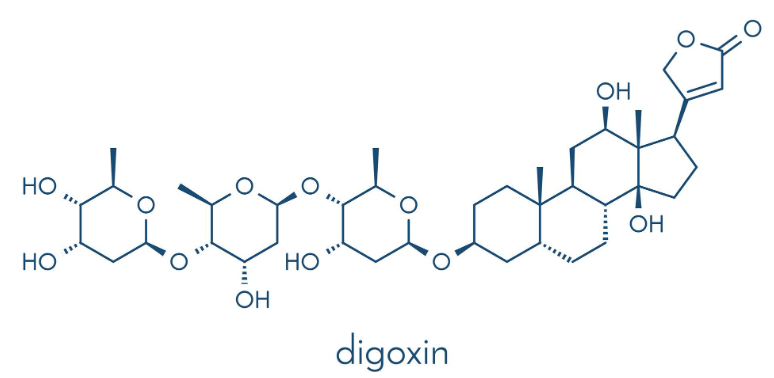
Digoxin Waste: In Brief
Digoxin waste is something that hospitals, pharmacies, and waste management facilities deal with regularly, and each plays an important role in handling it safely. Hospitals generate digoxin waste through patient care, pharmacies manage expired stock or unused doses, and waste facilities ensure it is finally treated and disposed of correctly. Because the drug is highly toxic, even in small amounts, improper handling at any stage can lead to accidental exposure or environmental contamination. This makes it essential for all three settings to follow strict guidelines, use proper waste containers, and work together to ensure digoxin never enters regular trash or wastewater systems.
Overview of Digoxin as a Pharmaceutical Waste
Chemical Profile of Digoxin
- Chemical Formula: C₄₁H₆₄O₁₄
- Physical Properties: Appears as a white to off-white crystalline powder. Has a high molecular weight and a relatively complex glycoside structure.
- Solubility: Sparingly soluble in water, which means it does not dissolve easily. More soluble in alcohol and certain organic solvents, which impacts how it behaves in environmental systems.
Nature:
- Highly potent even at very low doses—small amounts can cause serious cardiac effects.
- Toxic if ingested, inhaled, or absorbed through the skin.
- Exposure can lead to symptoms such as nausea, dizziness, vision disturbances, and potentially fatal heart rhythm problems.
- Its high toxicity and strong biological activity are major reasons it must be treated as hazardous pharmaceutical waste.
Therapeutic Use vs. Environmental Hazard Potential
- Life-Saving in Healthcare:
Digoxin is an essential medication for treating heart failure and irregular heartbeats. In controlled medical settings, it helps stabilize heart rhythm and improves cardiac function.
- Toxic Outside Clinical Use:
The same powerful effects that benefit patients can be harmful to the environment. Even small amounts of such waste can remain biologically active for long periods.
- Impact on Ecosystems:
If it enters soil or waterways, it can disrupt the normal biological processes of plants and animals. Aquatic organisms are especially vulnerable because their ion channels respond to cardiac glycosides just like human heart cells—leading to cardiac dysfunction or death.
- Risk to Humans and Wildlife:
Improper disposal increases the chance of poisoning in pets, wildlife, sanitation workers, and the general public.
- Environmental Contamination:
Contaminated water sources or soil can create long-term ecological damage, as Digoxin does not easily degrade.
- Why this Matters:
While it provides high therapeutic value in medicine, its environmental toxicity means it must be handled and disposed of with exceptional care to avoid unintended harm.
Classification of Digoxin Waste
Because of its toxicity and potential for causing harm even at low doses, this substance is classified as hazardous pharmaceutical waste under medical waste regulations. It often falls under the category of RCRA hazardous waste due to its toxicity and bioactive nature. Facilities that handle this substance must treat its waste similarly to other toxic pharmaceuticals—requiring proper labeling, storage, inventory control, and regulated disposal methods. The waste includes unused tablets, contaminated PPE, empty vials, syringes, IV lines, and materials from spill cleanup.
Why Digoxin cannot be Disposed of Like Ordinary Drugs
- Highly Toxic even in Small Amounts:
Digoxin remains biologically active at very low concentrations, unlike many general medications that break down more easily.
- Not Removable by Standard Waste Systems:
Regular trash disposal allows it to end up in landfills, where it can leach into soil and groundwater. Besides, the wastewater treatment plants are not equipped to filter out or deactivate cardiac glycosides, meaning the drug can pass through unchanged.
- Environmental Contamination Risk:
Active digoxin entering rivers or lakes can harm aquatic organisms. It may disrupt ecosystems due to its effect on heart and ion channel functions in wildlife.
- Human Exposure Concerns:
Improper disposal puts custodial staff, sanitation workers, and the public at risk of accidental contact or ingestion. Moreover, pets and wildlife can also be poisoned if they come into contact with discarded tablets or contaminated materials.
- Regulatory Considerations:
Digoxin is classified as hazardous pharmaceutical waste, which means it must be segregated, labeled, and treated differently from general drug waste.
How does Digoxin Enter Waste Streams?
Such waste is generated at various stages across healthcare operations.
- Expired Stock:
Pharmacies and hospitals often discard outdated inventory to maintain safe dispensing practices.
- Spillage:
Accidental breakage of vials, crushed tablets, or leakage during compounding leads to contaminated materials that must be treated as hazardous waste.
- Unused Doses:
Patients may miss doses; IV bags may not be fully used, or partial vials may remain after administration—creating leftover drug waste.
Along with these sources, Digoxin can also contaminate gloves, gowns, absorbent pads, and sharps during handling or administration. Understanding these entry points helps hospitals and waste facilities design effective waste segregation and collection processes.
Regulatory Framework for Pharmaceutical Waste Disposal
Managing such waste safely is not only a best practice. Rather, it’s a regulatory requirement. Multiple agencies at the federal, state, and international levels provide guidelines to ensure hazardous pharmaceutical waste is handled, transported, and disposed of without causing harm. Below is a detailed overview of the key regulatory bodies and their roles in ensuring such waste is managed responsibly.
EPA Regulations:
The Environmental Protection Agency (EPA) governs hazardous waste disposal through the Resource Conservation and Recovery Act (RCRA). Digoxin often falls under the RCRA category of toxic hazardous waste due to its potency and risk to human health and the environment. Under RCRA:
- Facilities must identify, segregate, and label Digoxin waste as hazardous.
- Storage must occur in approved containers that prevent leaks or contamination.
- Waste must be transported only by licensed hazardous waste carriers.
- Facilities must follow the cradle-to-grave tracking system, ensuring the waste is monitored from generation to final disposal.
The goal is to prevent hazardous drugs like Digoxin from entering municipal waste streams or posing exposure risks during handling and transport.
DEA Rules:
While it’s not a controlled substance under the Drug Enforcement Administration (DEA) scheduling system, DEA regulations still apply in settings where Digoxin is co-stored or disposed of alongside controlled substances. These rules focus on:
- Ensuring secure storage of pharmaceutical waste to prevent diversion or misuse.
- Requirements for locked disposal containers in pharmacies and hospitals.
- Proper handling of mixed waste streams containing both hazardous and controlled drug waste.
The DEA’s secure disposal rules help prevent unauthorized access while maintaining traceability and accountability.
FDA Guidelines:
The Food and Drug Administration (FDA) provides guidelines on safe drug disposal to protect the public and the environment. FDA recommendations relevant to Digoxin include:
- Do not flush Digoxin unless specifically instructed (which is rare for hazardous drugs).
- Use drug take-back programs whenever possible.
- For healthcare facilities, follow facility-specific hazardous waste management protocols in line with EPA rules.
OSHA Standards:
The Occupational Safety and Health Administration (OSHA) ensures that workers handling hazardous pharmaceuticals like digoxin are protected from exposure. OSHA requirements include:
- Using appropriate PPE such as gloves, lab coats, and eye protection.
- Implementing spill response procedures and training staff on how to manage accidental releases.
- Maintaining ventilation and engineering controls in compounding or preparation areas.
- Providing hazard communication training (HazCom) and Safety Data Sheets (SDS) for all hazardous chemicals.
State and Local Environmental Laws on Pharmaceutical Waste
In addition to federal guidelines, many states enforce their own pharmaceutical waste regulations, sometimes more strict than RCRA. These laws may include:
- Requirements for segregated collection of hazardous drug waste.
- Bans on disposing of pharmaceuticals in solid waste landfills.
- Additional training and reporting obligations for healthcare facilities.
- Rules on storage limits, container types, and facility inspections.
Hospitals and pharmacies must follow both federal and state regulations to remain fully compliant.
International Frameworks:
Outside the United States, global regulations also emphasize safe handling of hazardous pharmaceuticals:
- European Union (EU):
The EU Waste Framework Directive classifies medicinal waste as hazardous and mandates strict segregation, labeling, and high-temperature incineration.
- United Kingdom (UK):
The UK’s Hazardous Waste Regulations require controlled storage, specialized transport, and licensed disposal facilities.
- World Health Organization (WHO):
Provides international guidance on managing pharmaceutical waste in hospitals, especially in developing countries where infrastructure may be limited.
These frameworks share a common goal—prevent pharmaceutical waste from harming people and ecosystems.
Required Documentation, Manifest, and Recordkeeping
Accurate documentation is essential for regulatory compliance and tracking hazardous waste like digoxin. Required records include:
- Hazardous Waste Manifests: Track the waste from generation to final disposal.
- Waste Inventory Logs: Maintain detailed records of quantities generated, stored, and shipped.
- Training Records: Document staff training on hazardous waste management.
- Incident Reports: Record spills, exposures, or any disposal-related issues.
- Vendor Certifications: Ensure waste transporters and disposal companies are properly licensed.
Good recordkeeping not only supports compliance but also protects facilities during audits or inspections.
Environmental Impact of Improper Digoxin Disposal
Improper disposal doesn’t just create problems inside a healthcare facility. It can have serious consequences once it reaches the environment. Because this drug stays active for a long time and is toxic even in tiny amounts, it can harm soil, water, wildlife, and even humans. Here’s a simple breakdown of the environmental risks when Digoxin is not handled or disposed of correctly.
1. How Digoxin Contaminates Soil and Groundwater
When thrown into regular trash or flushed into drains, it can eventually seep into soil or make its way into groundwater. Landfills are not designed to filter out pharmaceuticals, so rainwater can carry traces of digoxin deeper into the ground. Once it reaches groundwater, it becomes very difficult to remove and can contaminate well water, irrigation systems, and natural water bodies. This puts both the environment and local communities at risk.
2. Toxicity to Aquatic Life and Ecosystems
Aquatic animals are extremely sensitive to digoxin. If the drug reaches rivers, lakes, or streams, it can disrupt the heart and nervous systems of fish, amphibians, and other organisms. Even small concentrations can cause stress, abnormal heart rhythms, or death in aquatic species. Over time, this affects the entire ecosystem—predators lose their food sources, breeding cycles are interrupted, and biodiversity declines.
3. Bioaccumulation and Long-Term Persistence
Digoxin doesn’t simply break down quickly in the environment. Instead, it can persist for long periods, slowly building up in plants and animals. This process, called bioaccumulation, means the chemical becomes more concentrated as it moves up the food chain. A small amount in water can eventually become a larger amount for fish, birds, and mammals. This long-term buildup increases toxicity risks over time.
4. Pharmaceutical Pollution in Waterways:
Digoxin is just one part of a bigger global problem. Around the world, pharmaceutical residues have been found in rivers, lakes, and even drinking water sources. This pollution comes from hospitals, households, manufacturing plants, and improper drug disposal. The presence of medicines in waterways affects ecosystems, impacts public health, and creates challenges for water treatment systems. Digoxin adds to this growing concern because of its strong biological activity and slow breakdown.
5. Impact on Human Health via Secondary Exposure:
When it enters the environment, humans may be exposed without even realizing it. Contaminated water can eventually reach our homes or be used to irrigate crops. Fish or livestock that accumulate the drug can pass it on through the food chain. Although levels may be small, long-term exposure may still pose health risks—especially for people with existing heart conditions or vulnerable immune systems. This is why preventing it from entering the environment is essential.
6. Why Traditional Incineration and Landfill are Not Always Sustainable
Many facilities rely on landfills and basic incinerators for pharmaceutical waste, but these methods are not always ideal for drugs like digoxin.
- Landfills can allow chemicals to leak into soil and groundwater.
- Low-temperature incinerators may not fully break down digoxin, allowing toxic residues to escape into the air or remain in ash.
- Both methods create long-term environmental risks if not properly managed.
Sustainable disposal requires high-temperature incineration, chemical neutralization, or advanced treatment technologies that fully deactivate hazardous pharmaceuticals.
Hazards of Digoxin Waste
Handling the waste requires caution because it is a highly potent drug with serious health risks. Both healthcare workers and waste management personnel can be exposed to hazardous effects if proper precautions are not followed. Below is a detailed overview of the key hazards associated with Digoxin waste.
1. Chemical Toxicity and Cardiac Effects on Accidental Exposure
Digoxin is a cardiac glycoside, which means it directly affects the heart. Even a small accidental exposure can disrupt heart rhythm and ion balance. Key risks include:
- Arrhythmias: Irregular or dangerously fast/slow heartbeats.
- Cardiac arrest: In extreme cases, accidental exposure can be life-threatening.
- Neurological effects: Dizziness, confusion, or visual disturbances may occur.
- Gastrointestinal effects: Nausea, vomiting, and abdominal pain are common if ingested.
2. Occupational Exposure Risks
Workers handling the waste can be exposed through several routes:
- Inhalation: Dust from crushed tablets or aerosolized particles from spill cleanups can be inhaled.
- Dermal contact: Skin absorption can occur if protective gloves and clothing are not used.
- Ingestion: Accidental hand-to-mouth transfer during handling or improper hygiene can lead to oral exposure.
These exposure routes highlight the importance of PPE, careful handling, and strict hygiene practices in hospitals, pharmacies, and waste facilities.
3. Symptoms of Acute Exposure in Waste Handlers
Waste handlers or healthcare personnel accidentally exposed to digoxin may experience:
- Cardiovascular Symptoms: Irregular heartbeats, palpitations, or low/high blood pressure.
- Neurological Symptoms: Headache, confusion, blurred vision, or dizziness.
- Gastrointestinal Symptoms: Nausea, vomiting, diarrhea, or abdominal discomfort.
- General Signs: Fatigue, weakness, or sweating.
Immediate medical attention is crucial if exposure is suspected, as even minor contact can escalate quickly due to the drug’s potency.
4. Fire and Chemical Reactivity Hazards
While it’s not highly flammable, it may pose chemical reactivity risks under certain conditions:
- Combustion in low-temperature incinerators may release toxic residues.
- Mixing with incompatible chemicals (strong oxidizers, acids, or bases) can generate hazardous reactions.
- Spill cleanup materials contaminated with Digoxin should be handled as hazardous waste to prevent accidental exposure or chemical incidents.
Understanding these hazards ensures safe storage, handling, and disposal practices.
5. SDS (Safety Data Sheet) Information for Digoxin Hazards
A Safety Data Sheet (SDS) provides critical information for managing this chemical safely. Key points include:
- Hazard Identification: Toxicity classification, target organs (heart, nervous system), and exposure routes.
- Handling and Storage: Required PPE, safe storage conditions, and spill response procedures.
- Exposure Controls: Engineering controls, ventilation requirements, and emergency measures.
- Disposal Instructions: Guidance on approved hazardous waste disposal methods.
- First Aid Measures: Step-by-step response to accidental ingestion, inhalation, or dermal contact.
Sources of Digoxin Waste
Such waste can come from many different places, especially wherever the drug is made, stored, used, or disposed of. Knowing these sources helps organizations handle the waste safely and prevent environmental or health risks.
-
Pharmaceutical Manufacturing and Formulation Units
Facilities that produce digoxin tablets, capsules, or injectable forms often generate waste during different stages of production. This includes leftover raw materials, rejected batches, spilled powders, unused solutions, and cleaning residues from equipment. Because digoxin is potent even in very small amounts, these residues must be handled as hazardous pharmaceutical waste.
-
Hospital Pharmacies and Nursing Stations
Hospitals frequently handle digoxin for patient treatment. Waste can occur when doses are prepared, partial vials are left unused, or medication expires. Nursing stations may also generate waste during administration—for example, when IV lines, syringes, or dosing cups become contaminated. Any unused or contaminated digoxin must be disposed of safely to avoid accidental exposure.
-
Retail Pharmacies
Pharmacies that store this substance for patients sometimes end up with expired, damaged, or recalled products. These medicines cannot be returned to stock or thrown in regular trash. They must be segregated as hazardous waste because improper disposal can pose risks to sanitation workers and the environment.
-
Research Laboratories and Academic Institutions
Laboratories and universities use digoxin for experiments, toxicology studies, or training purposes. Waste may come from leftover testing solutions, contaminated glassware, tissue samples, or experimental materials. Since digoxin is toxic even in microgram levels, lab waste requires careful disposal following strict guidelines.
-
Household Medical Waste
Patients prescribed digoxin may have leftover tablets if their dosage changes, their prescription ends, or they stop using the medication. Throwing unused digoxin into the trash or flushing can harm the environment. Many households also return unused medicines during medication take-back programs. These returns are an important source of digoxin waste and must be handled through authorized collection systems.
-
Contaminated Packaging, PPE, and Syringes
Such waste isn’t limited to medicines. It also includes any materials that come in contact with the drug. This includes empty blister packs, opened vials, gloves, masks, syringes, IV tubing, and gowns used during preparation or administration. All such items can carry trace amounts of the drug and should be treated as hazardous waste to prevent accidental exposure.
Sources of Digoxin Waste
Such waste can come from many different places, especially wherever the drug is made, stored, used, or disposed of. Knowing these sources helps organizations handle the waste safely and prevent environmental or health risks.
1. Pharmaceutical Manufacturing and Formulation Units
Facilities that produce digoxin tablets, capsules, or injectable forms often generate waste during different stages of production. This includes leftover raw materials, rejected batches, spilled powders, unused solutions, and cleaning residues from equipment. Because digoxin is potent even in very small amounts, these residues must be handled as hazardous pharmaceutical waste.
2. Hospital Pharmacies and Nursing Stations
Hospitals frequently handle digoxin for patient treatment. Waste can occur when doses are prepared, partial vials are left unused, or medication expires. Nursing stations may also generate waste during administration—for example, when IV lines, syringes, or dosing cups become contaminated. Any unused or contaminated digoxin must be disposed of safely to avoid accidental exposure.
3. Retail Pharmacies
Pharmacies that store this substance for patients sometimes end up with expired, damaged, or recalled products. These medicines cannot be returned to stock or thrown in regular trash. They must be segregated as hazardous waste because improper disposal can pose risks to sanitation workers and the environment.
4. Research Laboratories and Academic Institutions
Laboratories and universities use digoxin for experiments, toxicology studies, or training purposes. Waste may come from leftover testing solutions, contaminated glassware, tissue samples, or experimental materials. Since digoxin is toxic even in microgram levels, lab waste requires careful disposal following strict guidelines.
5. Household Medical Waste
Patients prescribed digoxin may have leftover tablets if their dosage changes, their prescription ends, or they stop using the medication. Throwing unused digoxin into the trash or flushing can harm the environment. Many households also return unused medicines during medication take-back programs. These returns are an important source of digoxin waste and must be handled through authorized collection systems.
6. Contaminated Packaging, PPE, and Syringes
Such waste isn’t limited to medicines. It also includes any materials that come in contact with the drug. This includes empty blister packs, opened vials, gloves, masks, syringes, IV tubing, and gowns used during preparation or administration. All such items can carry trace amounts of the drug and should be treated as hazardous waste to prevent accidental exposure.
Approved Digoxin Waste Disposal Methods
The disposal process varies depending on regulations, the type of waste, and the facility’s capabilities. Below are the most widely accepted and compliant methods for getting rid of the waste safely.
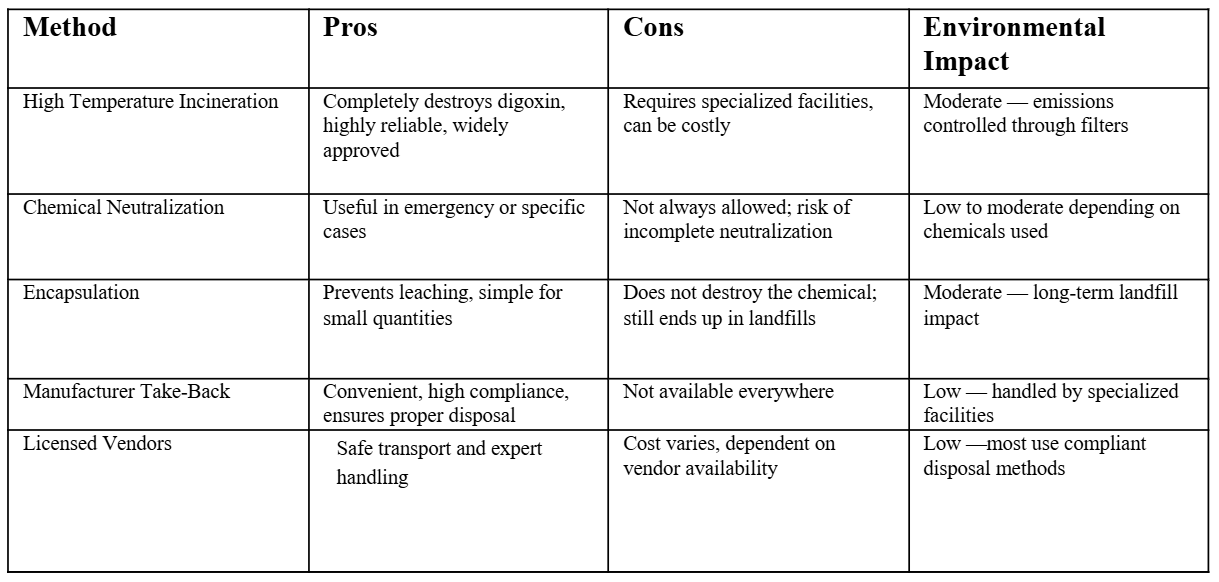
1. Incineration at High Temperatures
High-temperature incineration is the most reliable and commonly approved method for disposing of digoxin waste. Waste is burned at temperatures typically above 1,000°C, which completely destroys the chemical structure of digoxin.
This method ensures:
- No active drug remains
- Minimal environmental risk
- Compliance with EPA, WHO, and local regulations
2. Chemical Neutralization and Treatment
In some regions, authorized treatment facilities may use chemical processes to neutralize pharmaceutical waste. This involves adding specific chemicals that break down or deactivate digoxin so it no longer poses a health risk.
This method is not universally allowed because digoxin is highly potent, and improper neutralization could still leave active residues. When permitted, it must be done:
- Under strict supervision
- Inside licensed hazardous waste treatment plants
- With proper testing to confirm complete neutralization
3. Encapsulation or Immobilization Techniques
Encapsulation is a technique where digoxin waste is mixed with materials like cement, plastic resin, or concrete, creating a solid block. This solid mass prevents the drug from leaching into soil or water when it is eventually placed in a secure landfill.
This method is useful for:
- Small quantities of waste
- Facilities without access to incineration
- Contaminated sharps or packaging
4. Return to Manufacturer
Some pharmaceutical companies and licensed distributors offer programs where unused, expired, or recalled digoxin can be sent back for proper disposal.
Benefits of this approach include:
- Reduced burden on healthcare facilities
- Ensured compliance with disposal regulations
- Lower environmental impact
5. Use of Licensed Hazardous Waste Disposal Vendors
Many healthcare facilities rely on certified waste disposal companies to handle digoxin waste. These vendors are trained and equipped to:
- Collect and transport hazardous drug waste
- Dispose of it using approved methods (usually incineration)
- Maintain legal documentation like waste manifests
6. Comparison of Methods
Emergency Spill Response and Containment
Accidental spills involving digoxin, whether in a hospital, pharmacy, lab, or manufacturing unit, must be handled quickly and carefully. After all, a proper spill response ensures safety, prevents contamination from spreading, and keeps the facility compliant with hazardous waste regulations.
Immediate Steps in Case of Accidental Spill
The first few minutes after a digoxin spill are critical. Here’s what staff should do immediately:
- Stop work and alert others in the area about the spill.
- Avoid touching the spill with bare hands.
- Restrict movement to prevent the drug from spreading to clean areas.
- Notify the supervisor or safety officer right away.
- Put up warning signs so no one walks into the contaminated area.
These steps help contain the incident before it becomes a bigger hazard.
Ventilation, Isolation, and Containment Protocols
Good ventilation and isolation are essential when dealing with hazardous drug spills. Facilities should:
- Turn on local exhaust ventilation (e.g., fume hoods, exhaust fans) to keep fumes or dust from lingering.
- Isolate the area by closing doors or using physical barriers to limit access.
- Block off traffic around the spill using cones or tape.
- For powder spills, avoid sweeping or dry brushing—this can send particles into the air.
Containment is all about keeping the spill from spreading to floors, hallways, or equipment.
Absorbents and Cleanup Procedures
Once the area is secured, trained personnel can begin cleanup using a hazardous drug spill kit.
Cleanup usually includes:
- Using absorbent pads or spill pillows to soak up liquid digoxin.
- Using damp wipes for powder spills so particles don’t become airborne.
- Starting cleanup from the outer edges and moving inward to prevent spreading.
- Placing all used absorbents into a designated hazardous waste container.
- Washing the area thoroughly with approved cleaning solutions to remove residues.
PPE for Cleanup Personnel
Anyone cleaning a digoxin spill must wear proper personal protective equipment (PPE) to stay safe. This typically includes:
- Double gloves (nitrile or chemotherapy-tested gloves)
- Disposable gowns or lab coats
- Eye protection like goggles or face shields
- Face masks or respirators, especially if powder is involved
PPE protects cleanup workers from skin contact, inhalation, or accidental ingestion during the process.
Reporting and Documentation of Spill Incidents
Every spill, big or small, must be documented. A proper incident report should include:
- What was spilled and how much
- Where and when it happened
- Who responded to the spill
- What cleanup procedures were followed
- Whether anyone was exposed or injured
This documentation helps the organization improve safety procedures and stay compliant with regulatory requirements.
Disposal of Contaminated Cleanup Materials
After cleanup, all materials used, like absorbent pads, wipes, gloves, gowns, and any disposable tools, must be treated as hazardous pharmaceutical waste.
Key points include:
- Place all contaminated items in black hazardous drug waste containers.
- Seal the containers properly to prevent leakage.
- Store them in a designated area until a licensed vendor collects them.
- Never throw them in regular trash or red biohazard bags.
Proper disposal prevents accidental exposure and ensures harmful chemicals don’t enter the environment.
Environmental Monitoring and Compliance
Below are the key areas every healthcare or pharmaceutical facility should focus on.
1. Routine Audits and Inspections
Routine audits are like regular health checkups for your waste management system.
During these inspections, safety teams typically look at:
- Whether waste is stored in the right containers
- If labeling and segregation rules are being followed
- Whether staff are using PPE correctly
- If spill kits and emergency equipment are available and up to date
These audits help catch problems early, before they turn into violations or safety incidents. Consistent inspections also show regulators that the facility takes hazardous waste management seriously.
2. Air and Water Quality Monitoring for Pharmaceutical Residues
Even tiny amounts of pharmaceutical chemicals can escape into the environment. That’s why many facilities perform regular air and water quality checks. This monitoring can include:
- Testing wastewater for pharmaceutical traces
- Checking air filters and ventilation systems for drug particles
- Sampling surrounding drainage areas to ensure no contamination
These tests help confirm that hazardous drugs aren’t entering the environment through ventilation, spills, or improper disposal. It’s an important part of preventing long-term ecological damage.
3. Waste Storage Site Monitoring and Maintenance
Waste storage areas can become hotspots for contamination if they aren’t maintained properly.
Regular monitoring ensures:
- Containers are not leaking or damaged
- Waste is stored within allowed time limits
- Storage rooms are clean, ventilated, and secured
- Temperature and humidity levels stay within safe limits
This prevents accidental exposure, bad odors, spills, and environmental leaks. A well-maintained storage area also protects workers who handle waste daily.
4. Recordkeeping Requirements
Environmental agencies, like the EPA and state-level regulators, require documentation for everything related to hazardous waste. Your facility must maintain accurate records for:
- Waste generation logs
- Transport manifests
- Disposal certificates
- Spill incident reports
- Employee training programs
Keeping detailed records not only supports compliance but also protects your facility during inspections. Good documentation proves that the organization is following all required safety and disposal rules.
5. Corrective Actions for Non-Compliance
If a problem is found, whether during an internal audit or an official inspection, corrective action must be taken quickly. This may involve:
- Retraining staff who made procedural mistakes
- Updating outdated SOPs (Standard Operating Procedures)
- Improving storage areas or replacing containers
- Conducting follow-up inspections to ensure improvements
- Reporting major issues to regulatory agencies, if required
Corrective actions show commitment to safety, help prevent repeat violations, and protect the facility from potential legal penalties.
Role of SDS (Safety Data Sheet) Management Systems
Safety Data Sheets play a crucial role in understanding and managing hazardous chemicals like digoxin. And when these SDSs are managed through a digital platform, it becomes much easier for organizations to stay compliant, keep employees informed, and handle disposal safely. Let’s break down how SDS and SDS management systems support safe digoxin waste management.
How SDS Helps Identify Digoxin Hazards and Disposal Instructions
Every Safety Data Sheet contains detailed information about a chemical’s risks, safe handling procedures, and recommended disposal methods. For digoxin, the SDS helps users understand:
- Its toxicity and health hazards
- Safe handling guidelines
- What PPE to wear
- What to do in case of spills or exposure
- Approved disposal recommendations
Having this information available ensures that employees don’t rely on guesswork.
Section 13 of SDS
Section 13 of an SDS is specifically dedicated to Disposal Considerations.
For digoxin, this section usually explains:
- Whether the chemical must be treated as hazardous waste
- The recommended disposal method (e.g., high-temperature incineration)
- What to avoid (e.g., flushing down drains)
- How to dispose of contaminated PPE, syringes, or packaging
This section is essential for ensuring the waste ends up in the right place and doesn’t harm people or the environment.
Integration with Digital SDS Management Platforms
Managing hundreds or thousands of SDSs on paper can be difficult. Digital SDS platforms like CloudSDS make the entire process easier by offering:
- Quick access to the latest SDS versions
- Centralized storage of all chemical documents
- Smart search tools to instantly find information about digoxin
- Automatic updates whenever manufacturers release new SDS versions
Tracking Hazardous Drug Inventories and Expiry Alerts
Digital SDS systems often come with inventory-tracking features. These tools allow organizations to:
- Monitor how much digoxin is stored on-site
- Track batch details and expiration dates
- Receive automatic alerts when chemicals are nearing expiry
This helps facilities avoid stockpiling expired drugs and ensures timely disposal. It also supports better planning and reduces compliance risks.
Simplifying Compliance and Audit Readiness with SDS Software
Compliance can feel overwhelming when documents are scattered or outdated. SDS management systems solve this by:
- Keeping all SDSs in one place
- Ensuring documents are updated automatically
- Generating compliance reports
- Providing audit-ready logs and access history
So when an inspector arrives, facilities can easily show proof of proper documentation, employee access, and compliance with waste regulations.
Employee Training and Document Access via Cloud-Based Systems
One of the biggest advantages of cloud-based SDS platforms is how easily employees can access safety information. These systems allow staff to:
- Access SDSs from any device—mobile, tablet, or desktop
- Watch training videos or read SOPs related to hazardous waste
- Stay updated on new procedures or regulatory changes
This makes training more efficient and ensures workers always have the information they need, especially during emergencies or waste handling tasks.
Best Practices for Healthcare Facilities
Healthcare facilities use and store digoxin regularly, especially in hospital pharmacies, nursing units, ICUs, and cardiology departments. Below are key practices that support patient safety, staff safety, and regulatory compliance.
Hospital Pharmacy Waste Segregation Programs
A proper segregation program helps hospitals separate hazardous pharmaceutical waste from regular medical waste. This includes:
- Using black containers specifically for hazardous drug waste
- Separating digoxin waste from non-hazardous medications
- Following EPA and local state guidelines for hazardous pharmaceuticals
- Training pharmacy staff to recognize what counts as hazardous drug waste
Segregation prevents accidental mixing, reduces contamination risks, and ensures that digoxin ends up in approved disposal channels.
Safe Collection and Temporary Storage Areas
Hospitals must have designated spaces where hazardous drug waste is collected before final disposal.
These storage areas should be:
- Well-ventilated to avoid fumes
- Secure and locked to restrict access
- Clearly labeled as hazardous waste zones
- Equipped with proper spill kits
Containers used for temporary storage should be:
- Leak-proof
- Clearly marked
- Routinely checked for damage
A good temporary storage setup keeps waste contained and reduces exposure for both staff and patients.
Regular Training for Nursing and Maintenance Staff
Nurses, housekeeping staff, and maintenance teams handle digoxin and other hazardous waste every day. Regular training ensures that they:
- Understand how to identify hazardous drug waste
- Know the right PPE to use
- Follow spill response procedures
- Know which bins are used for which waste types
- Handle expired or unused medications safely
Ongoing training builds confidence, reduces accidents, and ensures that everyone responds correctly during emergencies.
Documentation and Labeling Standards
Good documentation is a key part of healthcare compliance.
Facilities should maintain records for:
- Waste generation and disposal logs
- Spill incidents
- Staff training records
- Vendor pickup receipts
All waste containers must also be properly labeled with:
- The type of hazardous waste
- The date it was first added
- The storage area ID
Clear labeling helps avoid confusion and supports compliance during inspections or audits.
Setting Up a Take-Back Program with Vendors
Many hospitals partner with licensed waste vendors for medication take-back programs. These programs allow:
- Safe and scheduled removal of expired or unused digoxin
- Reverse distribution for recalled batches
- Secure handling of hazardous drugs from collection to disposal
Working with a vendor ensures the hospital follows all disposal regulations and reduces the burden on internal staff.
Internal Auditing and Safety Culture Reinforcement
Internal audits help hospitals stay proactive rather than reactive.
Regular audits involve:
- Checking waste storage areas
- Reviewing documentation
- Assessing compliance with segregation rules
- Evaluating staff adherence to safety protocols
Beyond the audits, hospitals must also reinforce a strong safety culture. This means encouraging staff to:
- Report near misses.
- Follow SOPs consistently
- Ask questions when uncertain
A positive safety culture ensures long-term compliance and reduces risk for everyone in the facility.
Sustainable and Eco-Friendly Alternatives
When handling hazardous drugs like digoxin, safety is the first priority—but sustainability matters too. More hospitals, manufacturers, and waste management teams are now looking for greener ways to reduce environmental impact. Below are some eco-friendly approaches that can support safer and smarter disposal practices.
1. Green Pharmacy Initiatives and “Design for Degradation” Drugs
The pharmaceutical world is shifting toward green pharmacy, a concept that encourages designing drugs that break down faster and more harmlessly in the environment.
For example:
- Scientists are exploring ways to modify drug molecules so they degrade naturally after use.
- The idea is that, instead of lingering in soil or water, these medicines break down into simpler, non-toxic components.
- While digoxin itself is not yet available in a “green” version, these initiatives can inspire future cardiac drugs that are less persistent in the environment.
Green Pharmacy also promotes reducing unnecessary manufacturing, safer packaging choices, and encouraging prescribers to avoid over-dispensing.
2. Environmentally Friendly Incineration Technologies
Incineration is the most reliable disposal method for digoxin—but newer technologies are making it cleaner and more eco-friendly.
Some advanced systems include:
- High-efficiency incinerators that burn waste at precise temperatures while minimizing emissions.
- Air pollution control units that trap harmful gases before they escape into the atmosphere.
- Energy recovery incineration, where heat generated is reused to produce steam or electricity.
These improvements don’t just destroy hazardous chemicals—they also reduce the overall carbon footprint of waste treatment facilities.
3. Use of Bioremediation and Enzyme-Based Degradation
Bioremediation uses natural organisms—like bacteria, fungi, or enzymes—to break down chemicals in soil or water. For pharmaceuticals like digoxin:
- Researchers are studying special microorganisms that can degrade cardiac glycosides.
- Certain enzymes can break digoxin molecules into simpler, less harmful pieces.
- These methods are still mostly experimental but show great promise for wastewater treatment plants or contaminated sites.
The benefit? Bioremediation is usually cheaper, low-energy, and environmentally friendly compared to traditional chemical treatments.
4. Reuse and Recycling Options
While digoxin waste itself must be destroyed, its non-contaminated packaging can often be recycled.
Examples include:
- Cardboard medicine cartons
- Paper inserts and labels
- Clean plastic bottles
- Untouched blister packs (if accepted by local recyclers)
Hospitals can set up separate bins for recyclable packaging to reduce overall waste volume. This simple step helps cut down landfill load and supports sustainability goals.
5. Waste Minimization Strategies for Hospitals and Manufacturers
Reducing waste at the source is one of the most effective ways to protect the environment. Some strategies include:
- Optimized inventory management to prevent drug expiry.
- Smaller packaging sizes for drugs used in low quantities.
- Bulk purchasing programs to reduce packaging material waste.
- Digitized prescribing systems to minimize dispensing errors and unnecessary leftover doses.
- Lean manufacturing processes that reduce chemical byproducts.
By minimizing waste generation, organizations lower costs, reduce environmental impact, and improve compliance.
6. Role of IoT and Smart Waste Tracking in Sustainability
Technology plays a huge role in modernizing pharmaceutical waste management. IoT (Internet of Things) devices and digital tracking tools can make disposal safer and greener.
Examples include:
- Smart waste bins that alert staff when they’re full—preventing overflow and contamination.
- Barcode and RFID tracking that records every step of hazardous waste movement.
- Sensors that monitor temperature, humidity, and storage conditions to prevent drug spoilage.
- Cloud platforms (like those used in smart hospitals) that track waste volumes and help teams minimize unnecessary disposal.
Training and Awareness Programs
Even with strict disposal rules and advanced systems in place, none of it works unless the people handling digoxin waste truly understand what to do. Training and awareness programs make sure everyone knows the right steps, follows protocols, and stays confident while managing hazardous waste.
Importance of Worker Training in Pharmaceutical Waste Handling
When dealing with hazardous drugs like digoxin, proper training is not optional—it’s essential.
Here’s why:
- Digoxin exposure can be dangerous, even in small amounts.
- Workers who know the right procedures are far less likely to make mistakes.
- Good training helps staff act quickly during spills, leaks, or emergencies.
- It ensures everyone understands PPE requirements, segregation rules, and disposal guidelines.
- Ultimately, strong training improves safety, protects the environment, and keeps the facility compliant.
In simple terms: well-trained workers prevent accidents before they happen.
Onboarding and Regular Refresher Training
Training shouldn’t be a “one-time orientation.” New employees must be onboarded with:
- A clear introduction to hazardous drugs
- How to identify digoxin containers and waste labels
- What to do during spills or exposure
- Which bins or containers to use for disposal
After onboarding, refresher training is equally important. Why?
- People forget details over time
- Regulations change
- Procedures may be updated
- New equipment or software might be introduced
Offering refresher sessions every 6–12 months keeps everyone sharp, confident, and up to date.
Role of EHS and Pharmacy Managers
EHS (Environment, Health, and Safety) managers and pharmacy managers play a huge role in creating a safe waste-handling culture. Their responsibilities include:
- Developing clear waste-handling policies for digoxin
- Ensuring staff get proper training and follow it
- Conducting workplace inspections
- Making sure labels, SDSs, and safety notices are updated
- Investigating incidents and improving procedures
- Coordinating with disposal vendors and regulatory agencies
They act as the “go-to experts” whenever staff need guidance or clarification.
Visual Communication
Sometimes a simple visual reminder can prevent a serious mistake.
Facilities use visual communication to:
- Highlight hazardous waste bins with color coding
- Display posters showing dos and don’ts for digoxin waste
- Use clear labels on containers and storage areas
- Place floor markings to show safe zones, restricted zones, or spill kit locations
- Display quick-reference SDS instructions in key areas
These visuals support staff during busy shifts and help new workers learn faster.
Encouraging Staff Accountability and Reporting
A strong safety culture depends on people taking responsibility.
Facilities can encourage accountability by:
- Reminding staff that everyone plays a role in safe disposal
- Making it easy and judgment-free to report spills, errors, or damaged containers
- Offering positive reinforcement when protocols are followed correctly
- Encouraging open communication between nurses, pharmacy staff, and EHS teams
- Using simple reporting tools—like mobile apps, logbooks, or digital forms
Conclusion
Managing digoxin waste safely isn’t just a regulatory requirement—it’s a responsibility shared by hospitals, pharmacies, manufacturers, research labs, and even households. Because digoxin is a potent cardiac drug, even small amounts can pose serious risks to patients, healthcare workers, and the environment if not handled correctly. That’s why proper segregation, labeling, storage, and disposal practices must be followed at every step of the waste lifecycle.
With stronger environmental regulations and increasing awareness of pharmaceutical pollution, facilities can no longer rely on outdated or inconsistent disposal methods. Modern solutions—such as high-temperature incineration, licensed waste vendors, digital SDS management platforms, IoT-enabled waste tracking, and routine environmental monitoring—make it easier to stay compliant and maintain a culture of safety.
Ultimately, protecting people and the environment starts with informed workers, well-designed systems, and a commitment to continuous improvement. By adopting best practices, investing in training, and embracing sustainable technologies, organizations can handle digoxin waste confidently and responsibly reducing risk today while safeguarding public health and ecosystems for the future.
Leave A Comment