 Skip to content

While most of us instinctively link food poisoning to nasty bacteria, there’s a far less visible, yet equally insidious, threat silently stalking our plates: chemical hazards in food hygiene. From residual pesticides on our fresh produce to improperly stored cleaning agents in the busiest kitchens, and even heavy metals leaching from old equipment, these contaminants can stealthily transform a wholesome meal into a serious health risk. Even seemingly benign food additives or naturally occurring toxins, when present in excessive amounts, can trigger acute reactions or contribute to chronic health problems over time. Ultimately, understanding and rigorously controlling these pervasive chemical dangers is critical for truly safeguarding our food supply and ensuring public well-being.
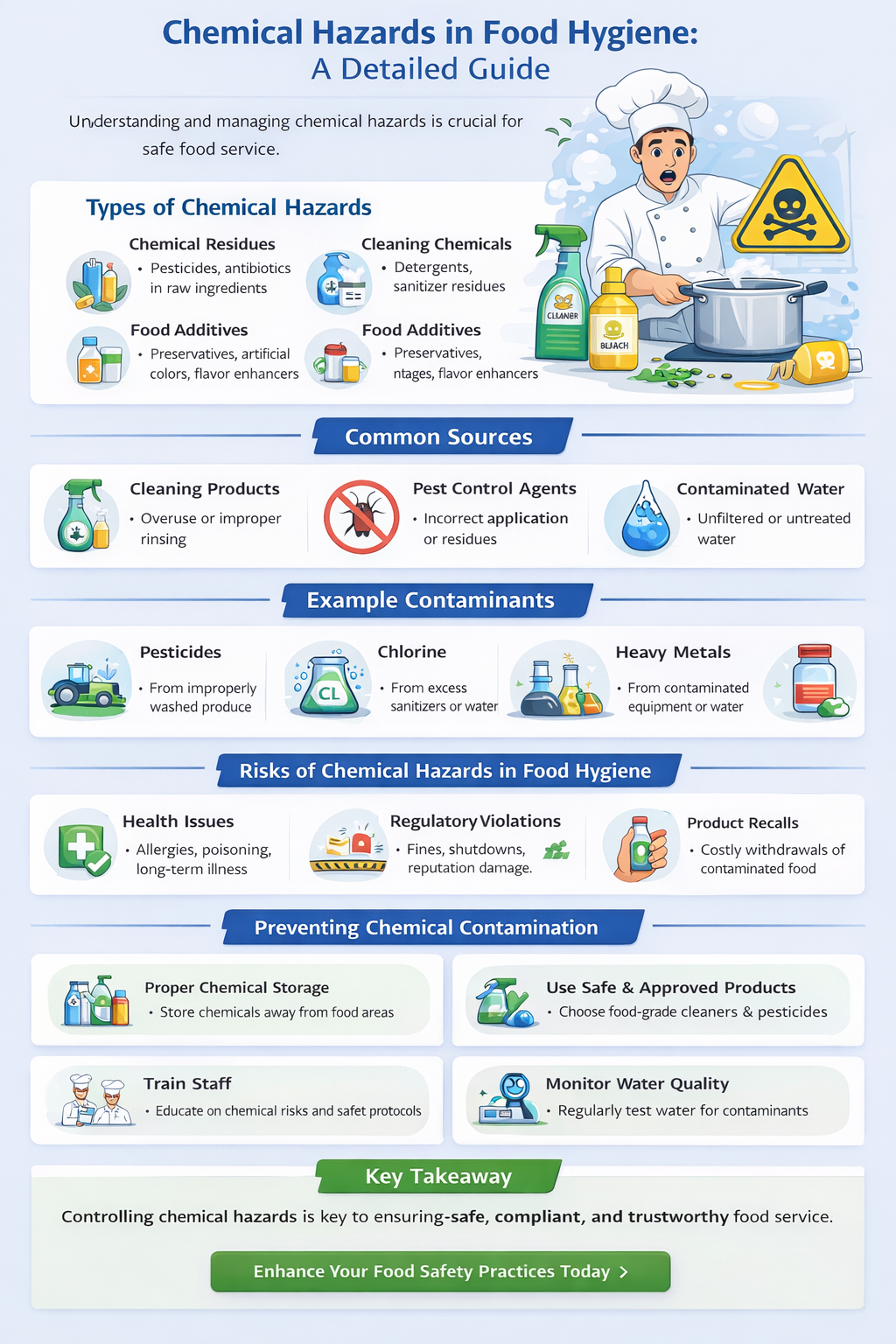
Chemical Hazards in Food Hygiene: Hidden Risks on Your Plate
Chemical hazards pose significant risks in food hygiene, contaminating products through various pathways, and threatening public health. Effective management requires understanding sources, impacts, and preventive strategies.
Types of Chemical Hazards
Chemical hazards in food hygiene encompass naturally occurring toxins, intentional additives, environmental pollutants, and unintentional contaminants from processing.
- Naturally occurring toxins like mycotoxins from molds on grains and nuts.
- Pesticide residues from agricultural treatments on fruits and vegetables.
- Cleaning agents and sanitizers that migrate into food via poor rinsing.
- Heavy metals such as lead, mercury, and cadmium accumulate in seafood and produce.
- Food additives including preservatives like nitrates exceeding safe limits.
Processing-induced chemicals, such as acrylamide formed during high-heat cooking of starchy foods, add another layer of risk.
Common Sources of Contamination
Contamination enters the food chain at multiple stages, from farm to fork.
-
Agricultural Inputs
Pesticides, herbicides, and fungicides protect crops but leave residues. Antibiotics in livestock contaminate manure, affecting soil and water used in irrigation. Veterinary drugs like growth promoters persist in meat and dairy.
-
Processing and Packaging
Machinery lubricants, paints, and varnishes can leach into products. Packaging materials release bisphenol A (BPA), phthalates, and PFAS, especially into fatty foods. High-temperature processing generates acrylamide, furans, and polycyclic aromatic hydrocarbons (PAHs).
-
Cleaning and Maintenance
Sanitizers, bleaches, and disinfectants contaminate if not properly rinsed from surfaces or equipment. Pest control chemicals like rodenticides introduce risks in storage areas.
-
Environmental Factors
Industrial pollutants like dioxins and PCBs are bioaccumulated in fish and animal fats. Heavy metals from polluted soil or water enter crops and seafood.
Health Impacts
Acute exposure causes immediate symptoms like nausea, vomiting, and skin rashes. Chronic effects include cancer, neurological damage, reproductive issues, and birth defects.
| Chemical Hazard | Short-Term Effects | Long-Term Effects |
| Pesticides | Nausea, dizziness | Endocrine disruption, cancer |
| Heavy Metals | Vomiting, abdominal pain | Neurotoxicity, kidney damage |
| Acrylamide | Nonimmediate | Carcinogenic risk |
| Cleaning Agents | Burns, irritation | Organ damage |
| Mycotoxins | Liver toxicity | Immunosuppression, cancer |
Children and immunocompromised individuals face heightened vulnerability due to lower body weight and weaker defenses.
Regulatory Frameworks
Global standards like Codex Alimentarius set Maximum Residue Limits (MRLs) for pesticides and Maximum Levels (MLs) for contaminants. OSHA, GHS, REACH, and WHMIS guide workplace handling, aligning with food-specific rules from FDA, EFSA, and FSSAI.
In the EU, EFSA assesses chemicals in food, enforcing strict limits on additives and toxins. India’s FSSAI mandates residue testing and labeling for allergens like sulphatic.
Prevention Strategies
Prevention relies on Hazard Analysis and Critical Control Points (HACCP), supplier verification, and good manufacturing practices (GMP).
✅️ At the Farm Level
- Select certified seeds and integrated pest management (IPM) to minimize pesticides.
- Regular soil and water testing for heavy metals.
- Antibiotic stewardship in livestock to reduce residues.
✅️ During Processing
- Use food-grade lubricants and dedicated equipment.
- Validate cleaning protocols with rinse checks and ATP swabbing.
- Control cooking temperatures to limit acrylamide formation (below 120°C where possible).
✅️ Packaging and Storage
- Choose BPA-free, phthalate-free materials compliant with regulations.
- Avoid high-fat foods in plastic packaging at elevated temperatures.
- Proper pest control without food-contact residues.
| Control Point | Critical Limits | Monitoring | Corrective Actions |
| Pesticide Residues | Below MRLs | Supplier certificates, lab tests | Reject lots, trace back |
| Cleaning Chemicals | No detectable residue | Rinse verification, visual checks | Retrain staff, re-clean |
| Allergens/Additives | Labeled accurately | Inventory checks, finished product testing | Recall if undeclared |
| Processing Heat | <180°C for frying | Temperature logs | Adjust recipes, equipment calibration |
Role of SDS in Food Hygiene
Safety Data Sheets (SDS) are crucial for managing chemicals in food facilities. They detail hazards, handling, storage, and emergency procedures under GHS standards.
Facilities must maintain SDS for all cleaners, sanitizers, and processing aids. SDS section 9 covers physical properties, aiding stability assessments, while section 16 lists regulations.
Best Practices for SDS Use:
- Train staff on reading SDS for hazard pictograms and signal words.
- Integrate SDS into HACCP plans for chemical CCPs.
- Digital SDS management systems like CloudSDS enable quick access and inventory tracking.
- Update SDS for regulatory changes, ensuring compliance with REACH or OSHA.
In EHS programs, SDS bridge chemical safety and food hygiene, preventing cross-contamination.
Real Life Cases
Acrylamide in Potato Chips
High frying temperatures in a major brand led to acrylamide levels exceeding EU benchmarks. Mitigation involved enzyme-treated potatoes and lower-temperature air frying, reducing levels by 50%.
Pesticide Incident in Produce
A 2024 recall in India affected spinach due to chlorpyrifos residues above FSSAI limits. Root cause: non-compliant farm suppliers. Resolution: Enhanced IPM and residue testing protocols.
Cleaning Chemical Contamination
A dairy plant outbreak traced to sanitizer residue caused gastrointestinal issues in 200 consumers. HACCP revisions included double-rinsing and staff certification.
Training and Awareness
EHS training emphasizes chemical hygiene in food handling. Programs cover SDS interpretation, spill response, and PPE use.
Key Training Modules:
- Identifying chemical hazards via labels and SDS.
- Safe storage: Segregate incompatibles (acids from bases).
- Emergency procedures: Eyewash stations, spill kits.
- Role-based LMS modules for operators, supervisors, and managers.
AI-driven platforms personalize training and tracking completion via digital badges.
Technological Innovations
Digital tools transform chemical hazard management.
- AI-powered residue scanners for real-time pesticide detection.
- Blockchain for supplier traceability, verifying chemical-free claims.
- IoT sensors monitor storage conditions to prevent mycotoxin growth.
Cloud-based SDS and LMS integrate with ERP for automated compliance alerts.
| Technology | Application | Benefit |
| AI Imaging | Contaminant detection | 90% accuracy in residues |
| Digital SDS | Access & updates | Reduces search time by 70% |
| Automated Testing | CCP verification | Continuous monitoring |
Global Challenges and Future Outlook
Climate change exacerbates mycotoxin risks by favoring mold growth. Emerging pollutants like microplastics and novel PFAS demand updated regulations.
Future focuses on green chemistry: Biodegradable sanitizers and natural preservatives. Harmonized global MRLs will streamline trade.
In India, FSSAI’s 2026 push for AI in hygiene aims to cut chemical incidents by 30%.
Best Practices Checklist
Chemical hazards in food hygiene involve contaminants like cleaning agents, pesticides, sanitizers, or lubricants that can enter food through improper handling, storage, or equipment use, posing risks to consumer safety. The provided best practices checklist offers a structured approach to mitigate these risks, aligning food operations with EHS standards such as OSHA HazCom and GHS.
Checklist Breakdown
- Conduct annual chemical audits: Perform yearly reviews of all chemicals in use, verifying SDS accuracy, inventory lists, and compliance with food safety regs like HACCP to catch discrepancies early.
- Implement FIFO for chemicals to avoid expiration: Apply First-In-First-Out rotation for cleaners, sanitizers, and pest control products, reducing degradation risks that could lead to ineffective use or contamination.
- Calibrate equipment quarterly: Regularly check scales, dispensers, and monitoring devices handling chemicals to ensure precise dosing, preventing over-application of sanitizers or cleaners into food zones.
- Simulate spill drills biannually: Run twice-yearly mock scenarios for chemical spills, training staff on containment, PPE use, and cleanup to minimize cross-contamination in processing areas.
- Review SDS with new chemical introductions: Examine Safety Data Sheets for every new product before use, confirming food-grade status, hazards, and handling protocols to integrate safely into hygiene routines.
Benefits for Compliance
Adopting this checklist builds proactive EHS integration into food hygiene, preventing incidents like pesticide residues or cleaner residues in products. It supports regulatory audits, fosters a safety culture, and protects consumers by minimizing chemical migration risks in facilities. Regular execution ensures alignment with standards like GHS labeling and OSHA training mandates.
Conclusion
Chemical hazards in food hygiene may be invisible to the eye, but their consequences are far too serious to ignore. From farm chemicals and processing by-products to cleaning agents and packaging materials, these risks can infiltrate the food chain at any stage, quietly undermining consumer safety. The key to protection lies not in reaction, but in prevention—through vigilant monitoring, strict regulatory compliance, science-based limits, and proactive systems such as HACCP, GMP, and effective SDS management.
By combining responsible sourcing, safer technologies, continuous training, and digital tools for traceability and compliance, food businesses can significantly reduce chemical contamination risks. Ultimately, safeguarding food from chemical hazards is a shared responsibility among producers, processors, regulators, and handlers. When every link in the chain prioritizes chemical safety, we don’t just meet standards—we protect public health, build consumer trust, and ensure that the food on our plates is truly safe to eat.
Leave A Comment