 Skip to content

Battling microscopic threats in the workplace may sound like the stuff of science fiction, but for many American workers, it is a harsh reality—a reality in which the tough standards of OSHA are essential. In particular, the Bloodborne Pathogens Standard (29 CFR 1910.1030), an important OSHA rule, requires detailed plans to control exposure, which include necessary parts like wearing personal protective equipment (PPE), thorough employee training, hepatitis B vaccination, and strict rules for disposing of sharp objects and regulated waste.
In addition to bloodborne pathogens, OSHA also takes a comprehensive approach to other biological hazards, using general duty clause enforcement and specific guidelines on topics such as mold, tuberculosis, and even pandemic planning, to ensure that a comprehensive approach is taken to worker safety. In enforcing these comprehensive regulations, OSHA ensures that employers take steps to reduce risks, creating a safer, healthier environment in which workers can carry out their tasks without fear of biological exposure.
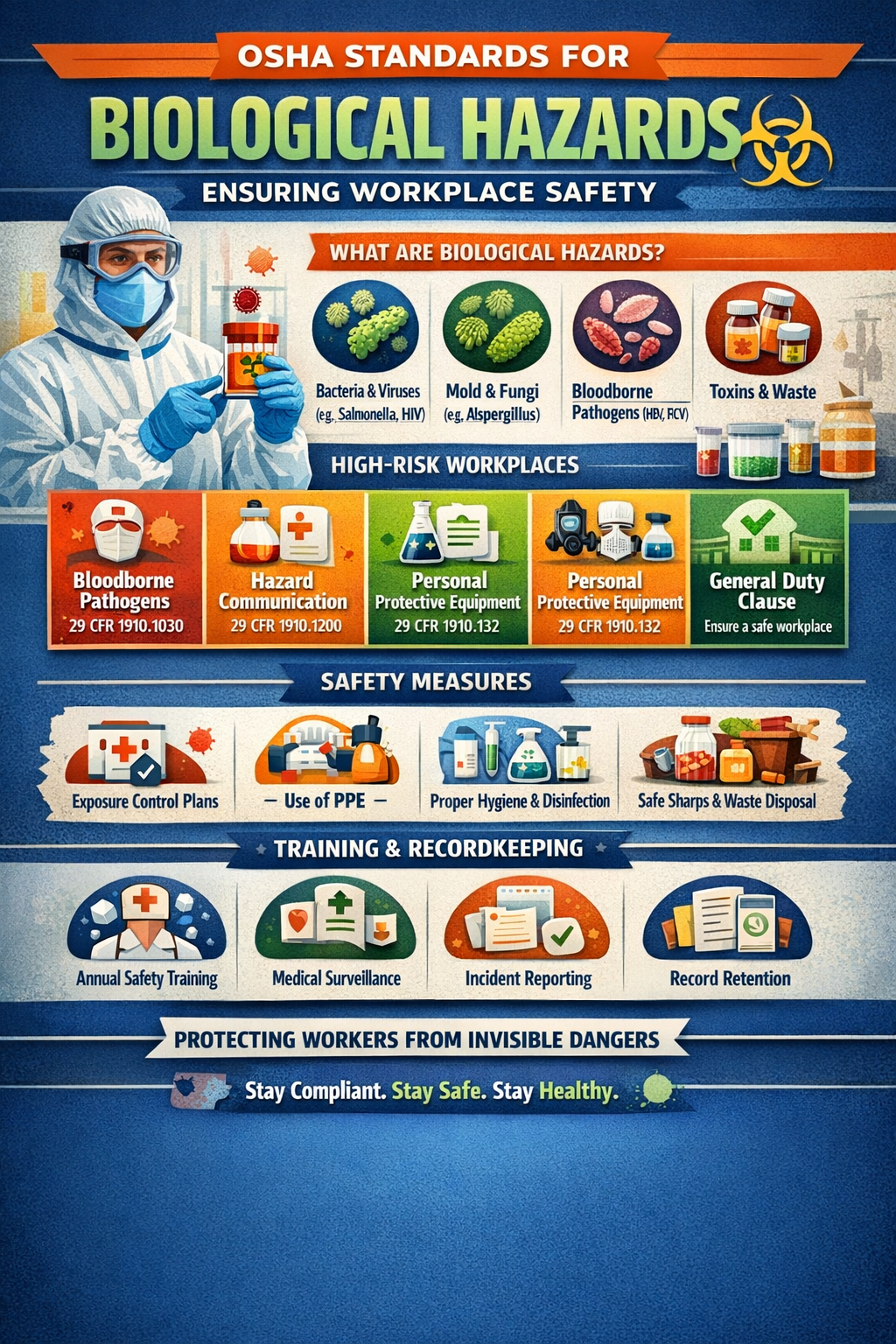
Staying Safe from Biohazards: Understanding OSHA's Requirements
Biological risks are threats that can't be seen in locations like hospitals and food processing factories. OSHA requires strong protections to keep workers safe, combining specific rules with general safety duties. This article explains the rules, duties, and best practices that employers need to follow to be compliant and keep their workforce safe.
What Are Biological Risks?
Biological hazards, sometimes called biohazards, are live things that can make people sick, such as bacteria or poisons. OSHA roughly defines them as bacteria, viruses, or their metabolites that can make people sick when they are breathed in, touched, eaten, or injected. These can be anything from normal bacteria to man-made germs. Biohazards are different from chemical risks because they may reproduce and change, which makes them hard to forecast. Under OSHA's rules, workplaces must recognize them in order to start precautionary actions.
1. Different Kinds of Biological Risks
There are different types of biological dangers, and each one has its own set of controls.
- Bacteria: Pathogens including Salmonella, E. coli, and Mycobacterium tuberculosis do well in wet places. Salmonella spreads on surfaces in food processing, and tuberculosis spreads through aerosols in labs.
- Viruses: Highly contagious agents like HIV, hepatitis B/C, or the flu spread by human fluids or the air. Needles often expose people to hepatitis in hospitals.
- Molds like Aspergillus or Histoplasma can cause breathing problems, especially on wet building sites or in farming.
- Bloodborne pathogens are viruses that can be found in blood or other fluids, such as HIV and HBV. OSHA has particular rules for these viruses.
- Toxins and biological waste: Botulinum toxin from poorly canned foods or prions in animal feces; garbage like sharps or cultures makes the risks worse.
2. Biological Dangers are Widespread in Workplaces
Sectors with a lot of risk are healthcare (hospitals and clinics that deal with blood), laboratories (research with microbes), food processing (pathogen contamination), agriculture (animal waste and molds), wastewater treatment (sewage bacteria), and manufacturing (biotech or pharmaceutical manufacture). Mold in HVAC systems can be dangerous even for offices. According to OSHA, healthcare workers record more than 5,000 needlestick injuries per year, which suggests that this is a common problem.
Why It's Important to Protect Against Biological Hazards
1. Health Risks for Workers
Workers are at risk of diseases that can be benign (like ringworm from fungus) or deadly (like Ebola-like viruses). Breathing causes respiratory illnesses, and touching the skin creates abscesses. People with weak immune systems, including some employees, have worse outcomes. A single exposure can keep workers out of work for weeks, like when norovirus gets out in food facilities.
2. Effects of Short-term vs. Long-term Exposure
- Short-term effects happen quickly, such as flu-like symptoms from viruses or allergic reactions to fungi that happen within hours.
- Long-term exposures build over time, such as chronic hepatitis from frequent blood contact or lung fibrosis from mold.
According to CDC research that relates long-term exposure to biohazards to higher disease rates, cumulative impacts can lead to malignancies or neurological impairment.
3. Effects on Safety, Productivity, and Liability at Work
Unprotected exposures lead to higher absenteeism (for example, epidemics can cause a 10–20% drop in production), higher workers' comp claims, and lawsuits. In 2023, OSHA penalized a lab $150,000 for an event when people were exposed to fungi and got sick. Strong protection raises morale, cuts down on downtime, and protects against liability under OSHA's General Duty Clause.
Does OSHA have Rules for Biological Hazards?
It does; the Occupational Safety and Health Act of 1970 says that workplaces must be free of biological dangers. OSHA doesn't have a single "biohazards standard," but it does enforce standards that are specific to certain situations and encompass all employers in the private sector.
1. How Biological Dangers Fit into OSHA Rules
Biohazards are included in standards such as Bloodborne Pathogens (29 CFR 1910.1030), Hazard Communication (HazCom, 29 CFR 1910.1200), and PPE (29 CFR 1910.132). The General Duty Clause relates to hazards that have not been dealt with, such as Legionella in cooling towers.
2. What OSHA Does to Enforce the Law
OSHA checks on businesses that have complaints or referrals or are in high-risk industries and gives them citations for breaking the law. State-plan states, like California's Cal/OSHA, have requirements that are the same as or stricter than federal rules. After incidents, enforcement goes up. In 2025, there were more than 1,200 biohazard-related citations.
Does OSHA have Rules for Biological Hazards?
It does; the Occupational Safety and Health Act of 1970 says that workplaces must be free of biological dangers. OSHA doesn't have a single "biohazards standard," but it does enforce standards that are specific to certain situations and encompass all employers in the private sector.
1. How Biological Dangers Fit into OSHA Rules
Biohazards are included in standards such as Bloodborne Pathogens (29 CFR 1910.1030), Hazard Communication (HazCom, 29 CFR 1910.1200), and PPE (29 CFR 1910.132). The General Duty Clause relates to hazards that have not been dealt with, such as Legionella in cooling towers.
2. What OSHA Does to Enforce the Law
OSHA checks on businesses that have complaints or referrals or are in high-risk industries and gives them citations for breaking the law. State-plan states, like California's Cal/OSHA, have requirements that are the same as or stricter than federal rules. After incidents, enforcement goes up. In 2025, there were more than 1,200 biohazard-related citations.
Important OSHA Rules About Biological Hazards
1. Bloodborne Pathogens Standard (29 CFR 1910.1030)
This fundamental standard pertains to occupational exposure to blood or other potentially infectious materials (OPIM), which are:
- Scope and covered employees: This law applies to healthcare, lab, public safety, and housekeeping professionals who are "reasonably expected" to be exposed.
- Plans for controlling exposure: Employers must write out their plans for identifying risks, jobs, and controls, and review them every year.
- Universal precautions: Treat all OPIM and blood as infectious; there is no risk-based difference.
2. Standard for Hazard Communication (29 CFR 1910.1200)
Labels, SDS, and training are all part of HazCom that make sure workers know about chemical and biological threats. Use biohazard symbols, such a trefoil, on containers to label biological materials.
- Safety Data Sheet (SDS) requirements: SDS for toxins list dangers, personal protective equipment (PPE), and first aid; biological SDS generally adhere to CDC standards.
- Right to know as an employee: training teaches how to identify and respond.
3. Standard for Personal Protective Equipment (PPE)
OSHA's 29 CFR 1910.132 says that PPE is required when there are still dangers. Employers are responsible for PPE and they must figure out what is needed, give it away for free, and teach employees how to utilize it. Choose, use, and take care of PPE that fits the hazard (for example, N95 for aerosols); check it often.
The General Duty Clause
Section 5(a)(1) says that "recognized hazards causing death or serious harm" must be dealt with." Without any specified requirements, courts uphold citations for biohazards like Hantavirus.
4.The General Duty Clause
Section 5(a)(1) says that "recognized hazards causing death or serious harm" must be dealt with." Without any specified requirements, courts uphold citations for biohazards like Hantavirus.
What Employers Must Do to Keep Employees Safe from Biological Hazards
Employers must take steps to safeguard workers against biological hazards like bacteria, viruses, fungus, and biohazards in places like labs, hospitals, food processing plants, and wastewater treatment plants. OSHA standards, such as 29 CFR 1910.1030 (Bloodborne Pathogens) and 1910.1450 (Chemical Hygiene), stress the importance of starting with assessments and then moving down the list of controls.
-
Doing Biological Risk Assessments
Site-specific hazard evaluations help employers find possible biological dangers. This means looking at things like handling human blood, cultures, or contaminated materials; figuring out how people are exposed (via breathing, skin contact, or eating); and putting microbiology labs at the top of the list of places that are most dangerous. There must be written records of assessments, they must be reviewed every year or after an incident, and workers must be involved to make sure they are correct.
-
Using Methods to Control Exposure
Once concerns are found, companies establish and keep up to date an Exposure Control Plan that lists ways to get rid of or lessen exposure. This involves engineering controls initially, then work habits, and it is the basis for all protective solutions.
-
Giving the Right PPE
Employers give employees personal protection equipment (PPE) for free, keep it in good shape, and make sure it is used correctly. Choosing based on risk assessment, with fit-testing for respirators and training on their limits.
-
Keeping Up with Cleanliness and Hygiene
Employers make sure that there are places for employees to wash their hands, cleanse their eyes, and clean surfaces. To keep from spreading germs, schedules must include high-touch locations and make sure that soap, sanitizers, and towels are always available.
OSHA's Rules for Training on Biological Hazards
The Hazard Communication Standard (29 CFR 1910.1200) and the Bloodborne Pathogens Standard require training to be given in language that is easy to understand and does not use technical jargon that workers may not understand.
-
Expectations for Initial and Refresher Training
Before they are exposed to risk, new employees get basic training. Every year, they get refresher training that covers any changes. Training must happen during work hours, be free, and include hazards that are specific to the facility.
-
Biological Hazard Training for Specific Jobs
Make the content relevant to the tasks. For example, lab techs learn about biosafety levels (BSL-1 to 4), while food handlers learn about germs like Salmonella. Include how to recognize signs and symptoms and what to do in an emergency.
-
Keeping Track and Documenting Training
Keep records for three years (or thirty years after the exposure ends), including the dates, content, names of the trainers, and signatures of the employees. Digital logs are fine as long as they can be accessed during inspections.
-
Requirements for Employees to Understand
Use quizzes, demonstrations, or verbal affirmations to make sure you understand. If there are gaps, retrain and make sure that people who don't speak English obtain translated materials.
Controls for Engineering and Administration
These are the main layers of defense, which means you don't have to rely on PPE as much.
-
Engineering Controls
Install ventilation with HEPA filters, biosafety cabinets (Class II for moderate risks), autoclaves for cleaning, and splash guards. Keep them in check by being certified (for example, by doing annual HEPA checks) to keep aerosols and splashes in check.
-
Policies and Work Practices
Create standard operating procedures (SOPs) that limit how long people can be exposed to dangerous regions, require people to switch shifts in high-risk areas, and ban eating and drinking in labs. Vaccinations, such hepatitis B, and limited access to biohazard zones are examples of things that count here.
-
Ways to Reduce Exposure
Combine controls like universal precautions (treat all blood as if it is contagious) and systems that don't use needles. Use air sampling or swab testing to check how well it works.
Personal Protective Equipment (PPE) Requirement
PPE is the last line of defense, and OSHA says that every company must do hazard assessments according to 29 CFR 1910.132.
-
Face Shields, Masks, Gloves, and Respirators
Wear nitrile gloves when handling chemicals or blood, and N95 respirators or PAPRs when working with airborne diseases (fit-tested once a year). Face shields and goggles work well together to protect against splashing.
-
Clothing and Gowns
For full-body protection, wear impermeable gowns, aprons, or coveralls. After one usage in a high-risk situation, wash or throw them away.
-
Training on How to Dispose PPE Properly
Train on putting on and taking off to avoid getting contaminated yourself, and check for damage before using. Throw out contaminated objects as controlled garbage; never use them again.
- Cleaning, getting rid of germs, and throwing away trash
- Routine measures keep dangers from building up
Personal Protective Equipment (PPE) Requirement
PPE is the last line of defense, and OSHA says that every company must do hazard assessments according to 29 CFR 1910.132.
-
Face Shields, Masks, Gloves, and Respirators
Wear nitrile gloves when handling chemicals or blood, and N95 respirators or PAPRs when working with airborne diseases (fit-tested once a year). Face shields and goggles work well together to protect against splashing.
-
Clothing and Gowns
For full-body protection, wear impermeable gowns, aprons, or coveralls. After one usage in a high-risk situation, wash or throw them away.
-
Training on How to Dispose PPE Properly
Train on putting on and taking off to avoid getting contaminated yourself, and check for damage before using. Throw out contaminated objects as controlled garbage; never use them again.
- Cleaning, getting rid of germs, and throwing away trash.
- Routine measures keep dangers from building up.
Cleaning and Disinfection Steps
Use EPA-approved disinfectants, like 10% bleach for bloodborne pathogens with a 10-minute contact duration. Use absorbents to clean up spills right away, and then disinfect surfaces every day.
-
Taking Care of Biological Waste
Put trash in red bags that can be autoclaved, sharp containers, or incinerator streams. Put biohazard marks on the label and keep it safe.
-
Requirements for Getting Rid of Sharps
Use containers that won't break (never fill them more than 2/3 full) and don't put needles back in. Follow state DOT rules for getting rid of things.
Management of Incidents and Exposure
1. Immediate Post-Exposure Steps:
- Wash the exposed area immediately with soap and water (eyes/nose/mouth with water or saline).
- Report the incident to the supervisor within 24 hours.
- Preserve contaminated clothing and sharps (e.g., secure in labeled biohazard containers; do not launder or discard improperly).
2. Medical Evaluation and Follow-Up:
- Provide confidential post-exposure prophylaxis (PEP) at no cost to the employee.
- Arrange evaluation by a qualified healthcare professional, including source individual testing (with consent) and employee baseline/follow-up tests (e.g., HBV, HCV, HIV).
- Document counseling on risks, symptoms, and treatment options; follow up at 6 weeks, 12 weeks, and 6 months.
3. Incident Reporting and Recordkeeping:
- Complete OSHA Form 301 (Injury and Illness Incident Report) with full details (date, time, location, description, involved parties).
- Investigate root causes using techniques like 5-Whys or fishbone diagrams.
- Retain records for 30 years; log in OSHA 300 form if recordable; implement corrective actions to prevent recurrence.
Requirements for Keeping Records and Documents
Privacy Compliance: Protect employee privacy under OSHA's Access to Employee Exposure and Medical Records standard (29 CFR 1910.1020). Limit access to authorized personnel only, and ensure records are stored securely to prevent unauthorized disclosure.
Records of Exposure Monitoring:
- Retain air sampling, surface wipe, and bulk sample results for at least 30 years.
- Include employee exposure data, sampling methods, lab analyses, and any corrective actions taken.
- Update records promptly after each monitoring event.
Records of Training:
- Maintain the duration specified in the applicable standard (e.g., duration of employment plus 30 years for hazardous chemicals under Hazard Communication, 29 CFR 1910.1200).
- Document of trainee names, dates, topics covered, trainer qualifications, and attendance verification (e.g., sign-in sheets or certificates).
Medical Surveillance Records:
- Store securely in a confidential location separate from personnel files.
- Provide access to employees, designated representatives, and physicians upon written request (per 29 CFR 1910.1020).
- Retain for the duration of employment plus 30 years; transfer to successor employer if business closes.
Audit and Inspection Readiness:
- Organize records in a centralized, easily retrievable system (digital or physical) for OSHA walkthroughs, inspections, or third-party audits.
- Conduct simulated internal audits quarterly to verify completeness, accuracy, and compliance.
- Include an index or log of all record types, locations, and retention schedules for quick reference.
Common OSHA Violations for Biological Hazards
Lack of Exposure Control Plans:
- 25% of inspections cite missing written plans or outdated versions.
- Plans must detail exposure determination, engineering controls, work practices, and housekeeping for bloodborne pathogens or other biohazards.
Inadequate Employee Training:
- Failure to prove training occurred, employees don't understand content, or sessions aren't annual/periodic.
- Required topics include hazard recognition, exposure risks, PPE use, and emergency response; document with records of dates, content, and attendance.
Improper PPE Selection or Use:
- No hazard risk assessments or ill-maintained/unsuitable gear (e.g., gloves, gowns, respirators not fitted or cleaned properly).
- Employers must provide, train on, and ensure compliance with PPE suited to biological risks like aerosols or splashes.
Poor Recordkeeping Practices:
- Incomplete or inaccessible logs (e.g., exposure incident reports, medical records, training verification).
- Makes compliance impossible to demonstrate during inspections; retain per 29 CFR 1910.1020 (e.g., 30 years for exposure/medical records).
Conclusion: Prioritizing OSHA Compliance for Biohazard Safety
OSHA regulations, particularly 29 CFR 1910.1030 for bloodborne pathogens, offer a tested approach, from risk assessment and exposure control plans to training, PPE, incident response, and meticulous recordkeeping, to protect workers from invisible dangers such as bacteria, viruses, and molds.
Preventive measures not only prevent frequent mistakes (such as training or plans that are inadequate, cited thousands of times each year) and significant fines of up to $150,000 but also increase productivity, reduce absenteeism, and promote a safety culture in high-risk industries such as healthcare and food processing.
Strive to stay ahead through regular audits, employee participation, and updates to ensure that the workplace is resilient to biological hazards.
Leave A Comment