

Last Updated on March 25, 2026
Chronic health hazards are things or situations that cause adverse health impacts only after being exposed to them for a long time, usually months or years. Acute dangers induce symptoms right away when you are exposed to them for a short time, including burns or poisoning. Chronic risks, on the other hand, build up slowly and exhibit their impacts over time. Because the symptoms appear like those of common ailments, there isn’t any instant drama, and they need to be tracked over a lengthy period, which is hard to do when you’re busy with other things.
Early detection of these risks in chemical safety programs saves lives and money by taking proactive steps, like monitoring exposure, to avoid permanent harm. The industries that are most affected include those that work with research chemicals in labs, disinfectants and drugs in hospitals, solvents and metals in manufacturing plants, and pesticides in agriculture.
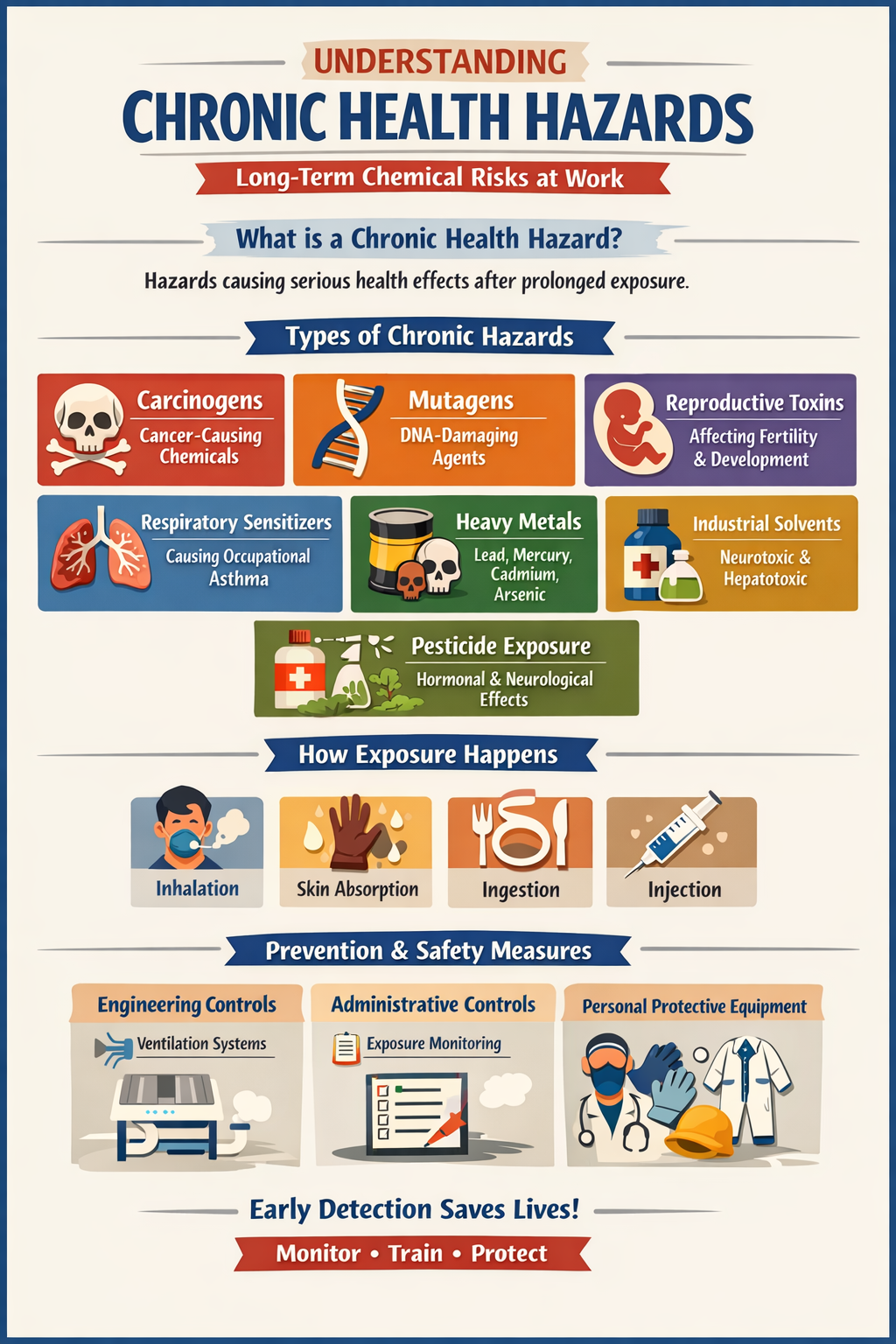
What Is a Chronic Health Hazard?
A chronic health hazard is any chemical, agent, or exposure that causes health effects after prolonged or repeated contact, as defined by OSHA and GHS standards.
How Chronic Exposure Happens
Chronic exposure builds subtly over weeks, months, or years, often evading notice until symptoms emerge. It primarily occurs through low-dose exposure over time, where workers encounter tiny amounts of hazards daily—think lab techs pipetting microliters of solvents repeatedly or factory operators breathing trace fumes during shifts. Without intervention, these accumulate like drops filling a bucket.
Key mechanisms include the following:
- Poor Ventilation: If there aren’t enough local exhaust systems or general airflow, vapors, dust, or aerosols can stay in breathing zones. For example, a hospital sterilizing room with recirculating air traps ethylene oxide gas, which increases the amount of the gas that workers are exposed to over time.
- Lack of Proper PPE (personal protective equipment): Wearing inadequate gear, such as thin cotton gloves against solvents or fabric masks for particles, allows chemicals to contact your skin or lungs. Over time, this exposure causes absorption. Farmworkers, for example, may absorb pesticides through their skin.
- Improper Chemical Storage or Handling: Storing chemicals that don’t go together (such as acids and bases) next to each other can produce gradual leaks or reactions that release poisons. Poor labeling can lead to mishandling, like pouring without secondary containment, which puts people at risk all the time.
OSHA research suggests that these kinds of situations cause 20–30% of chronic cases, which shows how important hierarchy-of-controls prevention is.
Why Chronic Hazards Are Dangerous
Symptoms appear slowly, delaying diagnosis; damage may be irreversible, like organ scarring; and they’re often difficult to trace back to the original exposure source due to latency periods spanning years.
1. Carcinogens (Cancer-Causing Substances)
The IARC (Groups 1-2A) or NTP classifies carcinogens as compounds that make cancer more likely after long-term exposure. Here are severalexamples:
- Benzene (found in fuels and solvents)
- Asbestos (for insulation)
- Formaldehyde (used in embalming and resins)
- Chromium compounds (fumes from welding)
Industries that are in danger are chemical manufacture, construction (demolition), research labs, and healthcare institutions (sterilants).
Health Effects: These can cause lung cancer, leukemia, skin cancer, and other problems that show up 10 to 30 years after exposure.
2. Mutagens (DNA-Damaging Chemicals)
Mutagens are chemicals that cause changes in genetic material (DNA), potentially altering cell function or reproduction. The examples include:
- Ethylene oxide (sterilant gas)
- Certain pesticides, like glyphosate derivatives
- Nitrosamines (in rubber and dyes)
Long-Term Impact: They trigger genetic mutations, increased cancer risk, and potential hereditary effects passed to offspring.
3. Reproductive Toxins
Reproductive toxins are chemicals that affect fertility, pregnancy, or fetal development, often via endocrine disruption. The examples of reproductive hazards:
- Lead (batteries)
- Mercury (fluorescent lamps)
- Phthalates (plastics)
- Certain solvents like glycol ethers
Health Effects: These cause infertility, hormonal disruption, birth defects, and developmental delays.
Workers at Higher Risk: Healthcare workers (anesthetics), laboratory staff (research chemicals), and industrial workers (paints).
4. Respiratory Sensitizers
Respiratory sensitizers are chemicals that trigger allergic reactions in the respiratory system upon repeated exposure, leading to hypersensitivity. Here are some common respiratory sensitizers:
- Isocyanates (paints, foams)
- Formaldehyde (adhesives)
- Latex proteins (gloves)
Symptoms: Occupational asthma, difficulty breathing, chronic respiratory inflammation, and wheezing that worsens over time.
5. Target Organ Toxicants
Target organ toxicants damage specific organs after prolonged exposure, per GHS Category 1-2 classifications. The common target organs are:
- Liver
- Kidneys
- Nervous system
- Lungs
Example Chemicals: Carbon tetrachloride (liver damage from degreasing), lead (nervous system damage), and cadmium (kidney damage from plating).
6. Heavy Metal Exposure
Heavy metals accumulate in the body over time, resisting natural detoxification and biomagnifying in tissues. Here are some common hazardous metals:
- Lead (paints, pipes)
- Mercury (thermometers)
- Cadmium (batteries)
- Arsenic (wood preservatives)
Long-Term Health Effects: Neurological disorders (tremors, cognitive loss), organ failure (kidney or liver), and developmental problems in children of exposed workers.
7. Chronic Exposure to Industrial Solvents
Industrial solvents are volatile chemicals used for cleaning, degreasing, and manufacturing processes like painting or extraction. Here are some examples:
- Toluene (paints)
- Xylene (adhesives)
- Trichloroethylene (metal degreasing)
Long-Term Health Effects: Nervous system damage (memory loss, neuropathy), liver and kidney toxicity, and respiratory issues (emphysema-like changes).
8. Pesticide Exposure
In this case, the question starts with, “Why Are Pesticides Chronic Hazards?” and the answer would be that pesticides pose risks from frequent exposure in agriculture and pest control, with residues lingering on skin or in the air. Here are the types of pesticides in question:
- Organophosphates (insecticides like malathion)
- Carbamates (similar nerve agents)
- Herbicides (atrazine)
Health Effects: Neurological damage, which can present as Parkinson’s-like symptoms, hormonal disruption that may lead to thyroid issues, and an increased cancer risk, particularly for non-Hodgkin lymphoma.
How Chronic Health Hazards Enter the Body
There are several ways to contaminate, but some of the most common are elaboratedbelow:
- Inhalation: Breathing contaminated air releases vapors or dust directly into the lungs.
- Skin Absorption: Chemicals penetrate skin, especially when abraded or exposed for long-term use.
- Ingestion: Contaminated food, hands, or water leads to swallowing toxins.
- Accidental Injection: Rare but possible in laboratory settings via needlesticks or cuts.
Early Warning Signs of Chronic Exposure: Common symptoms include persistent headaches, chronic fatigue, skin irritation, breathing problems, and memory issues. Early medical evaluation is crucial—blood tests or biomarkers can link symptoms to exposures before permanent harm.
How Workplaces Can Reduce Chronic Health Risks
Here are some efficient ways to reduce such health risks.
- Engineering Controls: Engineering controls include the use of ventilation systems, such as fume hoods, and closed chemical handling systems, such as enclosed mixers.
- Administrative Controls: Administrative controls include exposure monitoring through air sampling, safety training through annual refreshers, and chemical inventory management through software tracking.
- Personal Protective Equipment: Personal protective equipment (PPE) includes gloves (nitrile for solvents), respirators (half-face with cartridges), and protective clothing such as Tychem suits.
Importance of Safety Data Sheets (SDS)
The hazard identification portion lists GHS pictograms, such as
- The toxicological information section lists chronic effects.
- The exposure limits section lists PELs (Permissible Exposure Limits) and TLVs (Threshold Limit Values).
Digital SDS management platforms will make it easy to manage Safety Data Sheets (SDSs). This way, it becomes easier to find them, follow OSHA 1910.1200 (Occupational Safety and Health Administration regulations for hazardous chemicals), and make smart choices or avoid any sort of hazardous, unfortunate scenarios.
Final Thoughts
Chronic health hazards pose long-term concerns that may not be immediately obvious, slowly undermining worker health. Organizations can better protect their workers by focusing on prevention when they know what types of hazards are common, such as implementing effective chemical management practices, providing comprehensive safety training, and regularly monitoring exposure levels to harmful substances.
Chemical management, safety training, and monitoring exposure are all important for keeping workplaces safe and preventing accidents. This is especially true in industries where chronic health risks like exposure to toxic substances, repetitive strain injuries, and ergonomic risks are common.
Simplify Your SDS Management
CloudSDS gives your team instant access to 23M+ safety data sheets with AI-powered search, automated updates, and full OSHA/GHS compliance — all from one platform.
Leave A Comment