
Last Updated on April 16, 2026
Chemical manufacturing, construction, food processing, oil and gas, and de-icing operations sectors in the United States are heavily dependent on calcium chloride. Although it doesn’t fall under the highly toxic category, improper handling can still result in eye damage, skin irritation, and respiratory issues. These incidents may occur during dissolution. Following safety practices aligned with the Occupational Safety and Health Administration (OSHA) help organizations maintain compliance and protect workers.
This blog contains OSHA-aligned calcium chloride handling procedures, PPE requirements, storage practices, emergency response steps, and compliance considerations for U.S. workplaces.
What is Calcium Chloride and Why Safe Handling Matters?
Calcium chloride (CaCl₂) is a hygroscopic salt that is used in many industries in the U.S. to control dust on roads and construction sites, speed up the curing of concrete in cold weather, de-ice roads and runways, absorb moisture as a desiccant, process food, and make oil and gas drilling fluids. It is useful in factories because it can be used in many different ways, but if it is not handled properly, it can make work unsafe, which companies have to deal with through organized safety procedures.
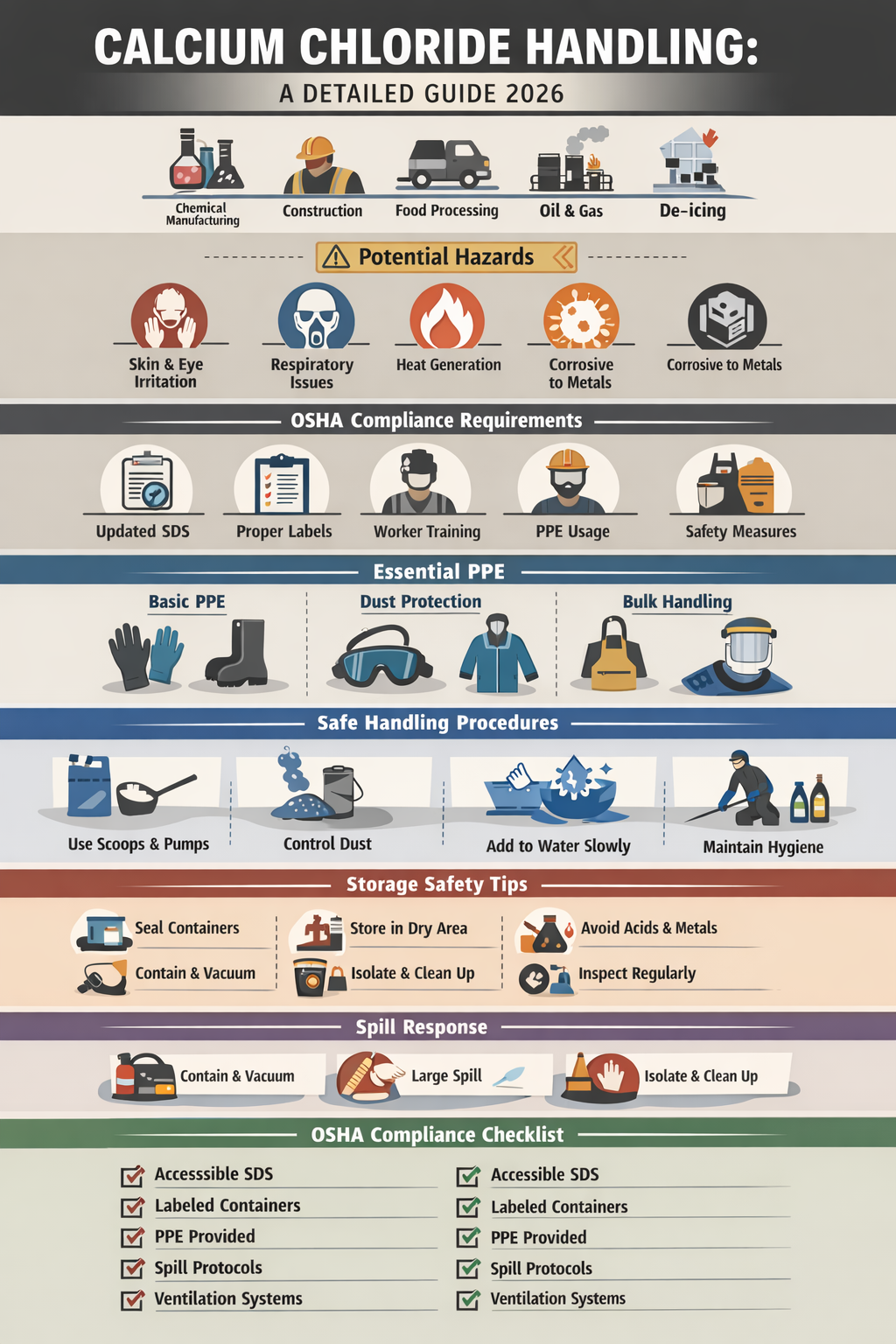
There are some good things about calcium chloride, but it can also cause a lot of problems. It can make a lot of heat when mixed with water, irritate the skin and eyes, make things slippery if spilled, make dust that bothers the respiratory system, and corrode some metals and tools. The Hazard Communication Standard says that to keep the workplace safe and lower risks, employers must find hazards, label them correctly, train workers, and make sure they can get to safety data sheets.
OSHA Hazard Classification and Communication Requirements
According to OSHA’s Hazard Communication Standard (29 CFR 1910.1200), companies must
- Keep Safety Data Sheets (SDS) for calcium chloride up-to-date.
- Put hazard warnings on the labels of containers.
- Teach workers about the dangers of chemicals.
- Ensure that SDS is available throughout shifts.
- Establish safety measures.
Some common dangers listed in SDS are
- Irritation of the skin.
- Irritation in the eyes.
- Irritation of the respiratory tract.
- When mixed with water, it creates heat.
Personal Protective Equipment (PPE) for Calcium Chloride Handling
According to OSHA, organizations should select PPE based on the likelihood of employee exposure. When working with calcium chloride:
1. Basic Personal Protective Equipment
- Gloves that don’t let chemicals through (nitrile, neoprene).
- Goggles or a face cover for safety.
- Clothing with long sleeves for protection.
- Closed-toe shoes that are resistant to chemicals.
2. Extra PPE when being around dust
- A dust mask or respirator that NIOSH has authorized.
- Protective coveralls.
- Nearby access to eyewash.
3. PPE for handling large amounts of industrial goods
- Apron for chemicals.
- Goggles and a face shield.
- Respiratory protection program (if the amount of dust in the air is too high).
- Choosing the right PPE must be based on an assessment of the risks at work.
Safe Handling Procedures
1. Avoid direct contact.
Workers should not touch solid or liquid calcium chloride directly; when possible, use scoops, pumps, or machines.
2. Prevent dust generation
When handling dry calcium chloride, it can make dust. As per OSHA
- Using local exhaust ventilation
- Carefully opening baggage
- Not dumping from a height
- Using closed-loop transfer systems
- Slowly add calcium chloride to the water.
3. Add calcium chloride to water slowly.
Calcium chloride releases heat when dissolved. To prevent splashing and burns:
- Always put calcium chloride in water.
- Never mix calcium chloride with water.
- While combining, stir slowly.
- Use containers that can handle heat.
4. Maintain healthy hygiene practices
Workers should:
- After handling, workers must wash their hands.
- They should not eat or drink in areas where you’re handling things.
- It is essential to take off clothes that are dirty right away.
- Before reusing, they need to wash clothes that have been contaminated.
Calcium Chloride storage guidelines
Proper storage reduces the risk of chemical breakdowns and accidents at work.
1. OSHA-aligned storage practices
- Supervisors must take care of those containers (after storage) that are tightly sealed.
- Store in a cool, dry, well-ventilated place.
- Keep away from the moisture.
- Stay away from strong acids.
- Stay away from aluminum and metals that react to it.
- Use shelves that won’t rust.
2. Bulk storage recommendations
- Use containers or silos that keep moisture out.
- Clearly label areas where items are kept.
- Stop spills from spreading.
- Look in containers often.
- Things could leak or break if workers don’t store them properly.
Engineering controls and ventilation
As per OSHA, it is necessary to use engineering controls along with PPE.
- Local exhaust ventilation to keep dust down.
- Conveyor systems that are closed in.
- Automated apparatus for dispensing.
- Systems for collecting dust.
How to handle spills and leaks
Calcium chloride isn’t very dangerous, but spills still need to be cleaned up correctly.
1. How do you respond to a small spill?
- Put on the right PPE
- Don’t make dust.
- Use a HEPA filter to Hoover or sweep thoroughly.
- Put the item in the right container.
- Follow local rules on how to get rid of it.
2. How should we respond to large spill incidents?
- Isolate the affected area.
- Keep people out of drains.
- Use machines to clean up.
- Wash away residue with controlled water use.
First Aid Measures for Exposure
1. Skin contact
- It is essential to take off clothes that are contaminated.
- Victims must use soap and water to wash
- If the irritation doesn’t go away, see a doctor.
2. Eye contact
- For at least 15 minutes, victims must rinse their eyes with water.
- If they have contact lenses, take them out.
- They need to obtain medical help right away.
3. Inhalation
- Provide the person some fresh air.
- If the symptoms don’t go away, see a doctor.
4. Ingestion
- It is essential to wash victims’ mouths.
- They need to drink some water.
- They need not make themselves throw up unless a doctor tells them to do so.
Fire and reactivity considerations
Calcium chloride is not flammable, although it may
- React with strong acids.
- When dissolved, they create heat.
- Metals rust.
When firefighters go to put out fires near calcium chloride storage, they should wear protective gear.
Training Requirements for Workers
OSHA requires employers to train workers on the following:
- Hazards from chemicals.
- How to handle things correctly.
- Using PPE.
- How to respond to a spill.
- What to do in an emergency.
- Understanding SDS.
Training must be
- Conducted before first exposure.
- Updated when procedures change.
- Documented for compliance.
Transportation and material handling
When transporting calcium chloride:
- Use containers that are sealed.
- Keep the moisture away.
- Ensure that loads are safe so they don’t leak.
- Use forklifts with stable pallets.
- Don’t stack bags that are broken.
- For big shipments, DOT rules may apply.
Common Workplace Risks and How to Prevent Them
| Risk | Ventilation |
| Skin Irritation | Wear gloves and protective clothing. |
| Dust Inhalation | Use ventilation respirators. |
| Eye Irritation | Use goggles or face shields. |
| Heat burns during mixing. | Add the chemical slowly to water. |
| Slip hazards | Clean spills quickly. |
| Corrosion | Use compatible storage materials. |
OSHA compliance checklist
Employers who work with calcium chloride should ensure the following:
- SDS is available and easy to locate
- Containers with the right labels.
- Workers were taught about dangers.
- PPE is given out and enforced.
- Documented spill protocols.
- Ventilation controls have been established.
- Eyewash stations are available.
- Storage places that follow the rules.
Following this checklist helps keep the workplace safe and in line with the law.
Conclusion
Many organizations in the U.S. employ calcium chloride; it can be dangerous if not handled correctly. Following OSHA-based rules makes sure that employers store things safely, use the right PPE, respond to spills properly, and obey the rules. To lower exposure, employers should put the hazards of communication, personnel training, and engineering controls at the top of their list. By adhering to these calcium chloride handling recommendations, organizations can enhance workplace safety, reduce accidents, and comply with OSHA regulations. They can also continue using this useful industrial chemical.
Simplify Your SDS Management
CloudSDS gives your team instant access to 23M+ safety data sheets with AI-powered search, automated updates, and full OSHA/GHS compliance — all from one platform.
Leave A Comment