 Skip to content
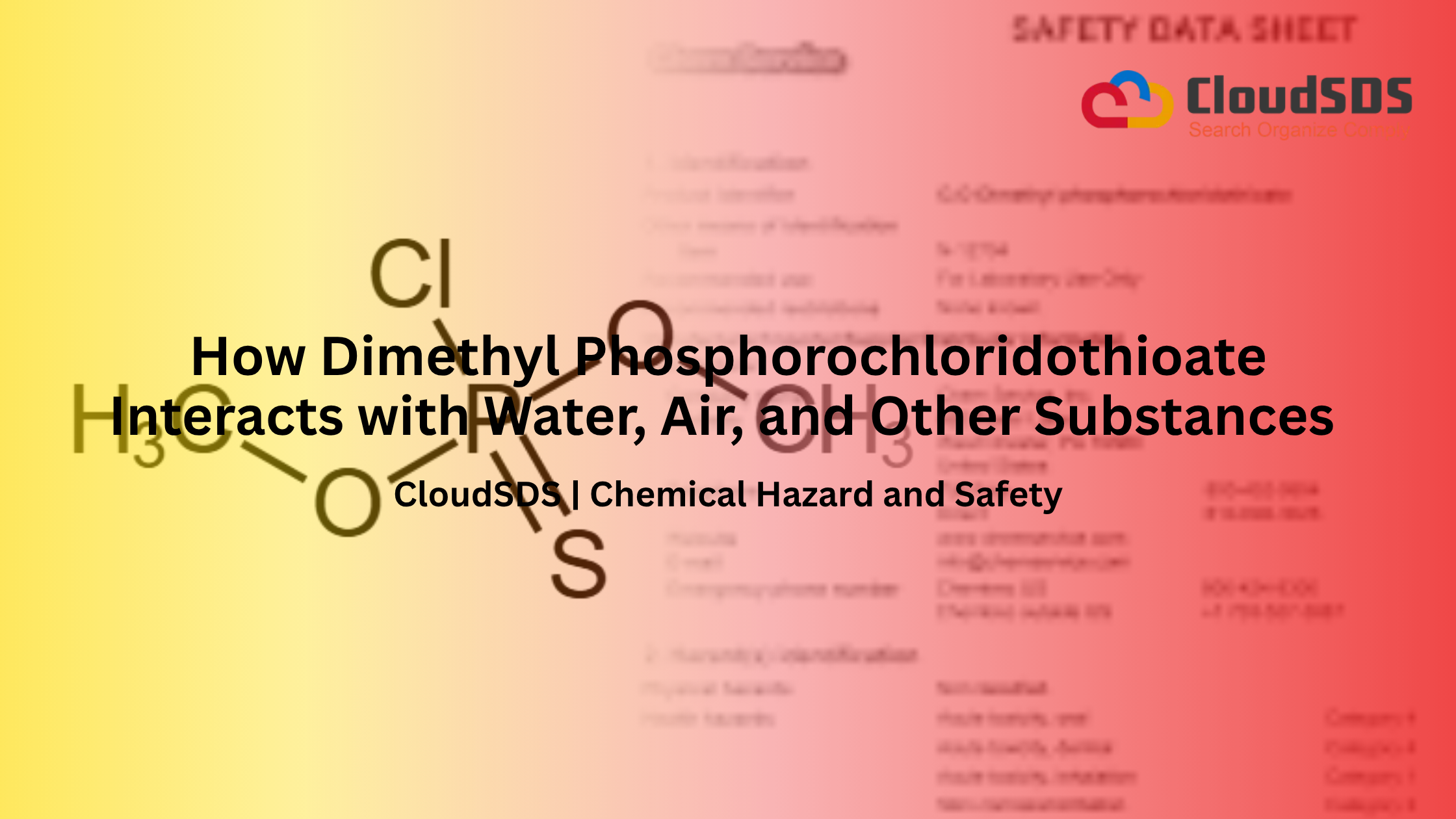
Dimethyl phosphorochloridothioate (DMPT), also known as O,O-dimethyl phosphorochloridothioate or dimethyl chlorothiophosphate (CAS 2524-03-0), is an organophosphorus chemical that reacts very quickly. Its formula is C₂H₆ClO₂PS. It is a thiophosphoryl chloride intermediate in making pesticides. Its reactivity comes from the phosphorus core, which is bound to chlorine, sulfur (P=S), and methoxy groups. This makes DMPT easy to attack with nucleophiles, which is especially dangerous in factories where it is exposed to water, air, or other chemicals. Environmental health and safety (EHS) specialists who keep track of chemical inventories, make sure that OSHA and GHS rules are followed, and stop accidents like those that happened in organophosphate handling facilities need to know how these interactions work.
In a chemical processing facility, the behavior of DMPT in different situations dictates how it should be stored, i.e., in a dry nitrogen atmosphere, in closed containers, and away from moisture, among other conditions. The reaction also generates heat, corrosive gases such as HCl, and harmful substances such as phosphine or oxides, which increase the dangers of spills and fires significantly. This webpage examines the reaction of DMPT with water, air, and other chemicals, as indicated in safety data sheets (SDS) and other reliable sources of information on chemicals.
Hydrolytic decomposition when it meets water
The P–Cl bond in DMPT is unstable in water, which makes it easy for water molecules to replace it. When it meets something, it breaks down instead of dissolving it. This is the overall process:
ce{(CH3O)2P(S)Cl + H2O -> (CH3O)2P(S)OH + HCl
This process speeds up in neutral or basic water, making hydrochloric acid and dimethyl phosphorothioic acid. The first addition creates a tetrahedral intermediate that falls apart to generate HCl gas, a corrosive, strong-smelling vapor that irritates respiratory tissues and eats away at metals. Exothermic heat production can cause leftovers to turn into gas and smells to build up in small places.
Hydrolysis happens slowly at room temperature, but it can happen quickly and violently when there is agitation or too much water. CAMEO Chemicals says, “May react violently with water.” When fully broken down, it makes phosphoric acids, sulfur species, and small amounts of methanol. Solubility data shows that “Decomposes” dissolves in water, but no stable solutions form. This reaction keeps going on its own in spills, especially when the temperature is above 50°C. This raises pressures in closed systems and could cause containers to break.
The effects on the environment are very bad: Runoff from dilution can pollute streams and be as dangerous as organophosphates. To neutralize, you need alkaline absorbents like soda ash. You should stay away from cellulose-based products because they make gas evolution worse. Be careful while using water spray to put out fires because it makes HCl release more.
| Condition | Rate of Reaction | Other Things That Come Up | Risks |
| Water at 0°C
| Slow
| HCl, phosphorothioic acid
| Gas evolution that isn’t too strong
|
| Temperature in the room
| Not too much
| HCl, H3PO4, and CH3OH
| Fumes that are corrosive and give off heat
|
| Water that is too hot (>50°C)
| Angry
| Phosphine and oxides
| Risk of explosion and poisoning
|
Air reaction: effects of moisture and oxidation
DMPT doesn’t react quickly or spontaneously with dry air, and it stays stable in inert conditions. But the humidity in the air (usually 40–60% RH) causes gradual hydrolysis at the surface, which leaves behind a thick residue and traces of HCl. Long-term exposure causes visible fuming because moisture speeds up the breaking of P–Cl bonds, which is similar to how water reacts but at slower rates because of diffusion constraints.
At ambient temperatures, there aren’t many oxidative interactions with oxygen in the air. The P=S bond doesn’t break down quickly when it meets oxygen. When the temperature rises beyond 120°C, autocatalytic breakdown begins, releasing phosphorus oxides (P₄O₁₀), sulfur dioxide (SO₂), and chlorinated volatiles. The vapor density (5.54) makes airborne mists settle, which can happen in low regions and make it dangerous to breathe them in. This can cause irritation, coughing, and organophosphate poisoning symptoms, including nausea or spasms.
Air dilution helps keep things from building in vented spaces, yet static circumstances make things corrode. SDSs say that air reactivity is “stable under normal temperatures” and that incompatibilities are caused by humidity and not just O₂. Long-term storage in dry nitrogen stops these effects and follows REACH and EPA rules for thiophosphoryl chlorides.
Important air-related traits:
- There is no ignition in dry air, although the flash point is between 105 and 221 degrees Fahrenheit. When combustibles touch each other, they may catch fire.
- When heated, toxic POₓ, SOₓ, and Cl₂ chemicals are released into the air.
- Heavy vapor: Sinks and pushes oxygen out of pits.
Reactions with other chemicals: Incompatibilities and Hazards
DMPT’s electrophilicity makes it react with a wide range of nucleophiles, oxidizers, and reducers, making it very incompatible.
Strong bases, including NaOH and amines, quickly replace phosphonates and chloride salts, releasing a lot of HCl in the process. For example:
- Exothermic and perhaps dangerous; steer clear of alkaline cleaners.
- Oxidizing Agents (like KMnO₄ and H₂O₂) change P=S to P=O and let off Cl₂ or hypochlorites. Forms explosive mixes and doesn’t work well with other chemicals.
- Reducing agents like LiAlH₄ break P–Cl down into phosphines, which are poisonous and combustible and dangerous to use in synthesis.
- Transesterification of alcohols and thiols creates mixed phosphates and thiophosphates, which are important for making pesticides. However, it also makes HCl, which needs scavengers like pyridine.
- Metals/Combustibles: It eats away at steel and sets off organic materials when they touch it. Clays or dirt are examples of absorbents that don’t work well together because they react strongly.
Thermal decomposition (over 120°C) creates a mix of H₂, CO, and phosphine that is both flammable and poisonous. According to PubChem, the reactivity profile is similar to that of “Acyl Halides/Thiophosphate Esters.”
| Type of Chemical | Type of Reaction | Things/Products | Level of Risk |
| Water or moisture | Hydrolysis | HCl, acids | Substitution of High Bases |
| Phosphonates and salts
| – | – | Extremely High |
| Oxidizers | Oxidation | Oxides, Cl₂ | A lot |
| Reducers | Lessening | Phosphines | Very |
| Drinks | Esterification | HCl and esters | Not too much |
In industrial hygiene, DMPT requires PPE (neoprene gloves, SCBA), secondary containment, and monitoring for HCl (10 ppm TWA). To clean up a spill, you should leave the area, let in fresh air, and use lime to neutralize the spill. GHS says Acute Tox. 3, Skin Corr. 1B; UN 2267 (6.1+8, PG II). Training focuses on reviewing SDS based on roles and evaluating cholinesterase levels for exposures.
Incidents throughout the world show risks, such as how TPC Group-type instances show how hydrolysis fires can happen. AI-powered SDS technologies help with predictive reactivity modeling.
In short, DMPT’s reactivity with water (violent hydrolysis), air (humidity-driven fumes), and chemicals (nucleophilic/oxidative confrontations) show that it has two roles: it is a powerful synthetic agent and a problem for EHS. Strict rules make a guarantee that new technologies can be safely used in farming and other fields, balancing progress with risk management.
Leave A Comment