 Skip to content
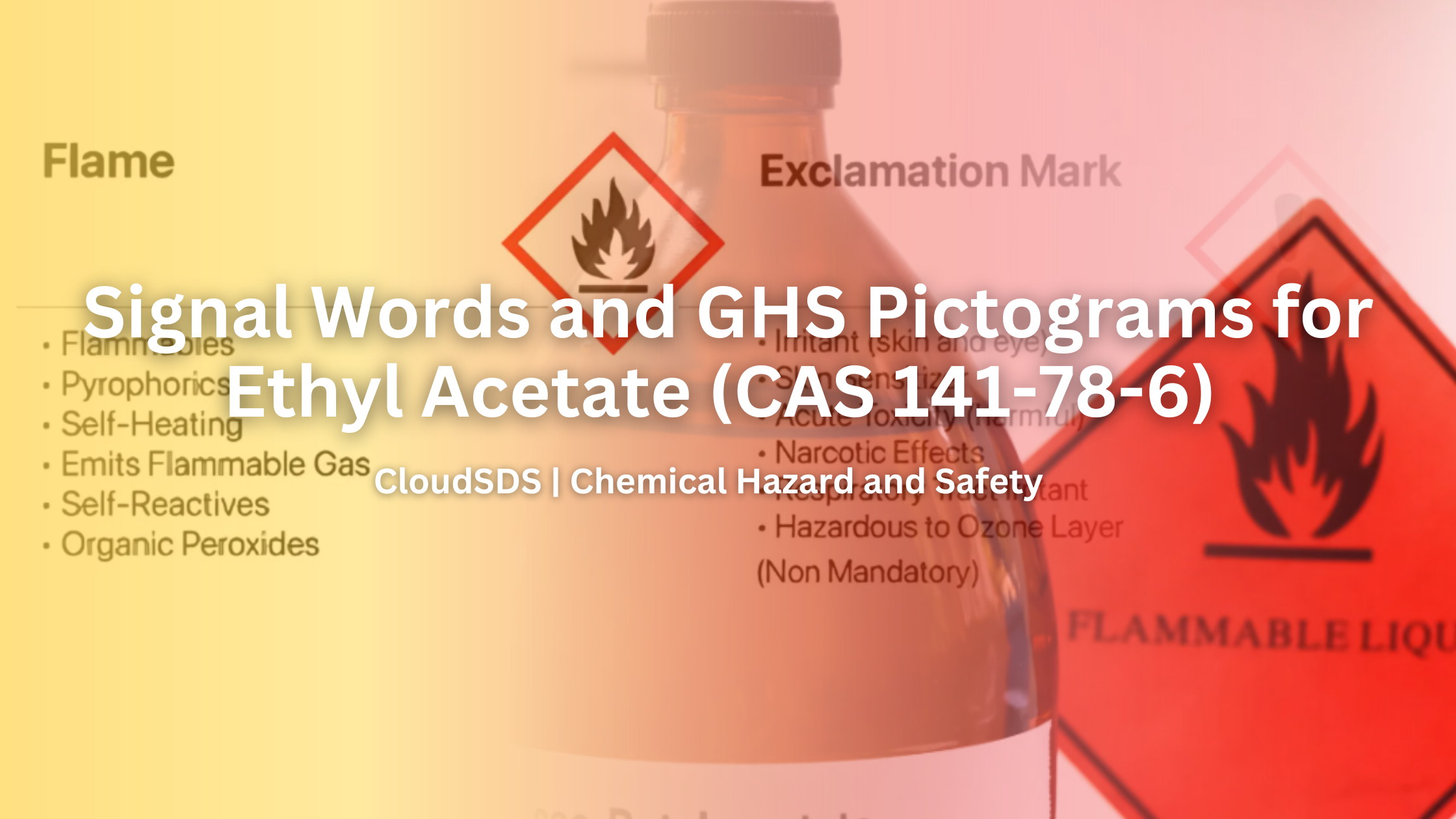
Ethyl acetate is one of the most widely used industrial solvents globally, with applications spanning paints and coatings, printing inks, adhesives, pharmaceuticals, food processing, and electronics manufacturing. The global ethyl acetate market was valued at approximately USD 6.61 billion in 2025 and is projected to reach USD 12.45 billion by 2035, reflecting steady demand driven by automotive, construction, flexible packaging, and food and beverage industries. With an estimated global production capacity exceeding 6 million metric tons annually—concentrated primarily in Asia-Pacific, which accounts for roughly 80% of worldwide output—ethyl acetate remains a critical chemical intermediate and solvent across diverse sectors.
Despite its economic importance and relatively favorable toxicity profile compared to other industrial solvents, ethyl acetate presents significant occupational hazards that require rigorous hazard communication. It’s extremely low flash point (approximately -3 to -4 °C), wide flammable range, and potential for eye irritation and central nervous system effects necessitate clear, standardized labeling under the Globally Harmonized System of Classification and Labelling of Chemicals (GHS). The GHS framework—adopted by regulatory authorities worldwide, including OSHA in the United States and the European Chemicals Agency under CLP regulations—ensures that chemical hazards are communicated consistently through standardized label elements: signal words, pictograms, hazard statements, and precautionary statements.
This article provides a comprehensive analysis of the GHS signal word and pictograms assigned to ethyl acetate, explaining the regulatory basis for each label element, the practical implications for workplace safety, and best practices for training and compliance programs. Understanding these label elements is essential for EHS professionals, chemical safety managers, and frontline workers who handle ethyl acetate in laboratory, manufacturing, or maintenance operations.
What a “Signal Word” Means in GHS (and Why It Matters)
A signal word is the label’s “headline” that communicates the relative severity of the hazard classification:
- Danger = more severe hazard categories within a hazard class (e.g., Flammable Liquid Category 2)
- Warning = less severe hazard categories (e.g., Flammable Liquid Category 3)
For ethyl acetate (substance), most mainstream SDS/labels classify it as Flammable liquid Category 2 (H225), which drives the signal word to “Danger.”
The signal word serves as an immediate visual cue that helps workers quickly assess the general level of caution required when handling the chemical. This immediate recognition capability is particularly valuable in emergency situations where quick decision-making is critical.
Ethyl Acetate: GHS Label Elements (At a Glance)
For ethyl acetate as a substance, the commonly cited classifications include:
- Flammable liquids — Category 2 (H225)
- Eye irritation — Category 2 / 2A (H319)
- STOT SE (single exposure), narcotic effects — Category 3 (H336)
Core GHS/CLP Label Elements for Ethyl Acetate (Substance)
| Label element
| What appears on label
| Practical meaning
|
| Signal word
| Danger
| Higher-severity flammability category drives urgent controls
|
|
Pictograms
| GHS02 (Flame) + GHS07 (Exclamation mark) | Fire hazard + irritant / drowsiness-dizziness warning |
|
Hazard statements (H-codes)
|
H225, H319, H336
| Highly flammable; serious eye irritation; may cause drowsiness/dizziness
|
|
Supplemental EU hazard (CLP)
|
EUH066 (often listed)
| Repeated exposure may cause skin dryness/cracking (EU supplemental phrase)
|

GHS Pictograms Used for Ethyl Acetate (and What They “Translate” To)
GHS02 — Flame (Flammability)
Why it appears: Ethyl acetate is commonly classified as Flammable Liquid Category 2 (H225).
What it tells workers to do immediately:
- Treat vapors as ignitable and potentially flashback-capable in poorly ventilated areas.
- Control ignition sources (sparks, hot surfaces, static discharge) and use appropriate bonding/grounding practices.
Useful supporting property context (often shown in SDS):
- Flash point around -3 to -4 °C (closed cup) (very easy to ignite).
- Explosive limits roughly 2.2–11.5 vol% (meaning many “normal spill” vapor concentrations can be in the flammable range).
GHS07 — Exclamation Mark (Irritation + Narcotic Effects)
Why it appears: Ethyl acetate commonly carries:
- Eye irritation Category 2/2A (H319)
- STOT SE Category 3 (H336) (drowsiness/dizziness from vapor exposure)
What it tells workers to watch for:
- Eye exposure risk from splashes and vapor contact.
- Short-term overexposure symptoms such as drowsiness, dizziness, headache—particularly in enclosed or poorly ventilated spaces.
The visual nature of pictograms makes them particularly valuable in multilingual workplaces or situations where language barriers might impede understanding of text-based hazard information. Their standardized design ensures consistent interpretation across different countries and cultures.
Why the Signal Word Is “Danger” (and When It Might Change)
1. The main driver: Flammability category
Under both OSHA-aligned GHS SDS formats and EU CLP SDS formats, ethyl acetate is frequently classified as Flam. Liq. 2 (H225). This category typically triggers “Danger.”
Signal words work in conjunction with pictograms and hazard statements to create a coherent hazard communication system. The signal word provides immediate severity indication; pictograms offer visual hazard identification, and hazard statements deliver specific hazard information.
2. When labels may differ (especially for mixtures)
In real workplaces, ethyl acetate often appears in mixtures (thinners, inks, cleaners). The final label depends on the mixture classification, which can change due to:
- Concentration of ethyl acetate (and other solvents)
- Presence of additional hazards (corrosives, sensitizers, carcinogens, etc.)
- National GHS “building block” adoption choices
Practical rule: Always label from the mixture SDS, not from the pure-substance profile.
Typical Hazard Statements for Ethyl Acetate
Most SDS present these key hazard statements:
- H225: Highly flammable liquid and vapour.
- H319: Causes serious eye irritation.
- H336: May cause drowsiness or dizziness.
Common EU supplemental phrase (often included in CLP SDS):
- EUH066: Repeated exposure may cause skin dryness or cracking.
Common Precautionary Themes (What Labels/SDS Emphasize)
While exact P-codes vary by supplier and region, ethyl acetate SDS commonly emphasize:
Fire prevention controls (driven by GHS02 / H225)
- Keep away from ignition sources, no smoking
- Bond/ground containers; prevent static discharge
- Use explosion-proof ventilation/equipment where needed
Exposure controls (driven by GHS07 / H319, H336)
- Use in well-ventilated areas; local exhaust for higher-use operations
- Wear eye protection (chemical splash goggles where splash risk exists)
- Avoid breathing vapors; use respiratory protection when ventilation is insufficient (per site risk assessment)
Effective hazard communication training emphasizes how these elements work together. Workers learn to first notice the signal word for severity assessment, then examine pictograms for hazard types, and finally read hazard statements for specific hazard information. This systematic approach to label reading improves comprehension and safety outcomes.
Workplace Exposure Context (Why Ventilation Still Matters)
Even though ethyl acetate’s “headline” hazard is flammability, occupational exposure limits reinforce the need for ventilation and monitoring. The NIOSH REL and OSHA PEL are both commonly listed at TWA 400 ppm (1400 mg/m³). NIOSH also lists IDLH 2000 ppm.
This matters because:
- A “strong solvent odor” is not a reliable control boundary.
- CNS effects (H336) can occur in poorly ventilated areas, especially during bulk handling, tank work, or large spill scenarios.
Given ethyl acetate’s widespread use in paints, coatings, adhesives, and printing inks—industries characterized by batch processing, spray application, and enclosed workspaces—understanding and implementing appropriate ventilation controls is critical.
Quick Training Notes for EHS and Labelling Programs
Common label-check errors to prevent
- Using the pure ethyl acetate pictograms for a mixture product.
- Dropping GHS07 because the process “only uses small quantities,” even when splash and vapor exposure remain credible.
- Underestimating ignition risk during “routine wiping” or solvent transfer—flash fire risk is driven by vapor + ignition source, not only by visible liquid.
Minimal label content checklist (site-friendly)
- Product identifier (Ethyl acetate; CAS 141-78-6)
- Signal word: Danger
- Pictograms: GHS02 + GHS07
- Hazard statements: H225, H319, H336
- Key precautions (ignition control, ventilation, eye protection)
GHS pictograms represent the most recognizable aspect of the labeling system, providing immediate visual communication of chemical hazards through internationally standardized symbols. These black symbols on white backgrounds, enclosed in red diamond-shaped borders, transcend language barriers and provide instant hazard recognition.
Conclusion
Effective hazard communication for ethyl acetate—one of the most economically significant industrial solvents globally—relies on the proper understanding and implementation of GHS signal words and pictograms. The assignment of the signal word “Danger” and the dual pictogram system (GHS02 Flame + GHS07 Exclamation Mark) reflect the substance’s primary classification as a highly flammable liquid (Category 2, H225) combined with eye irritation (H319) and specific target organ toxicity following single exposure (H336). These label elements are not merely regulatory formalities; they serve as the frontline communication mechanism that enables workers, emergency responders, and safety professionals to rapidly assess risk and implement appropriate controls in diverse operational contexts—from automotive spray booths and pharmaceutical synthesis labs to printing facilities and electronics manufacturing cleanrooms.
The standardized nature of GHS labeling addresses a critical challenge in global chemical commerce and workplace safety: ensuring that hazard information remains consistent and interpretable across linguistic, cultural, and regulatory boundaries. For ethyl acetate, a chemical produced at a scale exceeding 6 million metric tons annually and traded extensively across Asia-Pacific, Europe, and North America; this standardization is particularly valuable. Safety professionals and procurement teams can rely on predictable label formats when sourcing material from different suppliers or regions, reducing the risk of miscommunication that could lead to incidents involving fire, eye injury, or acute overexposure.
From a training and operational perspective, the ethyl acetate label illustrates a fundamental principle of effective hazard communication: labels must drive action, not just awareness. The GHS02 pictogram immediately signals the need for ignition source control, bonding/grounding, and explosion-proof equipment in higher-risk scenarios. The GHS07 pictogram prompts the use of eye protection and adequate ventilation. When training programs emphasize this action-oriented interpretation of labels—rather than rote memorization of pictogram meanings—workers develop better hazard recognition skills and are more likely to implement controls proactively.
Looking forward, as the ethyl acetate market continues to expand (projected to reach USD 12.45 billion by 2035), driven by growth in automotive coatings, flexible packaging, and pharmaceutical applications, maintaining robust labeling practices will remain a cornerstone of occupational safety and regulatory compliance. EHS professionals should ensure that site-specific chemical management systems accurately reflect the GHS classifications for both pure ethyl acetate and ethyl acetate-containing mixtures, conduct regular training on label interpretation, and integrate label review into pre-task hazard assessments and standard operating procedures. By treating GHS labels as dynamic risk management tools—not static compliance artifacts—organizations can leverage the full protective value of the Globally Harmonized System in safeguarding workers and preventing incidents involving this versatile but hazardous solvent.
Leave A Comment