
Last Updated on January 14, 2026
The Globally Harmonized System of Classification and Labelling of Chemicals (GHS) is an internationally recognized framework designed to standardize how chemical hazards are communicated across different countries and workplaces. For laboratory environments where hazardous substances are regularly handled, understanding GHS labels and pictograms is critical for ensuring worker safety, regulatory compliance, and effective hazard communication.
Understanding the GHS Framework
The GHS was developed by the United Nations as a voluntary international system established in 1992 and fully implemented by employers, distributors, chemical manufacturers, and importers in 2015. Prior to this standardized system, countries used their own labeling systems, which created confusion due to language barriers and inconsistent information, leading to unnecessary shipping costs and safety risks. The GHS replaced the previous orange square labeling systems with standardized, red-bordered diamond pictograms, creating a universal language for chemical hazard communication that transcends linguistic barriers.
Six Essential Components of GHS Labels
Every GHS label contains six required elements that work together to communicate comprehensive hazard information:
- Product Identifier – The chemical name, trade name, or product code assigned by the manufacturer
- Pictogram(s) – Standardized symbols indicating the nature of hazards
- Signal Words – Either "Danger" (more severe) or "Warning" (less severe)
- Hazard Statements – Standardized phrases describing the nature and degree of risks
- Precautionary Statements – Specific measures to minimize or prevent adverse effects
- Supplier Information – Company name, address, and phone number
Multiple pictograms can appear on a single label when applicable, as many chemicals present more than one hazard. The label elements must be grouped together for clarity and should not contradict other information on the container.
The Nine GHS Pictograms Explained
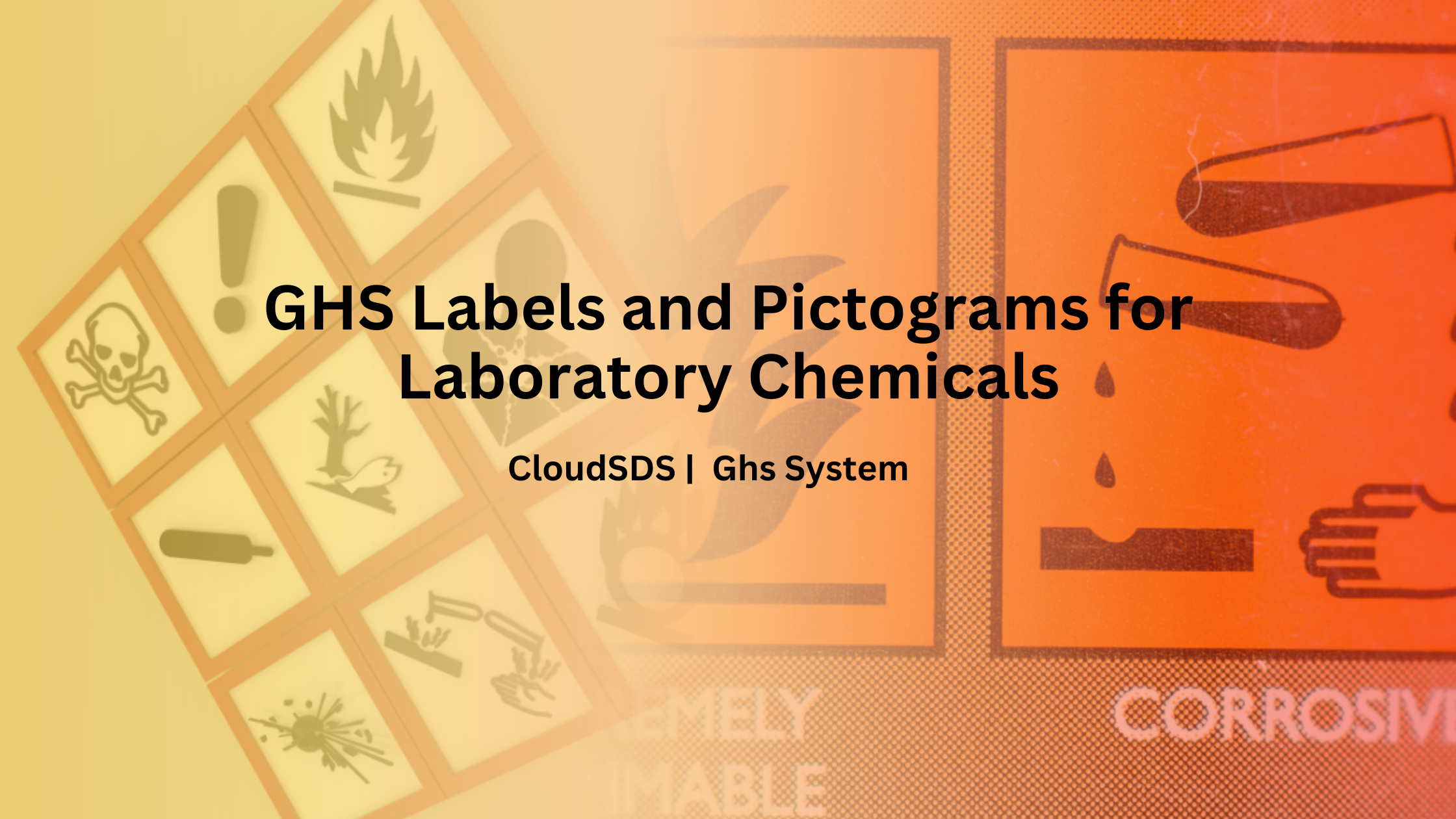
GHS utilizes nine standardized pictograms, each appearing as a black symbol within a red-bordered diamond on a white background. These pictograms are categorized into three groups based on the type of hazard they represent: physical hazards, health hazards, and environmental hazards.
1. Physical Hazard Pictograms
Physical hazards represent characteristics that can put both property and human safety at risk through mechanical or chemical reactions.
| Pictogram Code
|
Symbol Name
|
Represents
|
Chemical Classes
|
| GHS01 | Bomb/Explosive | Unstable and explosive substances | Explosives, Self-reactive substances, Organic peroxides |
| GHS03 | Flame Over Circle | Oxidizing materials | Oxidizing gases, liquids, and solids that intensify fires
|
| GHS04 | Gas Cylinder | Gases under pressure | Compressed, liquefied, or dissolved gases that may explode if heated |
| GHS02 | Flame | Flammable materials | Flammable gases, liquids, solids, aerosols, self-reactive and self-heating substances |
| GHS05 | Corrosion | Corrosive substances | Skin corrosion/burns, eye damage, corrosive to metals |
Corrosive pictogram details: The corrosion symbol depicts both a hand and a surface being damaged, as it covers both physical and health hazard classes. This pictogram indicates substances that eat away at materials upon contact.
2. Health Hazard Pictograms
Health hazards warn about substances that pose risks to human health through acute (immediate) or chronic (long-term) exposure.
| Pictogram Code | Symbol Name | Represents | Key Health Effects |
| GHS06 | Skull and Crossbones | Acute Toxicity | Fatal or toxic through ingestion, inhalation, or skin contact; highest severity level |
| GHS07 | Exclamation Mark | Harmful/Irritant | Skin/eye irritation, respiratory issues, less severe acute toxicity effects |
| GHS08 | Health Hazard | Serious Long-term Health Effects | Carcinogens, respiratory sensitizers, reproductive toxicants, organ damage, mutagenic substances, aspiration toxicity |
Health hazard pictogram description: The health hazard symbol features a silhouette of a person's head and torso with a white star shape spreading through the chest area, indicating potential for serious systemic damage.
The toxic symbol (skull and crossbones) represents chemicals with the highest levels of acute toxicity—those with immediate and severe, potentially lethal effects on human health. Exposure may occur through inhalation, ingestion, or skin contact, depending on the specific chemical.
The harmful symbol (exclamation mark) indicates substances causing less severe health effects that set in quickly. This includes irritants and lower-category acute toxins.
The health hazard symbol warns of long-term health threats without immediate effects, encompassing carcinogens, reproductive toxins, sensitizers, and organ-damaging substances.
3. Environmental Hazard Pictogram
| Pictogram Code | Symbol Name | Represents |
| GHS09 | Environment | Aquatic toxicity, ozone layer depletion |
The environmental pictogram alerts handlers to substances that pose risks to aquatic ecosystems or contribute to ozone layer depletion.
GHS Hazard Classification System
The GHS classifies chemical hazards into three overarching categories, further divided into specific classes and categories to describe both the nature and severity of risks.
Three Overarching Hazard Types:
- Health Hazards – Ten classes including acute toxicity, skin/eye damage, sensitization, mutagenicity, carcinogenicity, reproductive toxicity, and organ toxicity
- Physical Hazards – Eighteen classes including explosives, flammable materials, oxidizing substances, and gases under pressure
- Environmental Hazards – Two classes covering aquatic toxicity and ozone layer effects
Within each hazard class, categories rank the severity of danger. Category 1 always represents the most severe hazard, with higher numbers indicating decreasing hazard severity. This ranking system helps laboratories prioritize precautions based on chemical danger levels.
Label Elements and Signal Words
Signal words serve as the first line of communication regarding hazard severity:
- "Danger" – Used for the most severe hazard categories to command immediate attention
- "Warning" – Used for less severe categories to alert users to potential risks
These signal words, combined with pictograms, immediately communicate the relative severity of hazards without requiring detailed text reading.
Laboratory Application and Best Practices
For laboratory environments, effective GHS label implementation requires more than simply displaying the label. Laboratory personnel should follow a two-step safety approach:
Step 1: Hazard Awareness – Before handling any chemical, review the complete GHS label and corresponding Safety Data Sheet (SDS) to understand all associated hazards, proper handling procedures, and first-aid measures. Identify the pictograms present and understand what they indicate about the chemical's properties.
Step 2: Risk Mitigation – Establish lab protocols that minimize the likelihood of incidents:
- Determine appropriate Personal Protective Equipment (PPE) based on label and SDS requirements
- Identify emergency equipment locations (fire extinguishers, spill kits, first-aid stations) before beginning work
- Store incompatible materials separately to prevent dangerous reactions
- Maintain clear pathways to emergency exits
- Segregate and properly store waste in appropriate containers after experiments
Importance of Compliance and Safety Data Sheets
While GHS labels provide essential hazard information on container labels, Safety Data Sheets (SDS) contain more comprehensive details. According to regulations, if a chemical contains more than one hazard, appropriate hazard statements must be included on the label for each hazard.
Labels must meet specific readability requirements, using font sizes that do not normally require corrective glasses, and must be maintained in good condition. Additionally, labels must be updated within 180 days of the supplier becoming aware of new product information.
Conclusion
GHS labels and pictograms represent a unified international approach to chemical hazard communication that protects laboratory workers, the public, and the environment. By understanding the nine pictograms, recognizing signal words, and consulting accompanying documentation, laboratory professionals can make informed decisions about chemical handling and safety. The standardized nature of GHS across different countries and industries makes it an invaluable tool for anyone working with hazardous chemicals, ensuring that critical safety information is immediately recognizable regardless of language or background.
Simplify Your SDS Management
CloudSDS gives your team instant access to 23M+ safety data sheets with AI-powered search, automated updates, and full OSHA/GHS compliance — all from one platform.
Leave A Comment