
Last Updated on February 19, 2026
Do you think biohazard labeling is just a minor detail? Think again! Mastering the correct use of biohazard symbols, whether it is precise placement or strict compliance rules, goes beyond being just a good practice. It is a rather critical legal and safety imperative that ensures rapid responses and escalates any hazardous incident recovery.
These universally recognized warning signs demand more than just a passing glance. The signs require meticulous adherence to federal, state, and local regulations. A single sign covers everything, such as:
- Appropriate quantity and color
- The exact placement of containers
- Essential equipment
- Waste receptacles
Mislabeling or non-compliance cannot go away as a mere oversight, as it exponentially increases the following:
- Risk of accidental exposure
- Severely compromise workplace safety protocols.
- And can lead to hefty fines
For all personnel, handling potentially infectious materials can be harmful due to exposure. Ultimately, understanding and implementing the following guidelines is not optional. Consider these recommendations as the bedrock of a safe and compliant environment for you and your employees to work.
Accurate Ways to Biohazard Symbols: Efficient Labeling & Compliance Rules
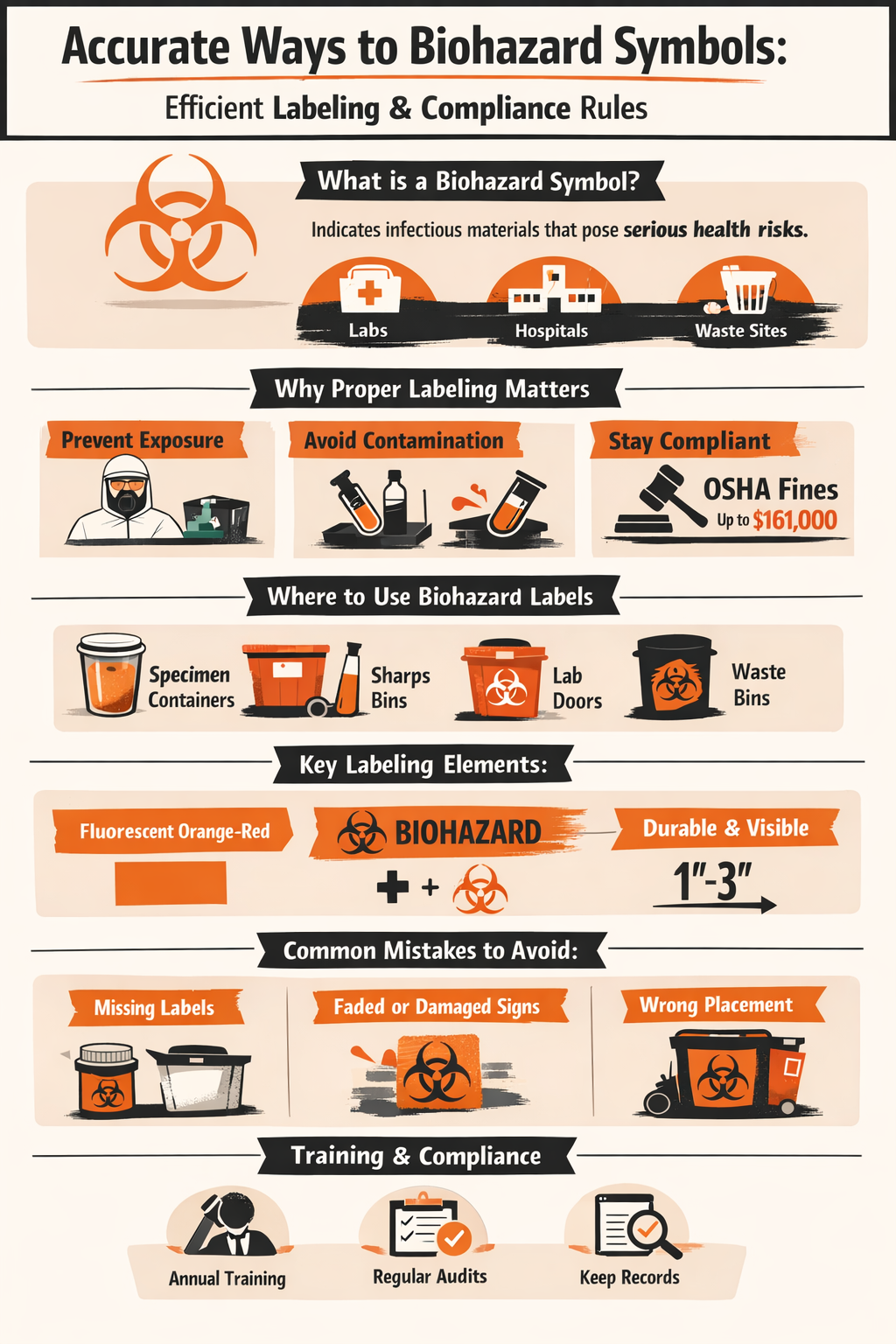
If you want your employees to be safe, then biohazard symbols are essential. These are warnings about infectious materials in workplaces, including labs and healthcare facilities. Proper use ensures safety and meets OSHA standards; read on for better insight.
What Does a Biohazard Symbol Mean?
The biohazard logo, which is often called the trefoil symbol, is a worldwide picture that warns people about the presence of biological elements that could be infectious. The CDC and NIH came up with this design in 1974. It has three circles inside a bigger circle, which looks like interlocking trefoils. Its main goal is to show that there is an urgent danger without using words so that people all around the world may understand it in dangerous places, such as:
- Labs
- Hospitals
- Waste factories
This symbol means that being around it could lead to infection, disease transmission, or pollution, so people should wear PPE and follow isolation rules.
What Does the Biohazard Sign Say About Staying Away from the Chemical?
The emblem tells you not to touch things that may contain harmful biological agents, either directly or indirectly. It warns of dangers from living things that make poisons, such as:
- Bacteria (like E. coli O157:H7)
- Viruses (like HIV and hepatitis B)
- Fungus
- Parasites
- Toxins
In real life, it stops people from mishandling things like blood-soaked bandages or culture material, where even a slight drop could make the hazards airborne. If you see this flag, it means “don’t touch” anything that could get through skin, mucous membranes, or breathing passages.
Several Sorts of Biological Risks and Their Symbols
The CDC has divided biohazard symbols into four Biosafety Levels (BSL-1 to BSL-4) based on the level of risk they pose. BSL-1 is for microorganisms that aren’t dangerous, like non-pathogenic E. coli. Salmonella is classified as a moderately dangerous microbe. BSL-4 is for exotic agents, like Ebola.
Why Is Correct Biohazard Labeling Critical?
-
Protecting Workers from Biological Exposure
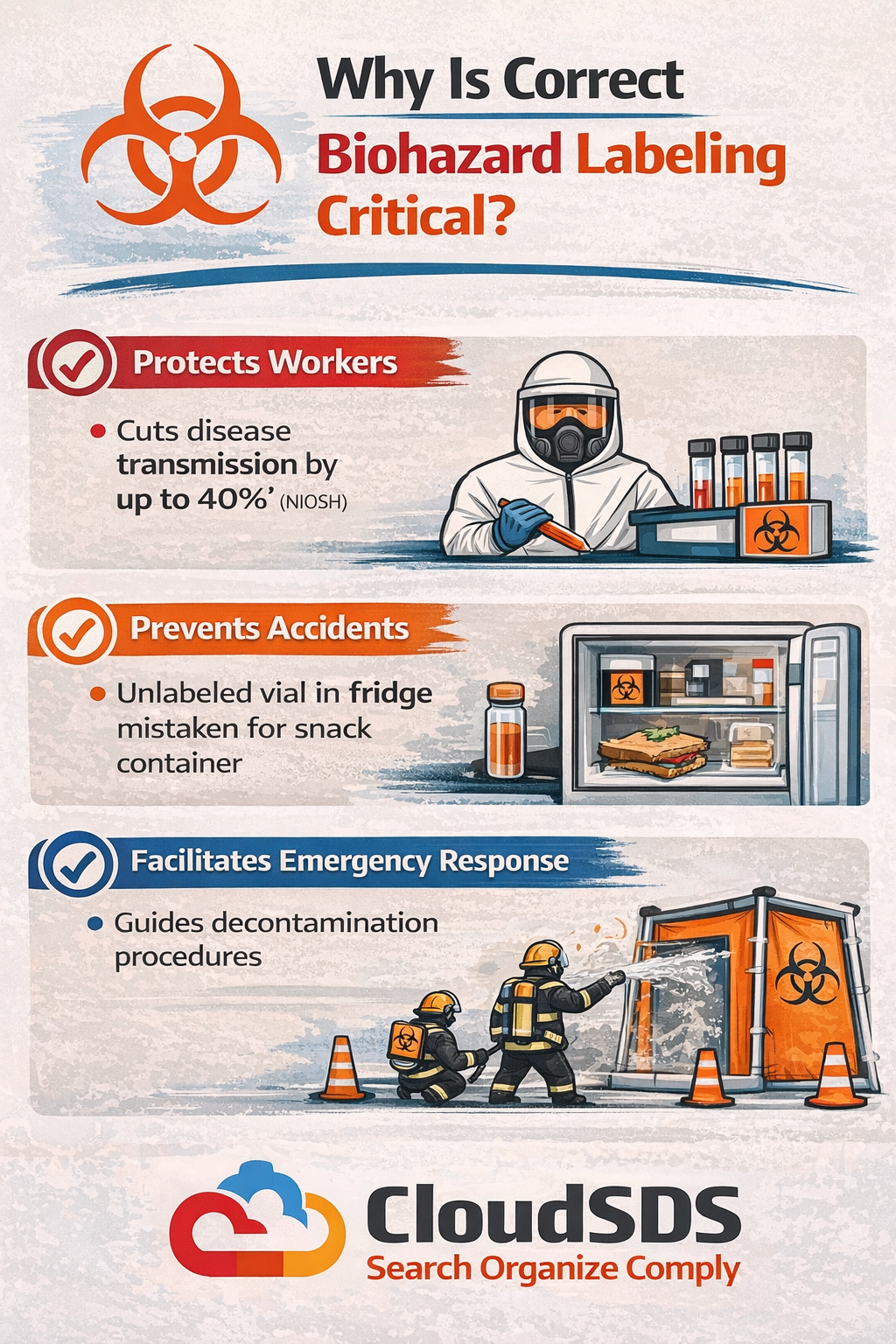
Accurate labeling shields employees by providing instant visual cues to avoid exposure to routes like percutaneous injury or inhalation. In a 2023 OSHA case study, a lab worker avoided getting hepatitis C after seeing a faded biohazard sticker on a pipette tip box. This made them wear gloves and autoclave the box. According to NIOSH research, using the right symbols with PPE hierarchy can cut incident rates by as much as 40% in compliance operations.
-
Preventing Accidental Handling and Contamination
Mislabeling turns routine tasks into contamination events, spreading pathogens via fomites (inanimate objects). For instance, an unlabeled fridge vial might be mistaken for a snack container, causing cross-contamination. Symbols enforce the “handle with care” mindset, minimizing secondary exposures in shared workspaces.
-
Role of Symbols in Emergency Response and Waste Management
Biohazard symbols help first responders segregate areas and use the right decontamination techniques after spills or evacuations. They make sure that incineration or autoclaving is used instead of landfills in waste streams, as required by EPA rules. Firefighters, for instance, use these signs to set up decon zones in order to stop breakouts from spreading across the neighborhood.
Who Oversees How the Biohazard Symbol Is Used?
-
OSHA’s Jurisdiction to Mark Things at Work
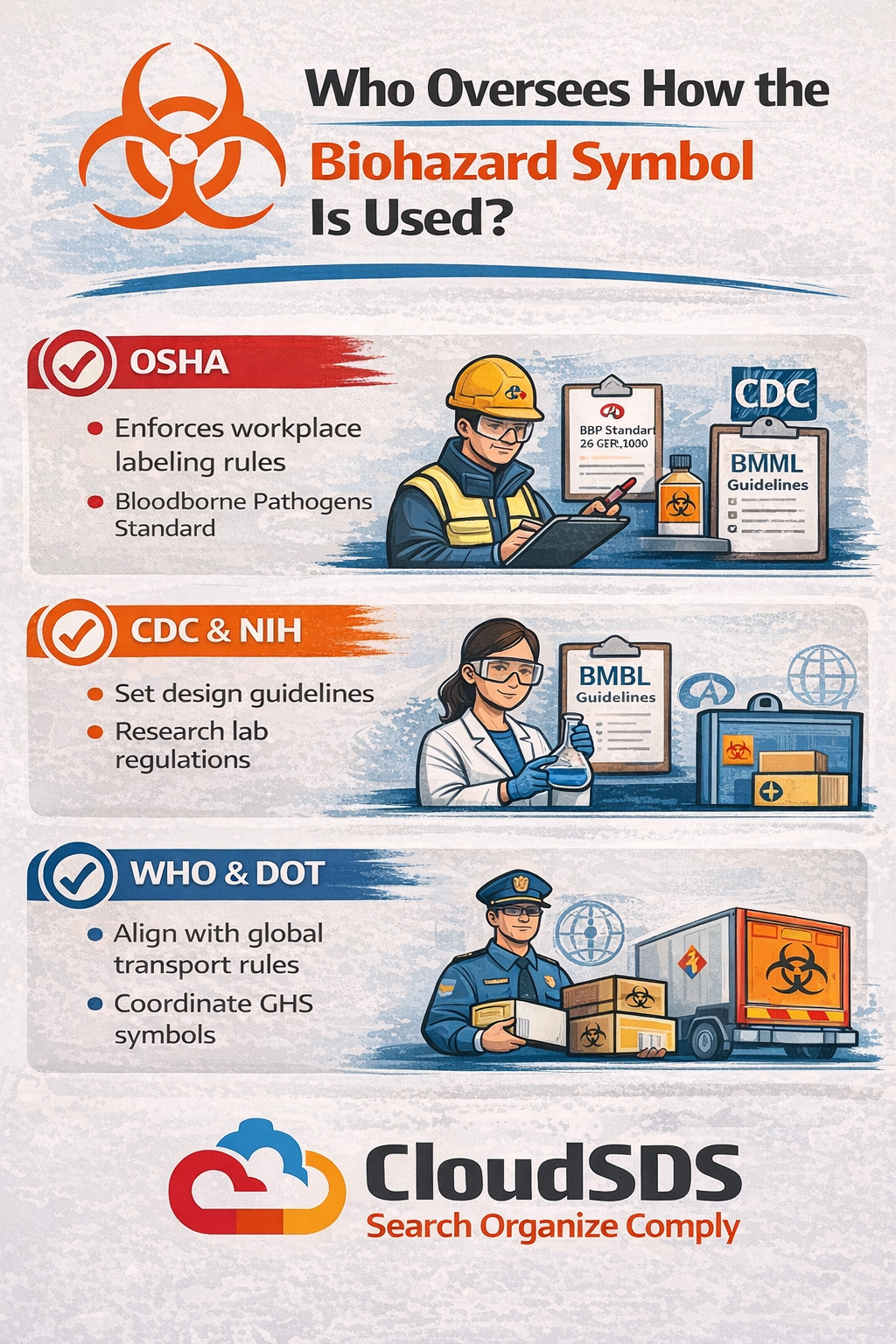
The Bloodborne Pathogens (BBP) Standard (29 CFR 1910.1030) requires symbols on regulated waste and infectious products to show that they are biohazardous. The agency does inspections, gives out tickets, and gives out free tools to help people follow the rules on OSHA’s official website.
-
What the CDC, NIH, and Other Agencies Do
The Biosafety in Microbiological and Biomedical Laboratories (BMBL) document from the CDC sets design requirements. The NIH, on the other hand, sets rules for research labs through its P3CO policy. WHO coordinates symbols with UN Model Regulations around the world, and DOT is in charge of transportation. In West Bengal, India, the Biomedical Waste Management Rules 2016 (amended 2019) are similar to these rules because they follow CPCB principles.
-
How Biohazard Signs Are Used in Legislation about Communicating Hazards
Biohazard symbols are part of OSHA’s Hazard Communication Standard (HazCom, 29 CFR 1910.1200), which says that biologicals are “hazards” much like chemicals. GHS makes sure that SDSs include biohazard information for companies that do business in more than one country, like REACH or WHMIS.
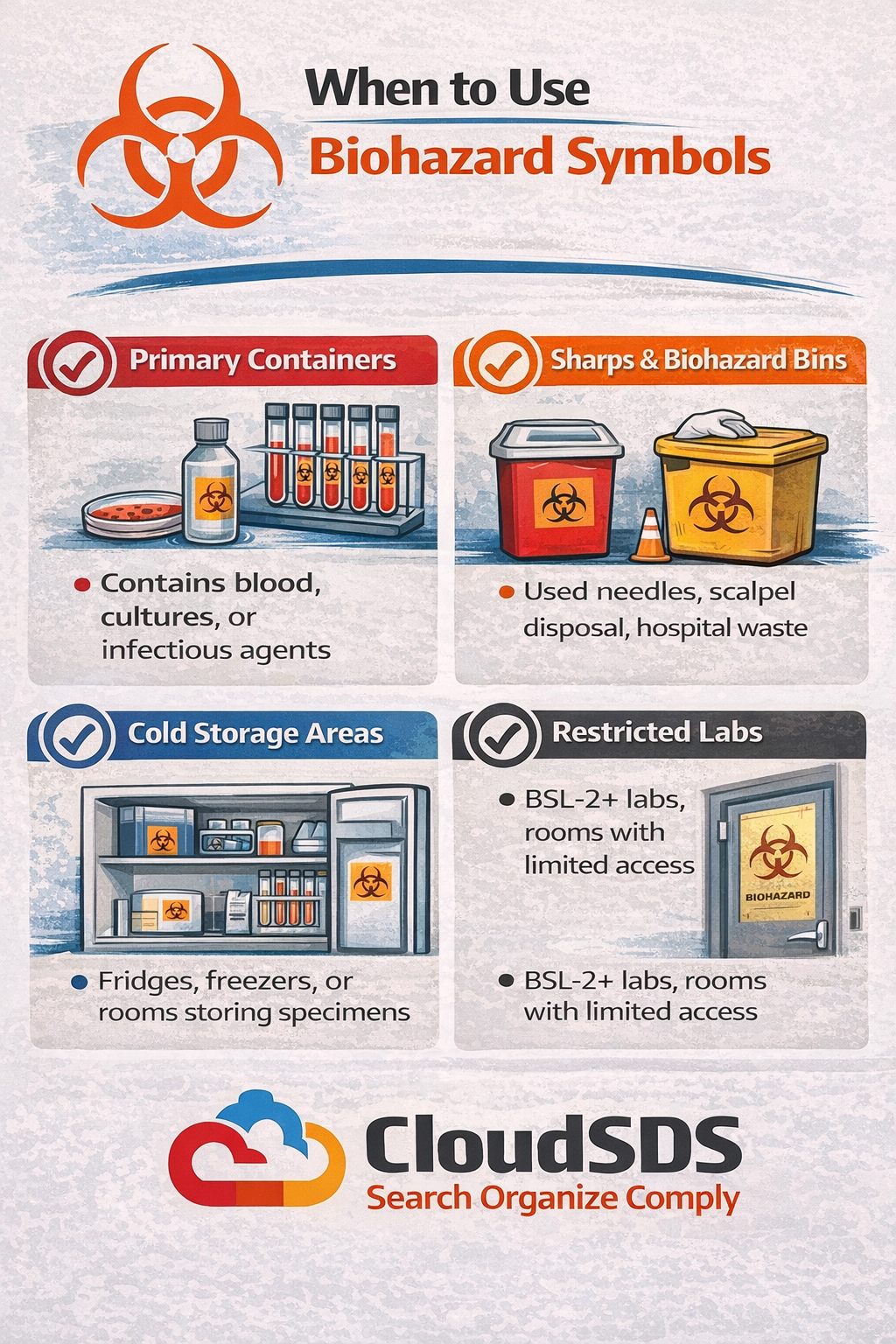
When to Use Biohazard Symbols
-
Containers That House Dangerous Biological Compounds
OSHA BBP says that any main container that holds blood, body fluids, or cultures needs this mark. Examples include test tubes with patient samples or flasks of viral media, which can be affixed directly or via tape.
-
Sharps Containers and Biomedical Waste Bins
Puncture-proof sharps bins and red biohazard bags must bear the symbol prominently. OSHA mandates this for needles, scalpels, and soiled linens to prevent “sharps injuries,” which account for 80% of BBP exposures.
-
Refrigerators, Freezers, and Storage Areas
Label doors and shelves storing biologics, even if empty, with “BIOHAZARD” text. A common setup: magnetic symbols on lab fridges holding serum aliquots.
-
Laboratory Doors and Restricted-access Areas
Post symbols on entry doors to BSL-2+ labs, signaling PPE requirements. Restricted zones like vivariums use them alongside access controls.
Biohazard Labeling Requirements Under OSHA
-
Bloodborne Pathogens Standard Labeling Expectations
OSHA 1910.1030(g)(1) requires a fluorescent orange-red trefoil on red backgrounds or labels for regulated waste, blood products, and contaminated equipment. Exemptions apply to multi-colored sharps containers if the symbol is visible.
-
When Labels are Mandatory vs. Optional
Mandatory for anything with “reasonable potential” for exposure (e.g., HIV+ blood). Optional for decontaminated items or research lab cultures if risks are documented low. Always label if waste leaves the facility.
-
Label Durability, Visibility, and Legibility Rules
Labels must withstand moisture, chemicals, and autoclaving; use vinyl or polyester. Visibility demands high contrast from 5 feet in normal lighting, with sans-serif “BIOHAZARD” text at least 1 inch high.
Biohazard Symbol Design Standards
-
Color Requirements
Fluorescent orange-red ensures daytime/nighttime visibility; Pantone 151 or equivalent. Red backgrounds for bags/bins amplify contrast.
-
Contrast and Background Visibility
For non-red surfaces, use black outlines on white or yellow, and steer clear of glossy finishes that reflect light. Test under 100 lux for legibility.
-
Size and Placement Considerations
For small containers, the minimum diameter should be 1 inch, while for doors or bins, it should be 3 inches. Place at eye level or on lid fronts, with multiples on large surfaces.
Biohazard Symbols vs Other Hazard Symbols
-
Biohazard vs. Chemical Hazard Symbols
Biohazards use the trefoil for infectivity; chemical GHS diamonds depict flames or skulls for corrosives/toxics. Never interchange—biohazards imply contagion, not just toxicity.
-
When Multiple Hazard Symbols are Required
Mixed hazards (e.g., ethanol-fixed tissues) need biohazard and flammable pictograms. Cluster on one label per HazCom.
-
Avoiding Symbol Confusion in Mixed-Hazard Environments
Use zoning: biohazard zones separate from chem stores. Color-code floors (red for bio) and train via mock drills.
Employer Responsibilities for Biohazard Labeling
-
Labeling Workplace Containers
Employers ensure all primary containers of biohazards are labeled with compliant warning labels, often procured from suppliers like Brady or Uline, which offer OSHA-compliant self-sticking vinyl biohazard labels. While OSHA does not explicitly require daily checks, regular inspections are a best practice under the exposure control plan to verify labels remain intact and legible during handling and storage. Red bags or containers can substitute for labels in some cases, such as laundry or internal transport.
-
Secondary Container Labeling
Secondary containers, like portable blood bags, must be labeled with the biohazard symbol if the primary is contaminated or for shipping/transport outside the facility; they mirror primary labels to communicate hazards such as product identifiers and general warnings. Labels on temporary containers (like secondary blood bags) can be taken off after they have been cleaned, since OSHA rules allow this for uncontaminated containers that are clearly identified as specimens following universal precautions. Puncture-resistant secondary containers are required if a leakage or puncture risk exists.
-
Training Employees on Symbols
Employers must give their workers annual training (or more often if things change) on how to recognize the biohazard emblem, what it means, and the risks that come with it. This can be done through OSHA’s Bloodborne Pathogens training materials and model programs. Training includes exercises that include exposure, reading labels, and taking safety measures, including wearing PPE. This makes sure that staff know what the universal symbol means and how it helps keep people from getting sick.
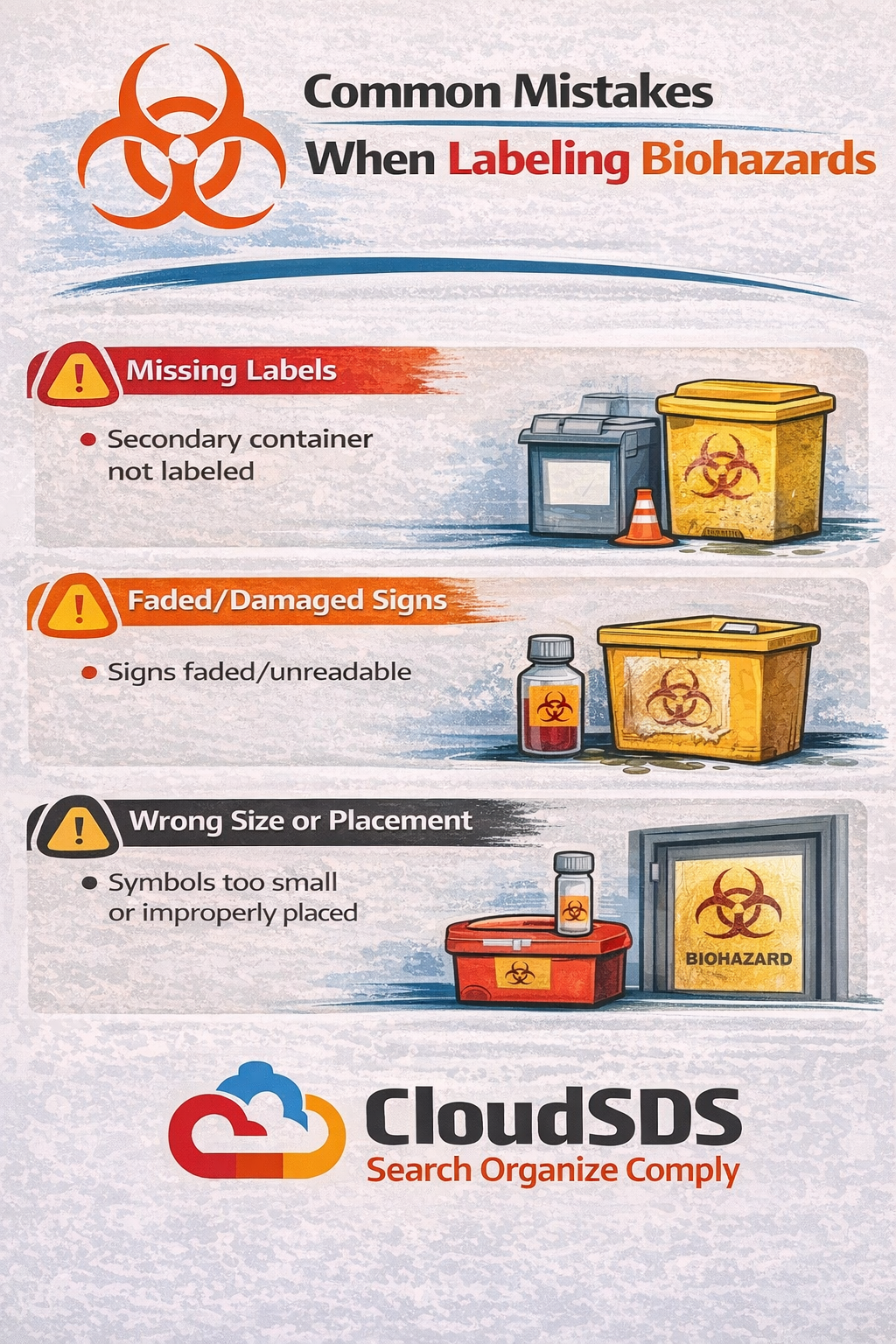
Common Mistakes When Labeling Biohazards
-
Missing Secondary Labels
During transfers, secondary containers often don’t have labels because workers think that the primary labels are enough. This leads to violations of hazard communication, which is a top category for OSHA citations, with over 3,000 cases each year. However, biohazard-specific data shows that secondary issues occur in about 20–30% of bloodborne inspections based on aggregated trends. This could lead to people handling OPIM like blood bags without knowing it.
-
Faded or Damaged Signs
Ink on labels fades when exposed to UV radiation, moisture, or abrasion, making symbols hard to read. OSHA says that warnings must always be visible, and they should be replaced every three months in outdoor or high-traffic areas. During walkthroughs, damaged labeling on fridges or trash cans can lead to citations.
-
Wrong Size or Placement
Putting symbols on the bottoms of containers or utilizing ones that are less than an inch tall breaks the regulations for visibility. The biohazard symbol must be easy to see (usually 1 to 3 inches) and on accessible sides. If inspectors see that sharps or equipment are not in the right place, they can fine the company.
-
Using Symbols Wrong
Putting biohazard symbols on clean places or containers that don’t hold OPIM waste is confusing and makes it harder to recognize hazards. This goes against OSHA’s rules for marking only regulated trash. Over-labeling clean tools teaches staff poorly, which makes universal precautions less effective.
Training Requirements Related to Biohazard Symbols
-
Understanding Employee Labels
Training must cover biohazard symbols (such as neon orange with a trefoil), how to use them on containers and freezers, and how to recognize them in order to enforce universal precautions. Verification after training makes sure that people understand, usually through exams in programs like OSHA model training, which show that workers can find and deal with dangers that are listed.
-
How And When to Keep Records
At first, training is required once a year, and then every year after that, or sooner if procedures change or new risks come up. Records must include dates, material, trainers, and attendance records, which can be logged in EHS LMS platforms like CloudSDS for audit trails. Roles that are high-risk may need more frequent refreshers, and OSHA inspections can see the records.
-
Training Based on Role
Make content specific to each role: lab technologists get hands-on training in how to handle identified biohazards and clean them up, while managers focus on audits, compliance oversight, and planning for controlling exposure. Specialized training for HIV/HBV lab personnel includes things that are specific to the institution in addition to regular sessions.
Biohazard Labeling During Transport and Disposal
Biohazard labeling makes sure that the items are safe to handle while being moved and thrown away, so they don’t meet bloodborne pathogens or DOT transport standards. The BMW Rules for biomedical waste in India and other countries are examples of worldwide rules that proper practices follow.
-
Labeling Containers for Waste
The Department of Transportation (DOT) calls biohazardous material “Regulated Medical Waste” (UN3291). This means that packages must have special markings and the biohazard sign must be on shipping manifests and exterior containers. Labels must stay clear and easy to read, and they should often have GHS-compliant hazard warnings for shipping around the world.
-
Labeling for Waste Containers
For flexible garbage, double bag it with biohazard symbols facing out on both bags to make sure it doesn’t get punctured. For sharps, you must use hard, leak-proof crates that are clearly labeled on all sides. Use supplementary containment to keep cargo in vehicles from spilling while they are being moved.
-
Following the Disposal Regulations
Make sure that labeling follows state-specific standards. For example, India’s Biomedical Waste Management standards 2016 say that bags must be color-coded (red/yellow for biohazards) and manifests must be tracked from the generator to the TSDF. Check the hauler’s credentials and get signed manifests that show that the waste was properly burned or autoclaved at permitted facilities.
Consequences of Improper Biohazard Labeling
-
OSHA Fines and Citations
Under 29 CFR 1910.1030, OSHA gives citations for containers that aren’t labeled. In 2026, the fine for significant infractions will be $16,131 per incident (adjusted for inflation), and it will go up to $161,323 for willful or recurrent crimes. Every year, more than 3,000 hazard communication violations are issued for things like failing to mark biohazards, which adds to what inspectors find.
-
Risks of Exposure and Infection
Unlabeled sharps and secondary containers increase the risk of needlestick injuries. The CDC says that from 2019 to 2023, there were about 385,000 healthcare exposures in the US that were due to inadequate labeling and handling. This increases the chance of infection from viruses like HBV and HIV, putting a load on workplace health programs.
-
Legal and Responsibility Problems
Mislabeling can lead to lawsuits, including settlements of millions of dollars (for example, $10 million or more in well-known healthcare cases) for negligence under premises of liability. Employers in high-risk fields like labs are more likely to get workers’ comp claims, lawsuits from third parties, and damage to their reputation.
Best Ways to Follow the Biohazard Symbol
Following best practices for biohazard sign compliance lowers hazards and makes sure that you are following the Bloodborne Pathogens Standard set by OSHA. They use audits, policies, and digital technologies to manage EHS in a proactive way.
-
Regular Audits
Use standard checklists to check the visibility, positioning, and condition of labels on all containers and equipment once a month. Keep track of trends and avoid getting penalties during OSHA inspections by writing your findings in logs.
-
Policies for All
Make standard operating procedures (SOPs) that say what the labels should look like (for example, biohazard symbols at least 1 inch high on orange backgrounds) and connect them to the way you manage SDS. Use digital templates from companies like Brady or Uline to make sure that all sites are the same.
-
Training and SDS Integration
Add symbol recognition to your yearly training and connect physical labels to digital SDS through technologies like CloudSDS. This will let you see hazards and take quizzes right away. This makes compliance easy, which cuts down on mistakes in high-risk jobs like moving things between labs.
Simplify Your SDS Management
CloudSDS gives your team instant access to 23M+ safety data sheets with AI-powered search, automated updates, and full OSHA/GHS compliance — all from one platform.
Leave A Comment