
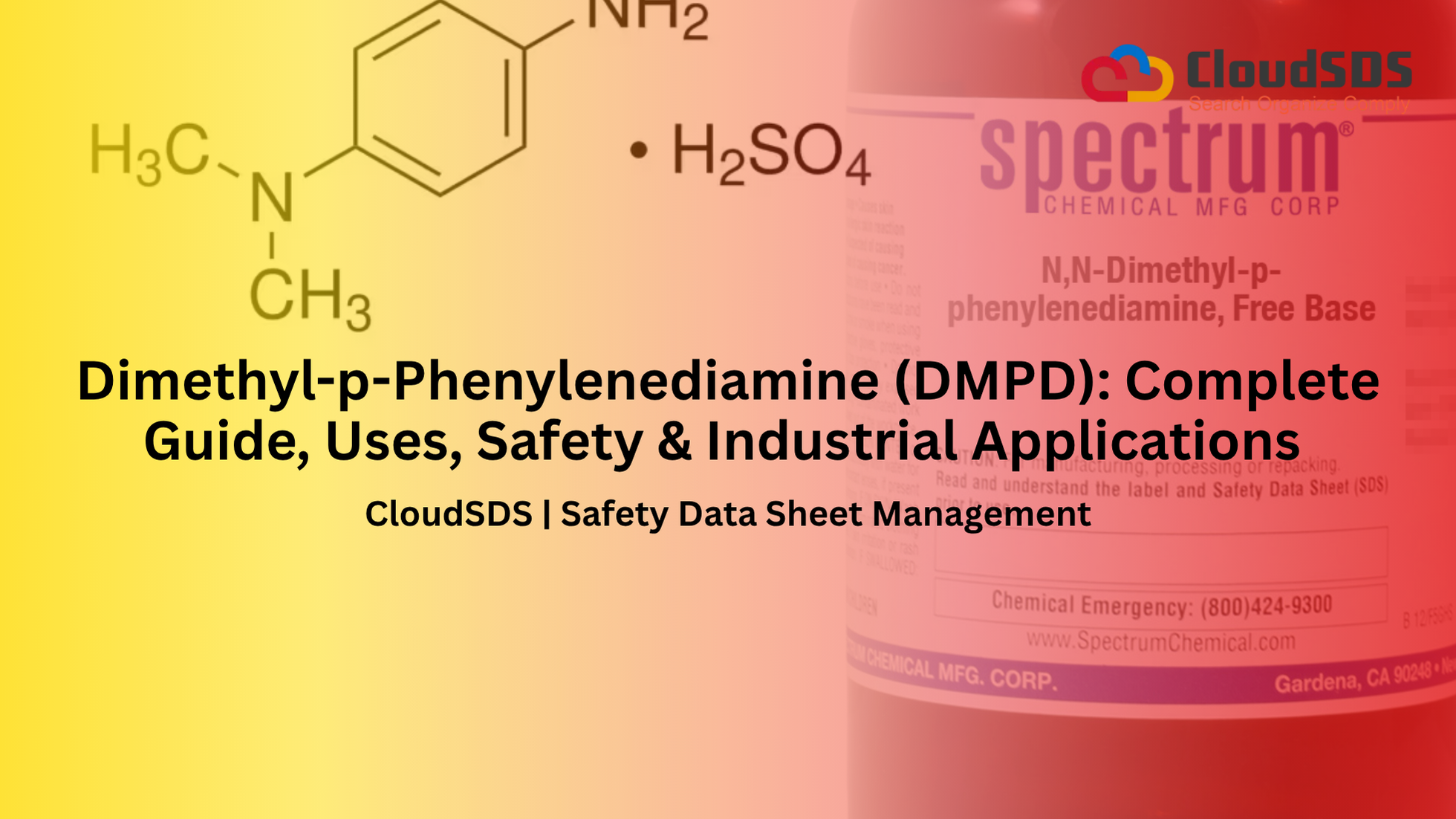
Dimethyl-p-phenylenediamine, also known as N, N-dimethyl-p-phenylenediamine, is a versatile aromatic amine compound that has several important uses, particularly in chemical analysis, colorant synthesis, and various industrial processes. This extensive resource provides information on the properties, uses, safety guidelines, legal guidelines, and a step-by-step procedure for conducting a dimethyl-p-phenylenediamine-based chloramine test, specifically for EHS practitioners who handle chemicals in a work environment. This resource combines protocols with risk management guidelines to assist in compliance, training, and handling in an industrial hygiene and/or water treatment context.

Dimethyl-p-Phenylenediamine (DMPD): Chemical Properties
DMPD, with the molecular formula C₈H₁₂N₂ and CAS number 99-98-9, appears as a colorless to reddish-violet solid at room temperature. It serves as a key intermediate due to its ability to form stable radical cations upon oxidation, which underpins many analytical techniques.
Key physical and chemical characteristics include the following:
| Property | Details |
| Molecular Weight | 136.19 g/mol |
| Melting Point | Approximately 54-58°C |
| Boiling Point | Around 290°C |
| Solubility | Soluble in water, ethanol, and organic solvents |
| Appearance | Solid, colorless to reddish violet |
| pH Reaction | Neutralizes acids exothermically to form salts |
DMPD is reactive with strong oxidizers, acids, and certain organic compounds such as isocyanates and peroxides, which can react to produce flammable hydrogen gas with reducing materials. Its dihydrochloride salt, with the CAS number 536-46-9, is used in its hydrated form for greater stability in the lab.
In the presence of oxidizing agents, the compound rapidly generates its characteristic radical cation with a 505 nm absorption band, making it useful for spectrophotometric assays without interference from storage conditions such as freezing.
Production Methods
The industrial synthesis of DMPD generally involves the nitration of toluene, reduction, and methylation, although this may vary from supplier to supplier. It is available from commercial sources such as Sigma-Aldrich at a purity level of more than 97%, which is in a solid state for accurate handling.
Common production considerations for EHS managers:
- Raw Materials: p-nitroaniline derivatives, reducing agents such as hydrogen, and iron catalysts.
- Process Hazards: Possibility of exothermic reactions in methylation and release of nitrogen oxides in thermal decomposition.
- Yield Optimization: Cyclovoltammetric monitoring maximizes purity by monitoring varying oxidation potentials at different pH levels.
The scalable synthesis focuses on a closed system to avoid exposure, following guidelines set by OSHA and EPA for handling aromatic amines.
Primary Uses
DMPD has significant potential for use outside of dyes, particularly in analytical chemistry for the identification of oxidative stress.
Dye and Intermediate Production
DMPD is a precursor to producing methylene blue dyes. The use of DMPD in dye synthesis is related to the para-substituted amine group.
Analytical Reagent
DMPD is used in water quality testing for the identification of chloramines through a colorimetric test. It is also used in the identification of iron(III) through H₂O₂.
Safety Data Sheet (SDS) Overview
DMPD handling requires strict adherence to GHS classification, particularly for its irritant and toxic properties.
Health Hazards
Dye and intermediate production: DMPP causes irritation of the skin, eyes, and respiratory system. The lowest toxic dose for the skin is 14 mg/kg. DMPD causes sensitization through inhalation or dermal exposure, which can cause methemoglobinemia through the oxidation of aromatic amines.
| Hazard Category | GHS Pictogram | Effects |
| Acute Toxicity (Oral/Dermal) | Skull and Crossbones | Harmful if swallowed; LD50 ~500 mg/kg (estimated rodent data). |
| Skin/Eye Irritation | Exclamation Mark | Redness, pain, Category 2 irritant |
| Specific Target Organ Toxicity | Health Hazard | Respiratory irritation, potential blood effects |
Prolonged contact links to allergic dermatitis; monitor via biomonitoring for aromatic amines per NIOSH guidelines. No rapid air/water reactions occur, but decomposition yields NOx fumes.
Handling and Storage Protocols
Safe management follows these industrial hygiene best practices:
PPE Requirements:
- Nitrile gloves (double-layered for extended contact).
- Safety goggles or face shields.
- Respirators with organic vapor cartridges (NIOSH-approved).
Storage Guidelines:
- Cool, dry, well-ventilated areas away from oxidizers and acids.
- Use secondary containment and label according to OSHA 1910.1200.
- Shelf life: Stable if protected from light/moisture.
Spill Response:
- Evacuate area; ventilate.
- Absorb with vermiculite; neutralize residues.
- Dispose of hazardous waste (RCRA code varies; verify local regs).
Fire and Reactivity Hazards
DMPD poses low fire risk but emits toxic NOx upon heating. NFPA 704 ratings are generally moderate (health: 2, flammability: 1, reactivity: 1). The incompatibilities include the following:
| Incompatible Material | Reaction Risk |
| Strong Oxidizers (e.g., peroxides) | Violent oxidation |
| Acids/Anhydrides | Exothermic salt formation |
| Reducing Agents (e.g., hydrides) | Flammable H₂ generation |
| Halogenated Organics | Potential instability |
Extinguishing: Use dry chemical or CO₂; avoid water streams on reactive spills.
Environmental and Regulatory Compliance
DMPD falls under EPCRA Section 313 for TRI reporting if it exceeds 10,000 pounds per year. CERCLA RQ is 10 lbs; no CAA 112(r) threshold.
| Regulation | Threshold/Action |
| OSHA PEL | Nonspecific; use ACGIH TLV for amines (~1 ppm) |
| EPA TSCA | Listed: inventory active |
| UN Number | 2811 (toxic solid, Packing Group II) |
| WGK Germany | 1 (low water hazard) |
EHS programs should integrate DMPD into chemical inventories using tools like CloudSDS for automated SDS access and role-based training.
Industrial Applications
a. Oxidative Stress Assays
DMPD’s radical cation enables the measurement of plasma antioxidant capacity, expressed as H₂O₂ equivalents (HPE). The assay resists freezing artifacts, suiting routine clinical or research labs.
b. Procedure outline:
Mix plasma with DMPD solution.
- Add Fe³⁺ catalyst; measure 505 nm absorbance.
- Correlate to oxidative status.
- Water Treatment and Chloramine Detection
Municipal facilities use DMPD for residual disinfectant monitoring, ensuring compliance with EPA drinking water standards. Sensitivity reaches microgram levels.
c. Photographic Developers
Historically in color film processing, DMPD reduces exposed silver halides, though digital shifts reduced demand.
d. Emerging Uses in Biosafety
Recent studies explore DMPD in Fe³⁺-catalyzed antioxidant scavenging assays for biohazard risk assessment, aligning with WHO/CDC exposure prevention.
Risk Assessment and Mitigation
Conduct qualitative/quantitative exposure assessments per AIHA guidelines:
| Exposure Pathway | Control Measures |
| Inhalation | Local exhaust ventilation (LEV): <1 mg/m³ airborne limit |
| Dermal | Barrier creams, daily laundering protocols |
| Ingestion | No eating/drinking in labs; training emphasis |
Training modules should cover SDS interpretation, spill drills, and emergency eyewash use, measurable via pre/post quizzes.
Transportation and Disposal
Ship as UN 2811, Class 6.1, PG II. Use DOT-approved packaging.
Disposal: Incinerate at permitted facilities (>1000°C) or treat via alkaline neutralization, confirming <1 ppm residuals pre-discharge.
Case Studies and Incidents
While no major DMPD-related incidents such as the TPC Group have been reported, similar aromatic amine exposures such as paraphenylenediamine in hair dyes demonstrate the potential for sensitization. In 2002, DMPD assays were validated for oxidative stress pathology, ensuring that misdiagnosis is not possible with the use of stable radicals.
Best Practices for EHS Managers
Dimethyl‑p‑phenylenediamine (DMPD) is a toxic aromatic amine used as a dye intermediate, redox indicator, and reagent; EHS managers must treat it as a serious health‑hazard substance under OSHA HazCom (29 CFR 1910.1200) and integrate SDS‑driven controls into digital chemical‑management platforms. Below is a concise, practice‑oriented guide tailored to your Saf‑D‑Sheet, CloudSDS‑style environment, and annual audit workflows.
1. Hazard profile and PPE strategy
Primary hazards:
- Acute toxicity if swallowed, in contact with skin, or inhaled (GHS “Danger” signal word; H300, H311, H331).
- Skin and eye irritation may occur, and significant exposure can lead to systemic effects such as methemoglobinemia or neuro-ocular injury.
PPE baseline for EHS‑managed areas:
- Wear chemical‑resistant gloves (e.g., nitrile or neoprene), a lab coat or chemical‑protective apron, and splash‑proof goggles or a face shield.
- If dust/aerosol generation is possible, add an N95 or P2‑equivalent respirator; for higher‑risk transfers, fit‑tested half‑face respirators with organic‑vapor/acid‑gas cartridges.
2. Storage and handling best practices
Storage conditions:
- Store in tightly closed containers in a cool, dry, well‑ventilated area, away from strong oxidizers, strong acids, acid anhydrides, and other incompatible materials (e.g., strong reducing agents and peroxides).
- Keep toxic materials separate from food, feed, and personal items; label shelves with “Toxic” and “Keep away from oxidizers” signs that follow NFPA-style guidelines.
Engineering and work practices:
- Use local exhaust ventilation (fume cupboards or downdraft tables) for weighing, dispensing, or repackaging.
- Prefer closed transfer systems (e.g., pumps or closed containers) over open pouring to minimize dust and vapor release.
- EHS managers should codify these in the digital SDS platform as “Control Recommendations” for each DMPD product line, visible in the chemical inventory of the facility.
3. Digital SDS platform integration (real‑time access)
Key integration actions:
- Ensure every DMPD‑containing product (including dihydrochloride salt and technical‑grade blends) has a HazCom‑2024‑compliant SDS loaded into the cloud platform, with searchable CAS 99‑98‑9 and 536‑46‑9.
- Attach SDS‑specific “Quick Cards” for each DMPD product: one-page job aids for toxicity, incompatibilities, PPE, and emergency steps (skin/eye exposure, spill).
Real‑time access design:
Link DMPD SDS entries to the facility’s chemical inventory module so that when a user scans a DMPD container barcode, the system shows the following:
- Current SDS version
- Storage location and compatible/incompatible zones
- Assigned PPE from the SDS “Exposure controls/PPE” section.
- Enable mobile-ready SDS views (tablets, BYOD) so operators can pull up DMPD controls on-site during charged transfers or sampling.
4. Employee training (29 CFR 1910.1200 alignment)
Training content structure:
- Confirm that your HazCom program explicitly lists DMPD as a covered hazardous chemical (CAS 99‑98‑9 and 536‑46‑9) and references the SDS sections 2–8 for each product.
- Cover:
- Globally Harmonized System (GHS) pictograms and hazard statements for DMPD (fatal if swallowed; toxic in contact with skin or if inhaled, serious eye irritation).
- Workplace‑specific procedures (closed transfer, spill response, and PPE donning/doffing) are aligned to SDS Section 7 (“Handling and storage”) and Section 8 (“Exposure controls/PPE”).
Practical HazCom activities for EHS managers:
- Conduct annual refresher training that includes:
- A live search of DMPD in the digital SDS platform, demonstrating how to locate first aid, incompatibilities, and required PPE.
- A short scenario (e.g., a broken vial in the lab) requires learners to pull the correct DMPD SDS, identify incompatible materials, and justify PPE and cleanup steps.
- For new users, require a digital quiz on DMPD‑specific hazards and SDS navigation, with completion tied to LMS or platform‑based access control.
5. Annual audits for storage and handling compliance
Audit checklist items (DMPD‑specific):
- Verify that all DMPD‑containing containers are:
- Properly labeled with current GHS labels (including 29 CFR 1910.1200‑aligned pictograms and hazard statements).
- Stored in designated, ventilated areas, segregated from strong oxidizers and acids, with clear compatibility signage.
- Check that:
- Local exhaust and closed‑transfer systems are operational and documented in maintenance logs.
- PPE for DMPD handling matches SDS Section 8 and is available at the point of use (e.g., gloves, goggles, respirators).
Auditing with the digital SDS platform:
- Use the platform’s chemical‑by‑location report to generate a DMPD‑only audit list (locations, quantities, and SDS revision dates).
- Tag deviations (e.g., missing SDS, expired SDS, incorrect PPE) directly in the platform and set follow-up actions with responsible EHS owners and due dates.
Step-by-Step Protocol for DMPD Chloramine Test
DMPD is an important chemical used in the colorimetric tests for chloramines, especially monochloramine (NH₂Cl), in water samples such as drinking water and wastewater. It is similar to the standard DPD procedure but is modified to suit the sensitivity of the DMPD. The DPD The The chloramine test is based on the oxidation reaction of chloramines with the DPD reagent in the presence of an iodide ion or catalyst to produce a stable magenta-colored radical cation.
It can be measured spectrophotometrically at 515 nm. It is used to measure monochloramine, which is different from free chlorine and dichloramine. It is similar to the US EPA and Standard Methods (4500-Cl G) for the measurement of the level of disinfectants in water. It is used in water treatment plants to ensure compliance with the requirements of the Safe Drinking Water Act, which specifies the level of chlorine to be less than 4 mg/L.
Required Materials
Gather these items before starting to ensure accurate, reproducible results:
- DMPD reagent: 0.1% (w/v) N,N-dimethyl-p-phenylenediamine dihydrochloride in water (stable for weeks refrigerated).
- Buffer solution: pH 6.5 phosphate buffer (0.5 M).
- Potassium iodide (KI): 0.5% solution (activator for chloramine reaction).
- Sample cells or cuvettes (10 mL glass or plastic).
- Spectrophotometer (515 nm) or color comparator disk.
- Pipettes (1-10 mL), distilled water, timer.
- Personal protective equipment (PPE): gloves, goggles, and lab coats.
| Reagent | Preparation | Storage |
| DMPD Stock | Dissolve 100 mg in 100 mL water | 4°C, dark, 1 month |
| KI Solution | 0.5 g KI in 100 mL water | Room temp, 2 weeks |
| Buffer | 6.9 g Na₂HPO₄ + 0.68 g KH₂PO₄ in 100 mL | Room temp, 6 months |
Precautions
- Test samples within 15 minutes of collection to prevent chloramine decay (half-life: hours at neutral pH).
- Avoid high manganese (>0.05 mg/L) or copper (>1 mg/L) interference; add 0.5 mL 0.25% thioacetamide to blanks for correction.
- Calibrate the spectrophotometer daily with blanks; zero with reagent water.
- Work in a fume hood if handling concentrated DMPD due to irritant vapors.
Step-by-Step Protocol
Follow this sequence precisely for monochloramine quantification (results are as mg/L as Cl₂ equivalents).
- Prepare Blank: Fill one 10 mL sample cell with reagent water (distilled/deionized). Add 0.5 mL buffer + 0.2 mL KI solution. Mix. This establishes baseline absorbance (should be <0.01 at 515 nm).
- Sample Collection: Collect a 10 mL freshwater sample in a clean cell. Avoid headspace; analyze immediately. For high chloramine (>5 mg/L), dilute 1:10 with reagent water first.
- Add Buffer and KI: To the sample cell, add 0.5 mL of phosphate buffer and 0.2 mL of KI solution. Swirl gently for 10 seconds to stabilize pH and activate the chloramine-iodide reaction.
- Add DMPD Reagent: Pipette 0.2 mL of DMPD solution into the sample cell. Start timer immediately. Mix by swirling for 20 seconds. A magenta color develops within 30 to 60 seconds if chloramines are present (intensity is proportional to concentration).
- Incubate and Read: Wait exactly 1 minute (optimal reaction time; color stable 2-5 min). Insert the spectrophotometer; read the absorbance at 515 nm. For visual comparison, use a calibrated disk in a 1 cm path length comparator within 2 minutes.
- Calculate Concentration: Use Beer’s Law: Chloramine (mg/L Cl₂) = (Abs sample – Abs blank) × F, where F = calibration factor (~20-25 L/mg-cm from standards). Or use a kit-specific curve/table.
- Cleanup: Rinse the cells three times with deionized water. Dispose of waste as halogenated organics per local regs (treat with sodium thiosulfate to neutralize).
This infographic illustrates a similar water testing workflow, emphasizing sample handling critical to DMPD chloramine accuracy.
Calibration and Quality Control
Verify method daily:
- Standards: Prepare 0.5, 1.0, and 2.0 mg/L monochloramine from fresh stock (NH₂Cl generated via dilute bleach and ammonium chloride).
- Checks: Run duplicate samples, method blank, and spiked recovery (85-115% acceptable).
- Interference Correction: Subtract manganese blank (add Na arsenite 0.1 g/L pre-DMPD).
| Control | Frequency | Acceptance Criteria |
| Blank | Each batch | <0.02 AU at 515 nm |
| Duplicate | 10% samples | ±10% RPD |
| Spike | Daily | 90-110% recovery |
| Check Std (1 mg/L) | Daily | ±0.1 mg/L |
Troubleshooting
Common issues and fixes:
- No/Low Color: Verify DMPD freshness (discard if brown); ensure sample temp is 15-25°C.
- Fading Color: Delay in reading or light exposure; complete within 5 min.
- High Blank: Contaminated reagents; prepare fresh KI (oxidizes quickly).
- Interference (e.g., color/turbidity): Use paired blank subtraction or filter sample (0.45 μm).
Conclusion
The comprehensive guide to DMPD highlights its significance for analysis and industry operations, ensuring that safety remains a priority through specific protocols and strategies. EHS professionals will find the information provided useful in planning an efficient and effective plan for hazard communication and training systems, thereby reducing hazards and ensuring a safe working environment. Updating the SDS information and testing operators is essential for best practices.
Simplify Your SDS Management
CloudSDS gives your team instant access to 23M+ safety data sheets with AI-powered search, automated updates, and full OSHA/GHS compliance — all from one platform.
Leave A Comment