
Envision a spill occurring in your warehouse. Employees are actively seeking information about chemicals. Time is of the essence, yet a binder misplaces crucial Safety Data Sheets (SDSs). This disorganization can result in accidents or worse. When a firm fails to manage SDS documents properly according to OSHA’s Hazard Communication Standard or Globally Harmonized Standard (GHS), it can lead to a fine of up to $14,502 for a single violation. This article breaks down the must-have parts of a strong SDS management system. You’ll learn how to build one that boosts safety and meets rules without hassle.
Step-by-Step Guide to Implementing an Effective SDS Management System
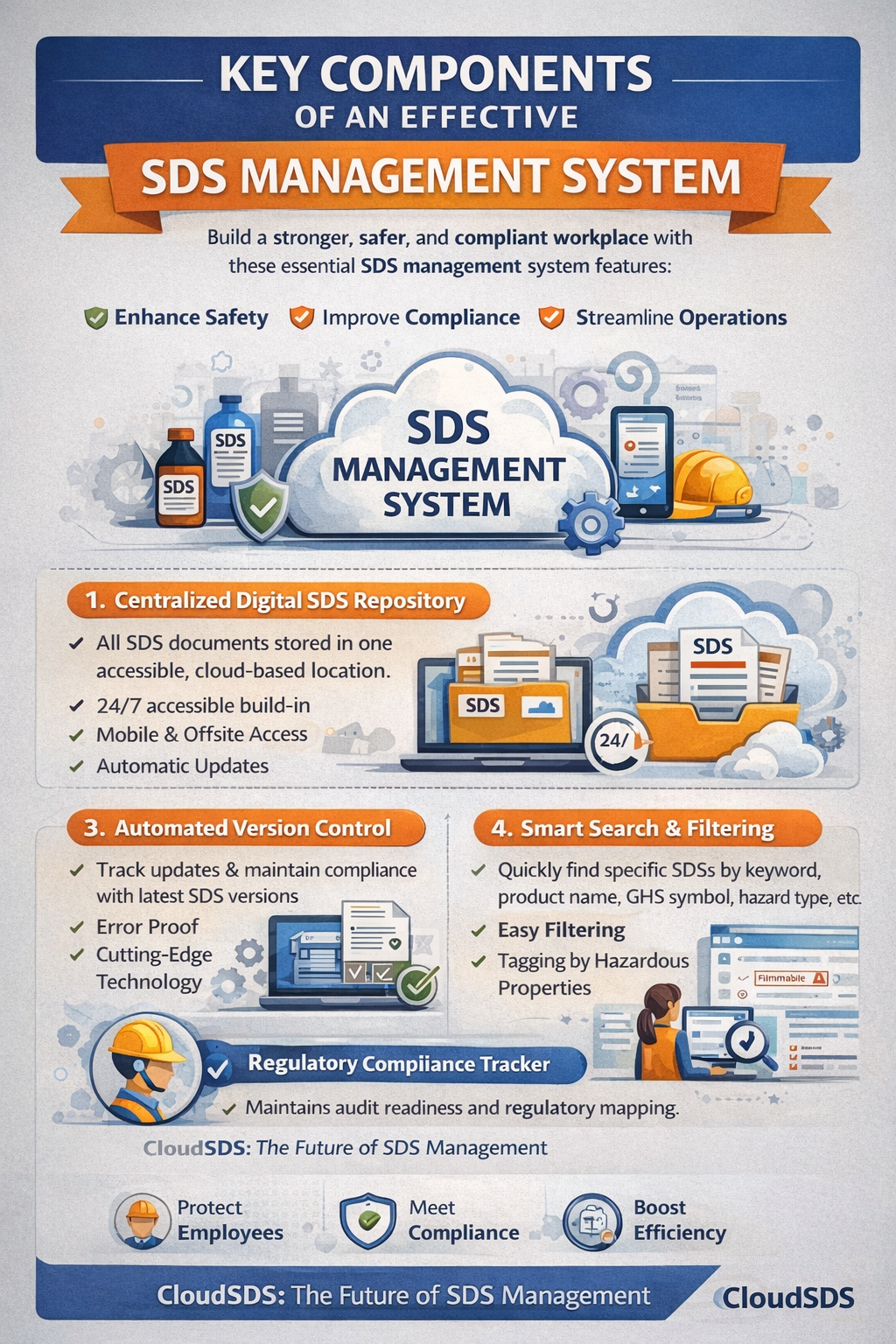
Centralized Digital SDS Repository: The Foundation of Accessibility
Ditch the old paper files and scattered folders. A central digital spot for all SDSs acts like a single hub. It keeps everything in one place, easy to reach. This setup cuts down on errors and saves time for your team.
-
Instantaneous 24/7 Accessibility
You need SDS info at your fingertips, day or night. Cloud-based tools let staff pull up documents from phones or computers, regardless of where they are. Emergency crews can access it too, even off-site. For example, a night-shift worker in a remote plant grabs the latest sheet in seconds. We should consider adding mobile apps to enhance this process. They sync updates right away, so no one waits for IT to help.
-
Automated Version Control and Updates
Old SDS versions can mislead your crew. A reliable system tracks changes and stores past ones automatically. It flags the newest, rule-compliant sheet every time. Regs demand that you use the current version, so this feature keeps you legal. Think of it as a smart filing cabinet that sorts itself. When a supplier sends a revamp, it slots in without you lifting a finger.
-
Comprehensive Search and Filtering Capabilities
Hunting for SDS during a rush? Not with smart tags. Label files by product name, hazard type, GHS symbols, or storage spot. Quick searches pull results fast, like typing “flammable liquids” to see all matches. This shines in audits or spills. Filters help narrow options, say by department or building. It turns a messy pile into a precise tool.
Advanced Hazard Communication and Training Integration
Storage alone won’t cut it. Link your SDS system to how your team uses it daily. This ties info to training and quick actions. It turns data into real protection on the job.
-
Integrated Employee Training Modules
Workers handle chemicals but forget details? Connect SDSs to training programs. Each module pulls hazard facts straight from the sheet. Pair it with a learning management system (LMS) for quizzes on specific risks. A painter learns about solvent fumes right from the SDS. This approach cuts accidents—studies show trained staff report 30% fewer incidents. You track who finishes what, proving your efforts.
-
Real-Time GHS Labeling Compliance
Labels on secondary containers must match SDS rules. Your system generates them instantly, utilizing GHS pictograms and warnings. Scan a barcode, and it spits out a compliant sticker. This avoids mix-ups with reused jugs. For instance, lab tech labels transfer acid in moments. It ensures that every bottle tells the full story of its dangers.
-
Emergency Response Protocol Linking
A spill happens. Where’s the cleanup kit? Smart SDS links jump to your site’s plans. Click on a chemical, and it shows first aid steps or the nearest eyewash station. This saves lives—response time drops by half with clear paths. Tie it to maps or videos for spill drills. Your team acts fast, not fumbling.
Regulatory Compliance Tracking and Audit Readiness
Inspections loom like surprise visits. A solid SDS system proves you’re on top of things. It logs everything, so you show compliance without sweat. No more digging through piles for proof.
-
Comprehensive Audit Trails and Logging
Who viewed the SDS on that acid? When? Why? Track it all. Logs note access times, users, and changes. This builds a clear record of your care. During an OSHA inspection please provide reports that demonstrate your diligence. Fines drop when you prove habits, not just files. Keep logs for years—it’s your shield.
-
Inventory Management Synchronization
Link SDS to your stock list. See which chemicals sit on shelves and if their sheets match. Flag old or banned items for removal. This stops hazards from lingering. A factory syncs orders to SDS updates, ditching expired paints automatically. It streamlines buys and cuts waste.
-
Regulatory Mapping and Cross-Referencing
Rules shift, like new state chem limits or REACH tweaks. Map your SDS against them. The system highlights gaps, says a California rule on toxins. Cross-verify global standards beyond basic GHS. This keeps you ahead, not scrambling. Tools alert you to change, so compliance stays fresh.
Streamlined SDS Lifecycle Management (Acquisition to Disposal)
SDS docs don’t sit still. They arrive, become used, and then are archived. Handle the full cycle smartly. This covers everything from supplier drop-off to final goodbye, requiring less work from you.
-
Automated Supplier Integration and Data Collection
Waiting for SDS by mail? Boring and slow. Hook up with suppliers via APIs. New sheets flow in as shipments arrive—no typing is needed. Big players like Dow or BASF offer these features. It spots errors early, like missing hazard info. Your stock stays current without extra steps.
-
Exception Handling for Non-Conforming SDS
Some suppliers skip the GHS format. Your system immediately flags them. It pulls the file aside for review or fixing. Maybe add pictograms yourself. This keeps junk out of your main hub. A quick dashboard shows pending ones, so you tackle them fast. There’s no compliant mess in your clean setup.
-
Secure Archival and Retention Policies
Chemicals leave, but records stay. Laws require that SDS be kept for 30 years after the last use. Lock old ones in secure storage, easy to pull later. Establish automatic retention rules to ensure nothing is deleted prematurely. Cloud backups protect against fires or hacks. Access old files for claims or audits, all tidy.
Conclusion: Achieving Proactive Safety Through Optimized SDS Management
A top SDS management system packs these parts: central storage, training tools, compliance tracks, and full life cycle tools. They boost safety by arming your team with quick info. Liability shrinks as you dodge fines and suits. Operations run smoother, with less paper chase. Compliance becomes a given, not a worry.
Don’t treat this process as a one-time solution. Please ensure your technology is updated regularly, as new regulations are introduced annually. Check tools now for gaps. Start small, like adding mobile access. Your workplace wins when safety leads. Build it right and watch risks fade.
Simplify Your SDS Management
CloudSDS gives your team instant access to 23M+ safety data sheets with AI-powered search, automated updates, and full OSHA/GHS compliance — all from one platform.
Leave A Comment