
Last Updated on March 27, 2026
GHS is a globally standardized framework. It focuses on categorization and communicating chemical hazards. It ensures workplace safety through transparent hazard communication all over the industry. The safety classification of sodium bicarbonate is defined as per the GHS (Globally Harmonized System). It is a commonly used chemical compound. It dissolves in water easily. This system supports regulatory compliance through guidelines on proper labeling, hazard identification, and documentation. According to the SDS information, sodium bicarbonate has very low potential to do harm to human health and the environment.
Definition of Sodium Bicarbonate
Sodium bicarbonate (NaHCO₃), is known as baking soda. It is a white crystalline powder and odorless. This chemical is alkaline (little bit) in nature. Chemically, it contains sodium, hydrogen, carbon, and oxygen. Usually, this chemical is efficient in buffering and neutralizing the chemical properties. This chemical dissolves in water. This chemical reacts with acids. That's why people use it to release carbon dioxide gas. That's why this chemical is essential for various chemical and industrial processes. In normal conditions, this chemical remains stable in composition and has low reactivity.
Sodium bicarbonate is used in different industries. These industries are food and beverage (as a leavening agent), pharmaceuticals (in antacids), agriculture, cleaning products, and fire extinguishers. It is also used in environmental management. In this sector, this chemical neutralizes acidic waste. This chemical is categorized as a low-hazard substance. If people use it in a normal situation, it does not harm human health or the environment under normal use. People may experience minor effects (eye or respiratory irritation) with excessive exposure. That's why it is considered safe when people follow correct handling practices.
GHS Hazard Classification of Sodium Bicarbonate (Core Section)
Is Sodium Bicarbonate Classified as Hazardous Under GHS?
The Globally Harmonized System (GHS) does not usually list sodium bicarbonate as a dangerous chemical. It doesn't meet the standards for main danger classes like acute toxicity, skin corrosion, or flammability, according to conventional classification criteria. Because it is chemically stable, doesn't react much, and is safe to use in many places, it is not considered dangerous by most regulatory bodies. Because of this, GHS doesn't usually require danger pictograms or signal words for sodium bicarbonate. This makes it easy to handle, store, and move around in the workplace.
Situational Classification
Most people think that sodium bicarbonate has low danger. But in some situations, based on the usage and given SDSs (by the suppliers), it has the high potential to harm human health. Dust that gets into the air while handling things might irritate the eyes or lungs. So, some vendors may put it in Category 2B of GHS as an eye irritant. These differences show the importance of dependency on SDS data for each supplier. Hazard classification in the safety data sheets can change a little (it occurs based on the formula, particle size, and concentration). Proper risk analysis and aligning with the SDS information give confirmation that usage of this chemical is safe and legal in all industries.
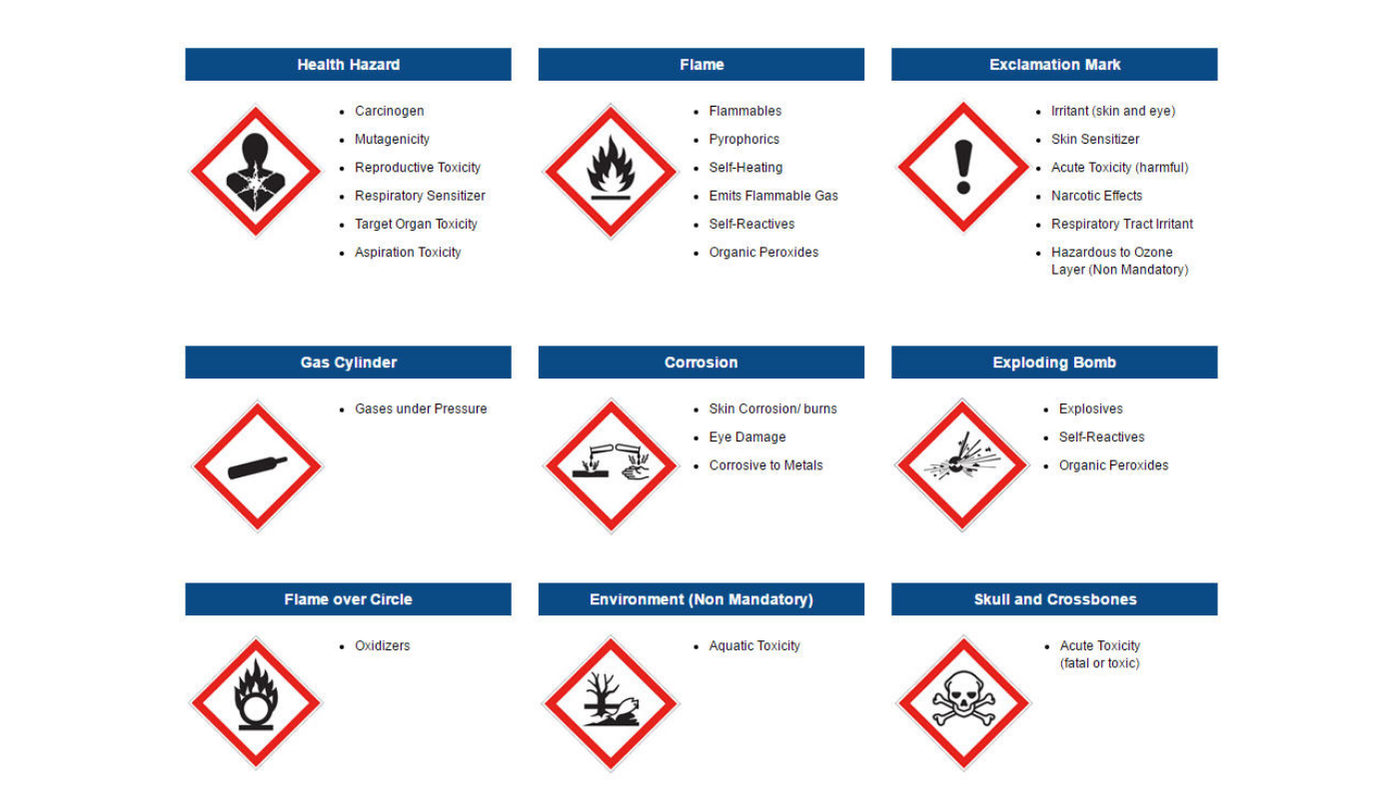
GHS Hazard Classes Explained
Physical Hazards
- Include risks like flammability, explosiveness, and chemical reactivity.
- Sodium bicarbonate is non-flammable and chemically stable.
- Under normal conditions, this chemical does now react violently.
- This chemical is decomposed at high temperatures. But it releases carbon dioxide safely.
- It does not meet GHS criteria for physical hazards.
Health Hazards
- Cover acute toxicity, skin corrosion, eye damage, respiratory sensitization, and chronic effects.
- Sodium bicarbonate is widely used in food and pharmaceutical applications.
- Does not cause severe toxicity or long-term health effects under normal use.
- May cause mild eye or respiratory irritation in dust form.
- Sodium bicarbonate does not meet thresholds for major GHS health hazard classification.
Environmental Hazards
- Sodium bicarbonate adds toxicity to aquatic life and long-term environmental damage.
- It naturally occurs and has less potential to harm the environment.
- It does not bioaccumulate or persist in ecosystems.
- It is commonly used to neutralize acidic substances in environmental applications.
- Sodium bicarbonate does not meet GHS classification for environmental hazards.
GHS Label Elements for Sodium Bicarbonate
i) Signal Word
- Typically: None required
- Usually, sodium bicarbonate does not meet the criteria for assigning a signal word under the GHS.
ii) Hazard Statements
- Generally: Not required
- There is no standard hazard statements are assigned due to its low-risk classification.
iii) Precautionary Statements
- People must avoid inhaling dust during handling or processing.
- They must avoid contact with eyes to prevent mild irritation.
- It is essential to use basic personal protective measures in industrial settings (in case of dust generation).
iv) Pictograms
- Generally: No pictograms required under GHS
- In some cases (supplier-specific classification):
- An exclamation mark pictogram may be used if sodium bicarbonate is classified as an irritant (e.g., eye irritation due to dust exposure).
Safety Data Sheet (SDS) Classification Breakdown for Sodium Bicarbonate
Section 2: Hazard Identification
- This section outlines the GHS classification status of sodium bicarbonate.
- Typically indicates "Not classified as hazardous" under GHS.
- May include signal word (usually none), hazard statements (not required), and pictograms (generally none).
- In some supplier SDS, sodium bicarbonate may be listed as a mild irritant, especially in dust form.
- Provides precautionary statements such as avoiding inhalation and eye contact.
Section 9: Physical and Chemical Properties
- This section describes the key properties of sodium bicarbonate:
- Appearance: White crystalline powder
- Odor: Odorless
- pH: Mildly alkaline
- Solubility: Soluble in water
- These properties help explain why Sodium bicarbonate is stable, non-flammable, and low risk.
- Supports its non-hazardous classification under GHS
Section 11: Toxicological Information
- Provides data on health effects and exposure risks of sodium bicarbonate.
- Typically shows low toxicity levels
- May mention minor irritation to eyes, skin, or respiratory tract in case of excessive exposure.
- Confirms that Sodium bicarbonate does not meet criteria for serious health hazard classifications.
Variability Across Manufacturers
- While Sodium bicarbonate is generally non-hazardous, SDS classifications may vary slightly between manufacturers.
- Differences can arise due to:
- Particle size (dust vs granular form)
- Purity levels or additives
- Interpretation of irritation data
- Some suppliers may classify Sodium bicarbonate as an eye irritant, while others may not
- Therefore, it is essential to review supplier-specific SDS documents to ensure accurate hazard communication and regulatory compliance.
Conclusion
The Globally Harmonized System (GHS) does not consider sodium bicarbonate to be dangerous because it does not fit into any of the major physical, health, or environmental hazard groups. However, even though it is low risk, it still needs to be handled, stored, and documented correctly to make sure the workplace is safe and follows the rules. Safety Data Sheets (SDS), proper labelling, and basic safety precautions are still very important, especially in places where dust could get into the air. In the end, GHS categorization for Sodium Bi Carbonate should be seen as part of a bigger system for managing chemical safety that encourages clear communication of hazards, risk assessment, and safe use across all industries.
FAQs
Is sodium bicarbonate classified as hazardous under GHS?
No, the Globally Harmonized System (GHS) does not usually list sodium bicarbonate as a dangerous substance. It doesn't fit into the primary hazard classifications like flammability, acute toxicity, or skin corrosion.
Does sodium bicarbonate require a hazard label?
Sodium bicarbonate is not considered dangerous; hence it usually doesn't need a hazard label. Still, basic labelling with information about the product and how to handle it safely is needed to follow the rules at work.
What GHS pictogram applies to sodium bicarbonate?
Sodium bicarbonate usually doesn't need a GHS pictogram. If a supplier thinks that dust exposure is a moderate irritant, they may utilize an exclamation mark pictogram.
Is an SDS required for sodium bicarbonate?
Yes, a Safety Data Sheet (SDS) is suggested and often required for Sodium bicarbonate in the workplace. An SDS makes sure that the substance is handled, stored, and used in case of an emergency, even when it is not very dangerous.
Can sodium bicarbonate be irritant?
Yes, sodium bicarbonate can be a minor irritant, especially when it is in dust form. If you breathe in a lot of it, it could make your eyes or respiratory tract feel a little irritated, depending on how you were exposed and how the supplier classifies it.
Simplify Your SDS Management
CloudSDS gives your team instant access to 23M+ safety data sheets with AI-powered search, automated updates, and full OSHA/GHS compliance — all from one platform.
Leave A Comment