
Sodium hydroxide, or NaOH, dominates the chemical scene. In your house or store, you probably use items with it daily. Drain cleaners to bath soaps, they all have it. Frequently known as caustic soda or lye, it rids fats and gunk superbly. Yet, its strength is what makes it super risky too. This stuff can seriously hurt you – burns skin, messes up eyes, and more – if you don't handle it right. That's why knowing how to deal with it properly is critical to stay safe when working with this powerful substance.
Understanding Sodium Hydroxide
What is sodium hydroxide?
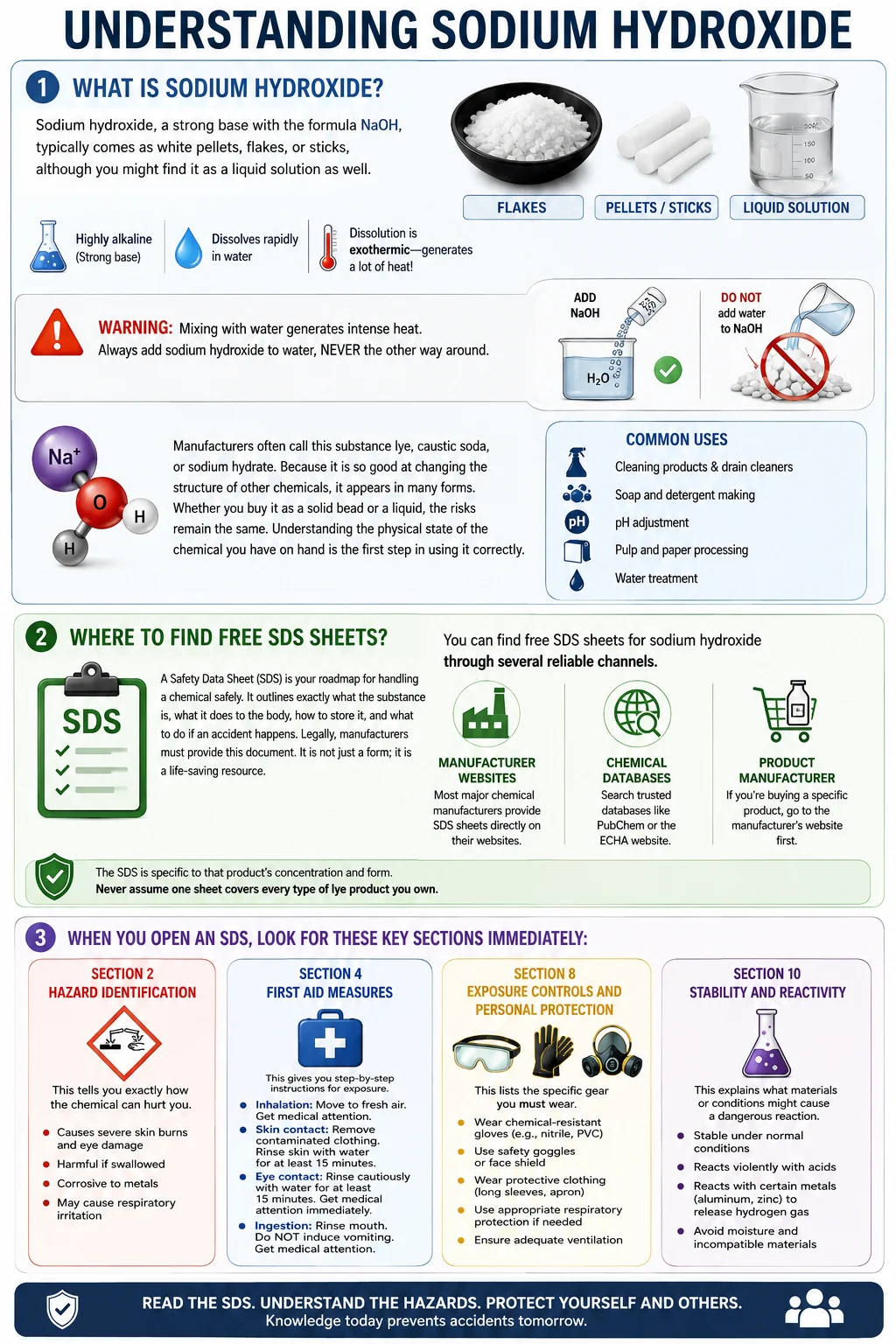
Sodium hydroxide, a strong base with the formula NaOH, typically comes as white pellets, flakes, or sticks, although you might find it as a liquid solution as well. It's well-known for its high alkalinity and fast water dissolution, which generates a ton of heat during the process. This exothermic reaction makes handling it very risky when mixing with water. So, extra care is needed.
Manufacturers often call this substance lye, caustic soda, or sodium hydrate. Because it is so good at changing the structure of other chemicals, it appears in many forms. Whether you buy it as a solid bead or a liquid, the risks remain the same. Understanding the physical state of the chemical you have on hand is the first step in using it correctly.
Where to Find Free SDS Sheets?
A Safety Data Sheet (SDS) is your roadmap for handling a chemical safely. It outlines exactly what the substance is, what it does to the body, how to store it, and what to do if an accident happens. Legally, manufacturers must provide this document. It is not just a form; it is a life-saving resource.
You can find free SDS sheets for sodium hydroxide through several reliable channels. Most major chemical manufacturers provide these documents directly on their websites. You can also search specific chemical databases like PubChem or the European Chemicals Agency's website. If you are buying a specific brand of cleaner or industrial product, always go to the manufacturer's website first. The SDS is specific to that product's concentration and form. Never assume one sheet covers every type of lye product you own.
When you open an SDS, look for these key sections immediately:
- Section 2 Hazard Identification: This tells you exactly how the chemical can hurt you.
- Section 4 First Aid Measures: This gives you step-by-step instructions for exposure.
- Section 8 Exposure Controls and Personal Protection: This lists the specific gear you must wear.
- Section 10 Stability and Reactivity: This explains what materials or conditions might cause a dangerous reaction.
Common Uses of Sodium Hydroxide
Industrial Applications
The industrial world relies on sodium hydroxide for massive production tasks. In the pulp and paper industry, companies use it to extract lignin from wood, which allows them to create paper pulp. The textile industry relies on it for mercerizing cotton, a process that makes fabric stronger and gives it a better shine.
Soap and detergent makers use sodium hydroxide for saponification. This is the chemical process that turns oils and fats into soap. Without this base, solid bar soap would not exist. In chemical manufacturing, it acts as a primary reagent to build other products. Even the aluminum you use in cans comes from bauxite ore, which is refined using a process that heavily depends on caustic soda.
Household and Commercial Uses
You likely have sodium hydroxide in your utility closet without realizing it. Drain cleaners often use it to eat through hair, grease, and food buildup in pipes. Oven cleaners rely on their strength to soften and lift burnt-on carbon and grease.
Beyond cleaning, it plays a role in daily life in surprising ways:
- Water Treatment: Water plants use it to balance pH levels and clean out filters.
- Food Processing: It helps peel fruits and vegetables, gives pretzels their distinct brown crust, and is used to process cocoa for chocolate.
- Jewelry Making: Artists use it to clean molds during the lost-wax casting process.
Safety Precautions and Handling
Hazard Identification
Sodium hydroxide is corrosive. It does not just irritate; it destroys tissue. If it touches your skin, it starts burning immediately. If it gets in your eyes, it can cause permanent damage or blindness in seconds. The respiratory tract is also at high risk if you inhale dust or mist from the chemical.
Reactivity is another danger. As noted, it reacts violently with water. It also reacts with acids, which can cause an explosive release of heat. When sodium meets metals such as aluminum, magnesium, or zinc, it creates hydrogen gas. This stuff is super flammable and can blow up in enclosed areas.
Personal Protective Equipment (PPE)
Now, onto personal protective equipment, or PPE. You should never skip out on proper gear when dealing with sodium hydroxide. Your skin and eyes are most at risk here.
- First, always wear chemical splash goggles that fit snugly. Throw a face shield over them if there's any chance of getting splashed. It's extra protection, which is smart.
- Second, cover up! Pick chemical-resistant gloves from nitrile, neoprene, or PVC. Roll up those sleeves, and make sure you've got full pant coverage too.
- Don't forget about dust masks. They keep the tiny bits of powder out of your lungs if the stuff gets airborne.
- And lastly, your feet need care too. Opt for chemical-resistant boots, but stay clear of sneakers; they'd just suck in the liquids and make messes worse.
Safe Handling Procedures
Always work in a space with plenty of airflow. If you are outdoors or in a large room, keep fans running to move air away from your workspace. The golden rule of handling lye is simple: always add the sodium hydroxide to the water, not the water to the sodium hydroxide. If you pour water into a large amount of caustic soda, the heat can cause the mixture to erupt or boil over instantly.
Store your supply in a cool, dry place. Keep it in its original, sealed container. Heat and moisture from the air can degrade the quality of the pellets or flakes. Never store it near acids or reactive metals. A locked cabinet is best to keep it away from children or pets who might mistake the flakes for something harmless.
Emergency Procedures and First Aid
Accidental Spills
If you spill a small amount of solid sodium hydroxide, carefully sweep it up and put it in a dry, sealable plastic container. Do not use a vacuum cleaner, as this can spread dust. For liquid spills, use an absorbent material like sand or vermiculite. Do not use paper towels or cloth that you might just throw in a trash can, as they could ignite or cause a burn later. Neutralization requires great care. Using acid to neutralize a spill can create even more heat. Focus on containment and removal first.
First Aid Measures
- If your skin meets the chemical, rinse it under cool water for at least 15 to 20 minutes. Don't stop even if the pain eases. Remove clothing and jewelry that might have met the substance as well. After rinsing, get medical help right away.
- Eye contact with chemicals is super serious. You need to flush your eyes out with water for 15 to 30 minutes, keeping your eyelids open the whole time. Head to an eyewash station if you can, then rush over to the ER.
- If someone inhales the stuff, hurry them over to fresh air. If they are unable to breathe, please call for medical assistance immediately.
- For ingestion, do not try to make the person throw up. Let them rinse their mouth with water, and if they're awake, offer them a small glass of water or milk. Call for emergency services immediately after.
Legal and Regulatory Considerations
Chemical Hazard Communication
OSHA (Occupational Safety and Health Administration) has strict rules for using dangerous chemicals like sodium hydroxide. If you run a business, you must have an SDS on file for every hazardous chemical you keep on-site. You must also label every container clearly. If you transfer lye into a smaller bottle, that bottle needs a label that lists the contents and the hazards. Use standard symbols to indicate that it is corrosive and dangerous.
Environmental Impact and Disposal
Sodium hydroxide is bad for the environment if it enters streams or lakes. It dramatically changes water pH, killing fish and plants. So, never pour lye waste down drains or on the ground. Your local waste management place probably has specific days for dropping off hazardous waste. Call your area's public works department to find out what you should do with leftover chemicals. Following these rules keeps the water supply safe and protects the community.
Now that you've got the knowledge to handle sodium hydroxide, you know where to find an SDS, how to set up your workspace, and what to do when there's an issue. But remember, safety isn't just a quick check—it's a habit. Every time you start working, continue building those safe habits. Always keep the SDS handy, wear your PPE, and stay alert. Taking these steps ensures that you use this useful chemical without becoming a statistic. If you are ever unsure about a specific task, refer to the SDS. It remains your best tool for staying safe while getting the job done.

Simplify Your SDS Management
CloudSDS gives your team instant access to 23M+ safety data sheets with AI-powered search, automated updates, and full OSHA/GHS compliance — all from one platform.
Leave A Comment