
In the beginning of 2026, the U.S. Environmental Protection Agency (EPA) has finally reached a settlement amount of a $1.1 million civil penalty with Home Market Foods. Well, this is just another incident that highlights a complete failure of chemical asset tracking. But what happened? Federal investigators discovered the corporation didn't comply with several Clean Air Act chemical safety regulations at its food processing and cold storage facilities in Massachusetts. The difficulties were related to the appropriate use and handling of anhydrous ammonia, a common refrigeration ingredient that could be dangerous if not handled properly. (Source: https://www.epa.gov/newsreleases/epa-reaches-11-million-settlement-home-market-foods-after-2022-deadly-ammonia-release)
Tracking each chemical product right from the moment it's bought should come under a proper tracking system till its disposal. But handling multiple products can be very difficult, especially manually. That's why digital chemical asset management software has become an essential system in the world of chemical safety management.
To ensure compliance in 2026, it's mandatory that your organization understands the importance of chemical asset tracking. This blog will guide you thoroughly; continue reading it.
What Is Chemical Asset Tracking?
Think about how many chemicals enter and leave a facility over the course of a year. Now, some of these are used daily. Besides, some sit in storage for months, whereas others are transferred between departments or locations. If your organization doesn't have a clear way to track them, it may attract some expensive dangers. That's why chemical asset tracking is necessary. This method allows organizations to keep a tab on all their in-house chemical products right from the moment of procurement.
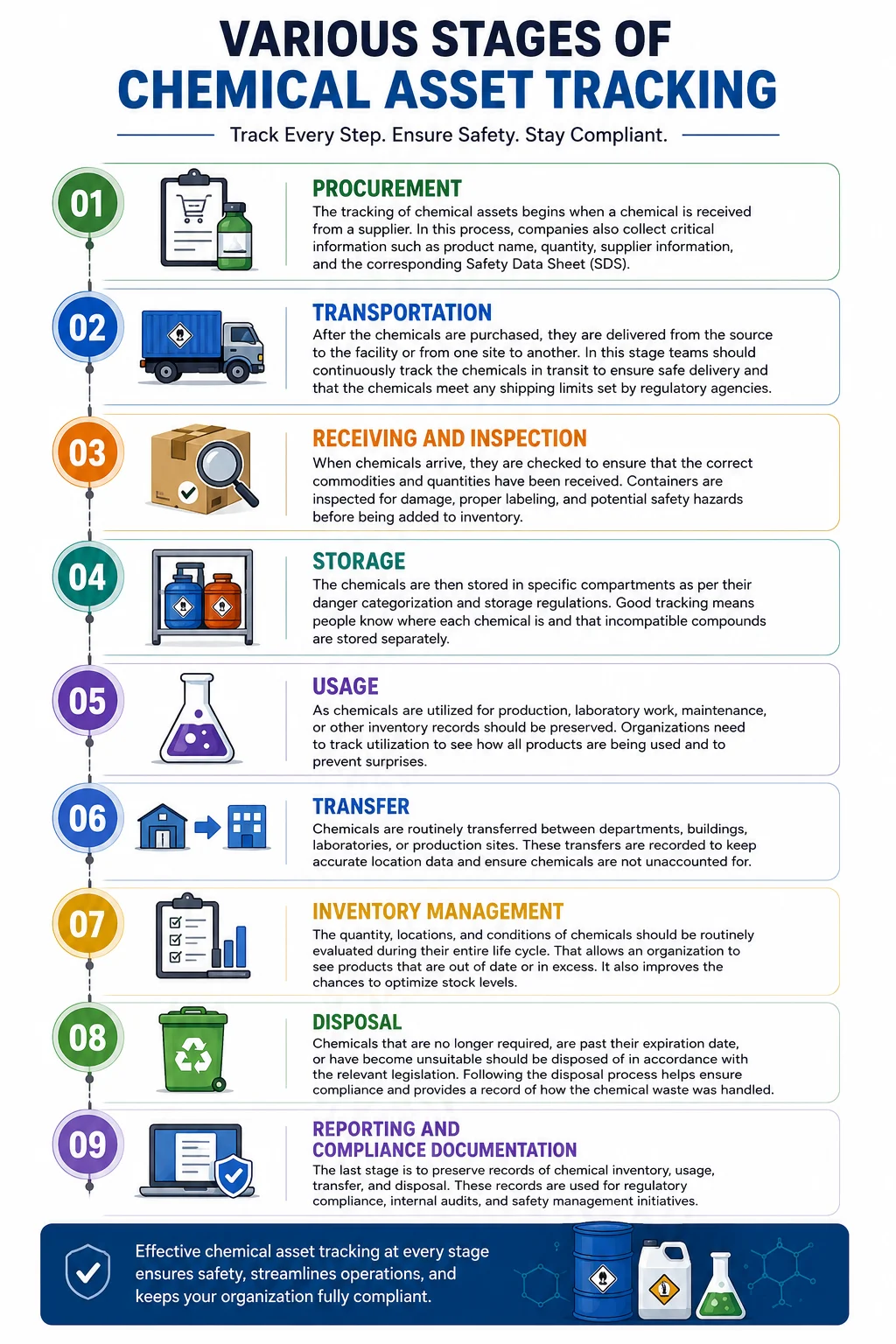
Various stages of chemical asset tracking
1. Procurement
The tracking of chemical assets begins when a chemical is received from a supplier. In this process, companies also collect critical information such as product name, quantity, supplier information, and the corresponding Safety Data Sheet (SDS).
2. Transportation
After the chemicals are purchased, they are delivered from the source to the facility or from one site to another. In this stage teams should continuously track the chemicals in transit to ensure safe delivery and that the chemicals meet any shipping limits set by regulatory agencies.
3. Receiving and inspection
When chemicals arrive, they are checked to ensure that the correct commodities and quantities have been received. Containers are inspected for damage, proper labeling, and potential safety hazards before being added to inventory.
4. Storage
The chemicals are then stored in specific compartments as per their danger categorization and storage regulations. Good tracking means people know where each chemical is and that incompatible compounds are stored separately.
5. Usage
As chemicals are utilized for production, laboratory work, maintenance, or other inventory records should be preserved. Organizations need to track utilization to see how all products are being used and to prevent surprises.
6. Transfer
Chemicals are routinely transferred between departments, buildings, laboratories, or production sites. These transfers are recorded to keep accurate location data and ensure chemicals are not unaccounted for.
7. Inventory management
The quantity, locations, and conditions of chemicals should be routinely evaluated during their entire life cycle. That allows an organization to see products that are out of date or in excess. It also improves the chances to optimize stock levels.
8. Disposal
Chemicals that are no longer required, are past their expiration date, or have become unsuitable should be disposed of in accordance with the relevant legislation. Following the disposal process helps ensure compliance and provides a record of how the chemical waste was handled.
9. Reporting and compliance documentation
The last stage is to preserve records of chemical inventory, usage, transfer, and disposal. These records are used for regulatory compliance, internal audits, and safety management initiatives.
Why are the traditional ways of tracking chemical assets failing?
1. Spreadsheets
One of the most common tools to track chemical assets is spreadsheets. It is used mostly by organizations that depend on manual data entry. However, a single typing error or accidental deletion can easily lead to inaccurate inventory records.
2. Paper logs
It's easy to cause damage to paper-based logs. These can be misplaced or become difficult to access. As a result, it unnecessarily slows down response time. It can create safety risks too.
3. Manual inventory updates
Many organizations also rely on manual inventory updates. This method requires employees to physically count and record chemical stock levels on a regular basis. As a result, inventory data can quickly become outdated.
The true cost of non-compliance in 2026
1. Huge financial fines
-
OSHA penalties
An organization may attract huge penalties if the auditors from OSHA find any violation. The inspector may act if they find issues like outdated SDSs, inadequate hazard communication, or errors in chemical labels. Fines are higher for recurring or willful violations, and compliance errors can be expensive.
-
Fines for damaging the environment
Failure to comply with environmental rules on chemical handling, emissions, spills, or reporting requirements may result in enforcement action by environmental regulators. These can be fines, corrective action fees and needed repair tasks, and they can add up quickly.
-
Hazardous waste violations
They can be heavily fined for violating hazardous waste storage, transport, treatment, or disposal. Regulatory agencies closely monitor hazardous waste handling, and even slight violations might trigger investigations and enforcement measures. Fines aren't the only price firms would have to incur, they can also incur cleanup expenditures.
2. Operational impacts
-
Site closure
Serious safety violations or dangerous conditions could prompt regulators to temporarily shut down operations while concerns are remedied. Even a small disruption might result in lost productivity, missed deadlines, and significant loss of revenue.
-
Inspection failed.
Regulatory inspections are a vital tool to help ensure workplace safety. If a facility fails to pass an inspection, it may be required to undertake corrective operations. It may also have to undergo follow-up inspections.
-
Legal investigation:
Regulatory bodies may take legal action when there are major compliance violations, chemical spills, or workplace mishaps. These investigations are costly and time-consuming, including extensive record reviews, interviews with employees, and the preparation of remedial action plans.
3. Damage to reputation
-
Loss of customer trust
Customers are increasingly demanding that their suppliers and partners have strong safety and compliance systems. If a corporation is found to be breaking the regulations, it could cause reliability and safety difficulties, forcing clients to go elsewhere.
-
Public safety concerns
Accidents involving chemicals, releases into the environment, or regulatory enforcement activities can attract public attention and media coverage. Negative publicity can damage community ties and leave lingering worries about an organization's safety policies.
-
Insurance issues:
Insurance agencies evaluate risk while determining coverage and premiums. If you have a history of compliance violations or chemical accidents, you may have to pay higher insurance costs, have more restrictive policy terms, or have limited coverage options. Occasionally insurance companies will deny claims where non-compliance was a factor in the incident, but this is rare.
How chemical asset tracking supports regulatory compliance
1. Inventory visibility in real-time
One of the most important benefits of chemical asset tracking is the ability to track chemical assets in real-time. Instead of spreadsheets or hand counts, organizations might have accurate inventory information at their fingertips and fast.
-
Immediate chemical location tracking
With chemical asset tracking solutions, organizations can accurately account for the whereabouts of every chemical at one site or multiple sites. Whether the chemical is in a warehouse, lab, production area, or maintenance room, you can determine where it is in seconds.
-
Departmental access
Different departments may have different usage and management of the substances. A chemical asset tracking system offers inventory data to authorized staff in their department but with centralized control. It increases responsibility, and it guarantees teams are working with the latest information.
2. SDS automated processing
Having the latest Safety Data Sheets (SDSs) is a major compliance need. SDS management functionality is usually included in chemical asset tracking systems to ensure chemical safety information is available across the company.
-
Centralized SDS database
Companies can keep all safety documents in one centralized database, rather than keeping SDSs in multiple locations or filing cabinets. Employees have all the latest SDSs in one place to eliminate confusion and improve compliance.
-
Instant document searching
Employees should have immediate access to chemical safety information during an emergency, inspection, or normal operation. An automated SDS management system allows the user to access the right SDS quickly and easily in a matter of seconds. This allows the user to respond more quickly and helps improve safety in the workplace.
3. Expiry and hazard notification
Chemical stockpiles are never static, and it can be difficult to monitor manually for possible issues. Automation alerts allow companies to address safety and compliance issues proactively before they become big problems.
-
Chemicals expiry notifications
Many compounds have expiration dates, and after this period they may no longer be useful, stable, or safe. When chemicals are near the expiration date, automated notifications are sent to the staff responsible so that they can replace or dispose of them in time and reduce the chances of using expired materials.
-
Storage risk alerts
Some chemicals need to be stored under particular conditions or kept isolated from incompatible chemicals. Chemical asset tracking systems can send alerts to users if storage criteria are not being maintained, helping to prevent accidents and regulatory breaches.
-
Hazard classification monitoring
Regulatory standards may alter over time, or new safety information may become available that changes danger classifications. Automated monitoring allows companies to be alert to any changes in classification and to stay in compliance with label, SDS, and safety protocols.
4. Auditing documentation
In addition, regulatory inspections often compel enterprises to produce detailed documentation of compliance.
-
Digital logbooks
All inventory transactions, chemical transfers, changes, and user activity can be recorded digitally. These logs also provide a good audit trail that shows compliance activity and encourages internal accountability.
-
Ready for inspection
Companies that keep digital documents are better prepared for regulatory inspections. This reduces stress during audits and improves the likelihood of a positive inspection result, as inspectors can obtain the information they require with ease.
5. Chain ofcustody tracking
Full tracking of chemical movement and usage is a need for compliance and safety. Tracking the chain of custody provides a transparent record of the entire lifespan of each chemical.
-
Who were the users?
A tracking system records which chemicals are tied to it and enables companies to more effectively investigate accidents or inventory problems.
-
Where the chemicals moved:
Chemicals are regularly moved from storage areas, departments, facilities, or job locations. Chain of custody logs can be used to fully track the chemical movement. This allows you to see every transfer to ensure the right handling protocols are followed.
-
Tracking the disposal
Chemicals need to be disposed of correctly. Chemical asset tracking systems record disposal. actions, including date, volume, method of disposal, and person accountable for disposal. These documents assist organizations in showing compliance with hazardous waste legislation and environmental accountability.
The best practices for avoiding compliance violations
✅Digital chemical inventory control systems
Digital inventory solutions enable real-time visibility of chemical inventory levels, locations, and usage across the company. They eliminate many of the inconsistencies that spreadsheets and paper-based data might introduce and allow for easy extraction of compliance information.
✅Monthly auditing
Regular audits will allow you to catch inventory errors, missing paperwork, expired chemicals, and storage difficulties before they become compliance concerns. Monthly checks also help to ensure that the inventory records adequately reflect the actual chemical supplies.
✅Provide frequent training for employees
Employees shall be retrained periodically on protocols to follow in the case of a chemical spill, hazard communication requirements, and emergency response procedures. Regular training sessions reinforce safe procedures and keep employees up to date on regulatory changes.
✅SDS records to date
Employers must ensure that Safety Data Sheets are up-to-date, complete, and available to workers at all times. Regular review of SDS data helps to avoid compliance gaps from out-of-date or missing safety information.
✅Barcode or RFID tracking
The use of barcode and RFID technology allows tracking of chemicals by automatically recording inventory movement and changes. These technologies make inventories more accurate and remove the need for people to keep compliance records.
✅Automating reporting to remain compliant
The automated reporting system allows you to provide fast, accurate inventory, use, and regulatory data. This reduces paperwork and gives companies the paperwork they require for audits and inspections.
Safe disposal of chemicals
Documentation of all chemical disposal actions (volume, process, date, and employee involved). Disposal monitoring allows the firm to prove compliance with the hazardous waste regulations and to avoid environmental problems.
Conclusion
Regulatory fines are not just costly but is not great for any company's image. So, before it's too late chosen a chemical asset tracking system that allows your organization to stay worry-free about managing your chemical inventory. Ultimately, regulatory bodies emphasize building a safer workplace over anything else.

Simplify Your SDS Management
CloudSDS gives your team instant access to 23M+ safety data sheets with AI-powered search, automated updates, and full OSHA/GHS compliance — all from one platform.
Leave A Comment