
TSCA Chemical Bans in 2026: EPA Restrictions, Compliance Deadlines & Affected Chemicals
Summary
EPA is set to develop risk management regulations under TSCA Section 6 for 2026, which will restrict the use of hazardous substances, including methylene chloride, TCE, PCE, carbon tetrachloride, chrysotile asbestos, and 1-bromopropane. EHS departments should ensure that they keep up to date with the regulatory deadlines, maintain their chemical inventories and SDSs, conduct workplace protection programs where necessary, search for alternative chemicals, and so forth.
Introduction
The EPA in 2026 is working to enforce risk management regulations under Section 6 of the Toxic Substances Control Act (TSCA), which involve restrictions or prohibitions of many hazardous substances used for manufacturing, processing, distributing, or at work. For EHS staff, being aware of new developments on the list of TSCA chemical bans is critical because failure to do so may result in violations of compliance, disruptions to the supply chain, and the potential for worker exposure to hazardous chemicals.
Which Chemicals Are Banned or Restricted Under TSCA in 2026?
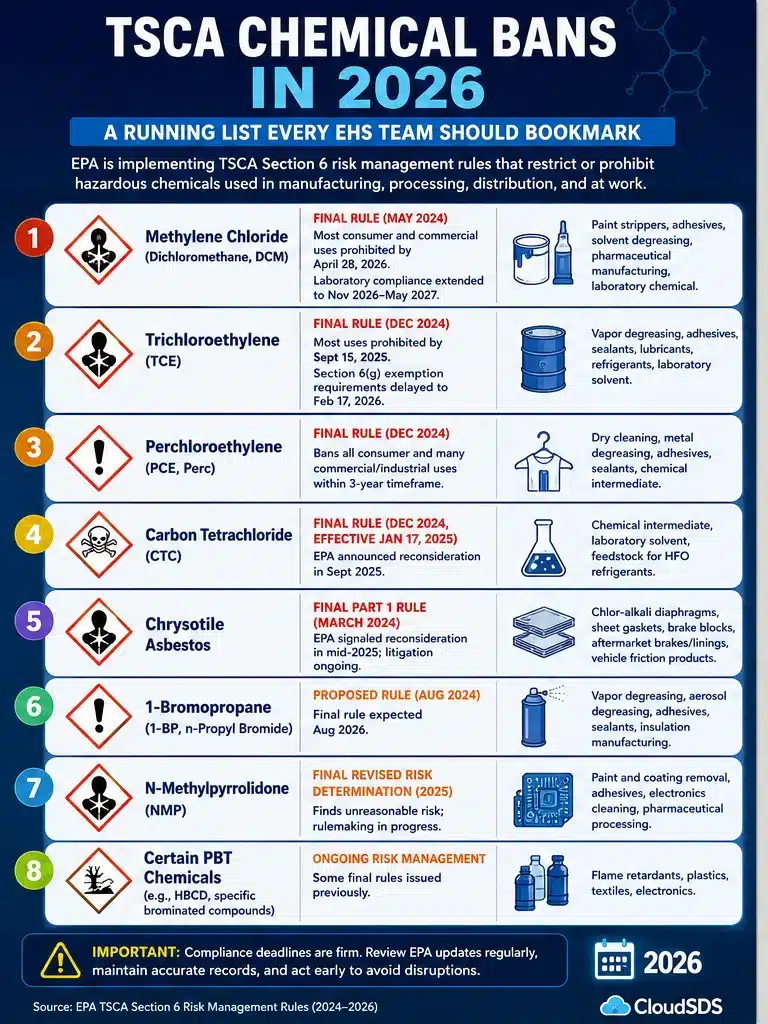
By 2026, the agency will implement the TSCA Section 6 risk management regulations in regard to the hazardous substances identified through risk evaluations. According to the regulations adopted, restrictions will be placed on the application of substances such as methylene chloride, trichloroethylene (TCE), perchloroethylene (PCE), carbon tetrachloride, chrysotile asbestos, and 1-bromopropane.
To ensure compliance with the regulations, it is necessary to consider the current EPA regulations about the impact of the rules on the manufacturing, processing, distribution, usage, and disposal of these chemicals. Important: Language matters—say “may apply,” “currently in effect,” and “existing EPA regulations” so that the article remains up-to-date.
TSCA continues to evolve rapidly. EPA is continuing to promulgate new TSCA Section 6 risk management rules: Several final rules were enacted in 2024, with compliance dates running until 2026. Restrictions affect the manufacture, distribution, importation, and downstream users of chemicals across various industries. Missing an update could result in non-compliance and legal problems. Learn about all the banned and restricted chemicals under TSCA in 2026, alongside all the necessary information on these chemicals, including the compliance timelines and action items.
What are TSCA chemical bans?
Definition
A “TSCA chemical ban” generally refers to EPA’s prohibition of specific activities—manufacturing, processing, distribution in commerce, or commercial/industrial use—under Section 6 of TSCA when EPA determines a chemical presents an unreasonable risk to human health or the environment.
Ban vs. Restriction
- Complete ban: Stops all or almost all uses of the chemical (consumer and major industrial uses).
- Restriction: Places restrictions on specific uses and/or conditions (chemical safety plan at work, exposure limits, and recordkeeping).
TSCA section 6 authority
TSCA Section 6 gives the EPA the power to control any chemicals posing an unreasonable risk, such as:
- Restricting manufacture, processing, or distribution of chemicals.
- Controlling the amount manufactured or processed.
- Imposing warning, recording, testing, and monitoring requirements.
EPA’s risk evaluation and risk management process
The EPA’s process is composed of:
- Priority: Identifying which chemicals to evaluate risks for.
- Risk evaluation: Evaluating the hazards and exposures that come with conditions of use.
- Risk determination: Determining if the chemical poses an unreasonable risk.
- Risk management rule: Publishing regulatory rules on how to manage identified risks.
- Compliance deadlines: Implementation dates for prohibiting and regulating chemicals.
- Some chemicals are simply prohibited while others have restricted usage due to proper workplace safety measures.
How EPA decides to ban or restrict chemicals
Step-by-step process
- Chemical Prioritization: The EPA identifies existing chemicals to be evaluated according to their hazard, exposure, and persistence.
- Risk Evaluation: A thorough evaluation of risks and exposures is conducted by the EPA.
- Comment period: Proposed rules are published in the Federal Register, where there are chances for public participation.
- Final Risk Determination: EPA determines if the chemical poses unreasonable risk or not.
- Risk Management Rule: The EPA promulgates the rule under section 6(a).
- Deadlines for compliance: Deadline for prohibition, workplace program, and reporting.
EPA TSCA rulemaking flow
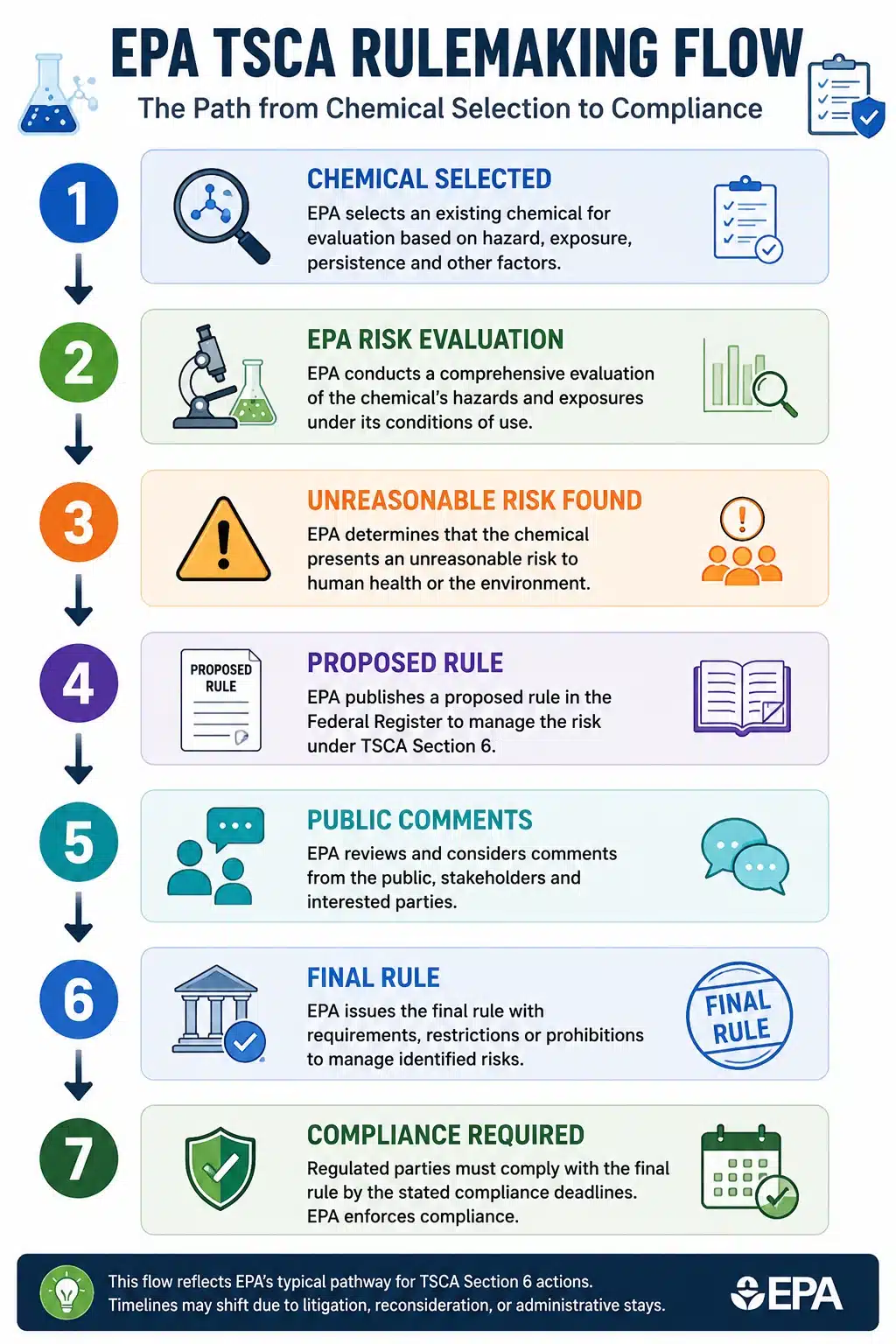
This flow reflects EPA’s typical pathway for TSCA Section 6 actions, though timelines may shift due to litigation, reconsideration, or administrative stays.
Running list of TSCA chemical bans and restrictions (2026)
| Chemical | EPA Status (2026) | Main Uses | Key Compliance Impact |
|---|---|---|---|
| Methylene Chloride (Dichloromethane, DCM) | Final rule (May 2024); most consumer and commercial uses prohibited by April 28, 2026; laboratory compliance dates extended to Nov 2026–May 2027. | Paint strippers, adhesives, solvent degreasing, pharmaceutical manufacturing, laboratory chemical. | Distribution to retailers prohibited by Feb 3, 2025; manufacturing/import prohibited by May 5, 2025; most industrial/commercial use prohibited by April 28, 2026; WCPP required for remaining uses. |
| Trichloroethylene (TCE) | Final rule (Dec 2024); most uses prohibited by Sept 15, 2025; Section 6(g) exemption requirements delayed to Feb 17, 2026. | Vapor degreasing, adhesives, sealants, lubricants, refrigerants, laboratory solvent. | Manufacturing/processing for most commercial uses prohibited; consumer products banned; WCPP required for exempted uses; compliance deadlines phased through 2026. |
| Perchloroethylene (PCE, Perc) | Final rule (Dec 2024); bans all consumer and many commercial/industrial uses within a 3-year timeframe. | Dry cleaning, metal degreasing, adhesives, sealants, chemical intermediate. | Manufacturing/import prohibited after June 11, 2026; processing prohibited after Sept 9, 2026; distribution restrictions through March 2027; WCPP required for continuing uses. |
| Carbon Tetrachloride (CTC) | Final rule (Dec 2024, effective Jan 17, 2025); EPA announced reconsideration in Sept 2025. | Chemical intermediate, laboratory solvent, feedstock for HFO refrigerants. | Workplace safety requirements for most uses; prohibitions for ceased uses; recordkeeping and downstream notification; reconsideration may affect ECEL and WCPP timing. |
| Chrysotile Asbestos | Final Part 1 rule (March 2024); EPA signaled reconsideration in mid-2025; litigation ongoing. | Chlor-alkali diaphragms, sheet gaskets, brake blocks, aftermarket brakes/linings, vehicle friction products. | Prohibitions on manufacture, processing, distribution, and commercial use for specified conditions; staggered compliance dates; reconsideration may adjust timelines. |
| 1-Bromopropane (1-BP, n-Propyl Bromide) | Proposed rule (Aug 2024); final rule expected Aug 2026. | Vapor degreasing, aerosol degreasing, adhesives, sealants, insulation manufacturing. | EPA developing final rule to prevent consumer access, restrict industrial/commercial use, protect workers; transition period likely. |
| N-Methylpyrrolidone (NMP) | Final revised risk determination (2025) finds unreasonable risk; rulemaking in progress. | Paint and coating removal, adhesives, electronics cleaning, pharmaceutical processing. | EPA developing risk management measures; expect restrictions on consumer and certain commercial uses. |
| Certain PBT Chemicals (e.g., HBCD, specific brominated compounds) | Ongoing risk management; some final rules issued previously. | Flame retardants, plastics, textiles, electronics. | Restrictions on manufacturing, processing, distribution; focus on persistent, bioaccumulative, toxic chemicals. |
Note: This table reflects final rules and EPA announcements through mid-2026. Always verify against the latest EPA publications. Last Updated: July 2026
Chemical Spotlight: Methylene Chloride
Why EPA acted
EPA determined methylene chloride presents unreasonable risks, including neurotoxicity, carcinogenicity, and acute fatalities from consumer paint stripper use.
Health risks
- Acute: Central nervous system depression, cardiac sensitization, fatalities from inhalation.
- Chronic: Cancer (IARC Group 2A), liver/kidney toxicity, reproductive effects.
Major restrictions
- Consumer uses: All prohibited; distribution to retailers by Feb 3, 2025; retail distribution by May 5, 2025.
- Manufacturing/import: Prohibited by May 5, 2025 (with limited exemptions).
- Processing: Prohibited by Aug 1, 2025.
- Distribution: Non-retail distribution prohibited by Jan 28, 2026.
- Industrial/commercial use: Prohibited by April 28, 2026.
- Exemptions: 10-year NASA exemption; 5-year furniture refinishing and aircraft adhesives/sealants exemptions with WCPP.
Workplace implications
- WCPP required for 13 remaining conditions of use (e.g., laboratory chemical, reactant processing).
- Initial monitoring: Extended to Nov 9, 2026, for non-federal laboratories.
- Regulated areas & ECEL compliance: Extended to Feb 8, 2027.
- Exposure control plan: Extended to May 10, 2027.
Alternative chemicals
Acetone, methyl ethyl ketone (MEK), NMP (subject to its own restrictions), benzyl alcohol, dibasic esters, bio-based strippers.
Chemical spotlight: Trichloroethylene (TCE)
Common applications
Vapor degreasing, adhesives, sealants, lubricants, refrigerants, and laboratory solvents.
Health hazards
Carcinogenicity (kidney cancer, non-Hodgkin lymphoma), neurotoxicity, reproductive/developmental effects.
EPA restrictions
- Final rule: Dec 17, 2024; most uses prohibited by Sept 15, 2025.
- Section 6(g) exemptions: Effective date delayed to Feb 17, 2026.
- Consumer products: Banned.
- WCPP: Required for exempted uses.
Compliance deadlines
- Manufacturing/processing for most commercial uses: Prohibited by Sept 15, 2025.
- Exemption requirements: Feb 17, 2026.
Alternatives
The list includes aqueous cleaners, modified alcohols, hydrofluoroethers (HFEs), n-propyl bromide (which is subject to its own restrictions), and CO₂ cleaning.
Chemical spotlight: Perchloroethylene (PCE)
1. Dry Cleaning
PCE is the dominant dry-cleaning solvent; the final rule bans consumer and many commercial uses.
2. Metal Degreasing
Vapor degreasing, cold cleaning, and adhesive/sealant applications.
3. Worker Exposure
Neurotoxicity, carcinogenicity, liver/kidney effects.
4. Risk Management Requirements
- Manufacturing/import: Prohibited after June 11, 2026.
- Processing: Prohibited after Sept 9, 2026.
- Distribution: Phased prohibitions through March 2027.
- WCPP: Required for continuing uses (e.g., certain dry cleaning, vapor degreasing).
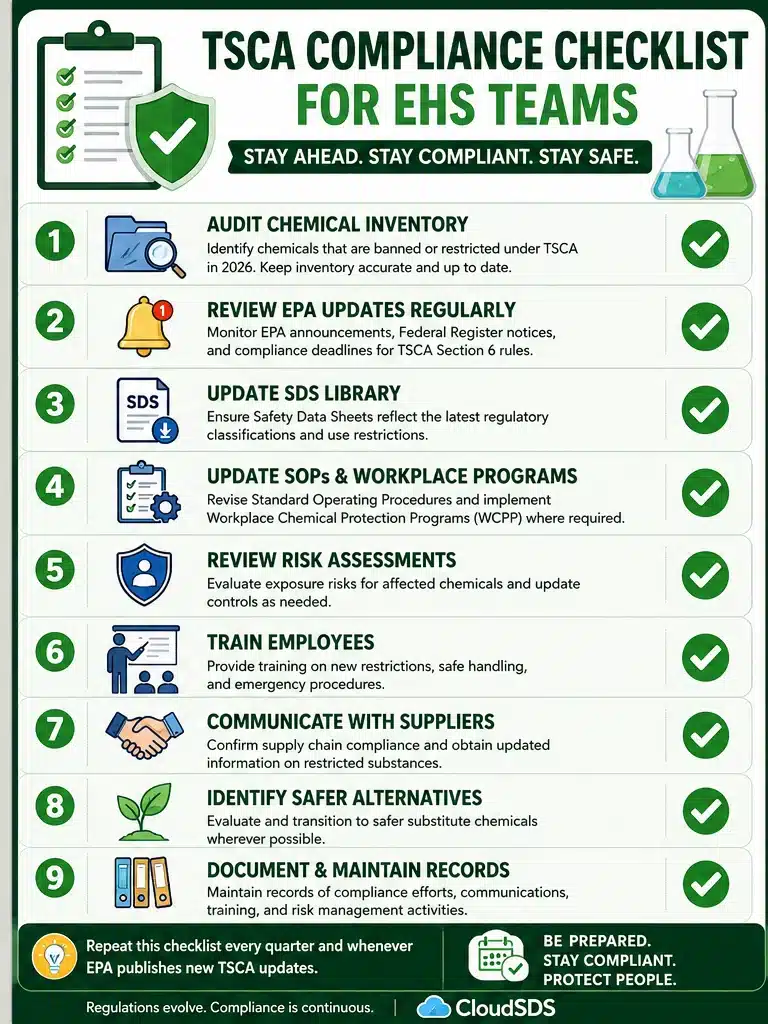
TSCA compliance checklist
✔ Check EPA updates frequently.
✔ Audit chemical inventory on a quarterly basis.
✔ Keep up-to-date SDSs.
✔ Train employees about new restrictions and WCPP.
✔ Inform suppliers about compliance requirements.
✔ Check purchasing records of restricted chemicals.
✔ Evaluate alternatives of phased out chemicals.
What these TSCA rules mean for EHS teams
Practical actions
- Check chemical inventory: All chemicals that fall under TSCA regulations should be identified.
- Identify the restricted chemicals: Compare with the final rules of the EPA.
- Update SDS database: SDSs should reflect the updated regulation status.
- Update risk assessments: Update risk assessments by incorporating new limits and prohibitions.
- Update SOPs: Banned uses and WCPP requirements should be reflected in SOPs.
- Retrain employees: Inform them about changes in uses and requirements for WCPP.
- Evaluate possible substitutes: Look for better substitutes to replace phased-out chemicals.
- Contact the supplier: Please contact suppliers to ensure there is no shortage and that we remain compliant with regulations.
How TSCA chemical bans affect different industries
Manufacturing
- Must cease manufacturing or importing prohibited chemicals by the specified dates.
- Implement WCPP for remaining uses.
Laboratories
- Extended compliance dates for methylene chloride monitoring and WCPP.
- Exposure control plans and regulated areas are required.
Healthcare
Impacted by restrictions on solvents used in device manufacturing, cleaning, and sterilization.
Automotive
Brake linings, degreasing, and adhesives are affected by TCE, PCE, and methylene chloride rules.
Electronics
Solvent cleaning and adhesive applications are subject to TCE, PCE, and NMP restrictions.
Aerospace
Limited exemptions for methylene chloride in aircraft/spacecraft applications; NASA exemptions apply.
Chemical Distribution
Distribution prohibitions phased through 2026–2027 for PCE and methylene chloride.
TSCA chemical bans vs other chemical regulations
| Regulation | Focus |
| TSCA | Chemical manufacture, processing, distribution, and use; Section 6 risk management. |
| OSHA HazCom (29 CFR 1910.1200) | Hazard communication, SDS, labeling, employee training. |
| REACH (EU) | Registration, evaluation, and authorization of chemicals in the EU. |
| CLP (EU) | Classification, labeling, and packaging of chemicals. |
| FIFRA | Pesticide registration and regulation. |
| Clean Air Act | Air emissions and hazardous air pollutants. |
Best practices for staying TSCA compliant
- Monitor EPA announcements: Subscribe to EPA listservs and check the Federal Register.
- Maintain current SDSs: Ensure these documents reflect regulatory status and restrictions.
- Conduct periodic inventory audits: Quarterly reviews of all chemicals.
- Review supplier updates: Confirm regulatory compliance with purchased chemicals.
- Track regulatory deadlines: Use compliance calendars for all TSCA rules.
- Use digital compliance software: Centralize SDS, inventory, and regulatory tracking.
- Maintain documentation: Keep records of training, monitoring, WCPP, and exposure control plans.
- Perform internal compliance reviews: Annual audits of TSCA compliance status.
How CloudSDS helps track TSCA compliance
CloudSDS provides a centralized platform for SDS management and chemical inventory control, supporting TSCA compliance efforts. Key features supporting TSCA compliance:
- Centralized SDS management: Store and access all SDSs in one secure location.
- Chemical inventory management: Maintain real-time inventory with regulatory flags.
- Regulatory alerts: Receive notifications on regulatory changes affecting your chemicals.
- Version control: Track SDS revisions and regulatory updates.
- Audit trails: Document compliance actions, training, and inventory audits.
- Advanced search: Quickly identify chemicals subject to TSCA restrictions.
- Reporting: Generate compliance reports for internal audits and regulatory inspections.
- Supplier SDS updates: Automatically request and update SDSs from suppliers
Note: CloudSDS does not provide automatic TSCA regulatory determinations; users should verify regulatory status against EPA sources.
FAQs
What chemicals are banned under TSCA?
TSCA generally restricts or prohibits chemicals that EPA determines present an unreasonable risk to human health or the environment under Section 6. The specific list changes as EPA issues new risk management rules.
Is a TSCA restriction the same as a chemical ban?
No. A restriction may limit certain uses, manufacturing, processing, or distribution, while a ban generally prohibits specific activities unless exemptions apply.
How frequently does EPA amend TSCA regulations?
Whenever there is new risk evaluation and risk management of such chemicals finalized by EPA, EPA will amend TSCA regulations. It is important for businesses to be on the lookout for such announcements from EPA.
How can I tell whether my business uses a restricted chemical?
It is necessary to examine the inventory of chemicals, SDSs, the supplier list, and the purchase documentation to determine which of these substances is affected by TSCA regulations.
What should EHS personnel do following an issuance of new TSCA regulations?
Assess whether the regulated chemical is present in your operations, review compliance deadlines, update SDSs and procedures, train employees, and document all corrective actions.
Key takeaways
- Restrictions under TSCA in section 6 apply to chemicals, causing unreasonable risks.
- The majority of the TSCA restrictions do not involve prohibitions but restrictions on chemicals.
- An up-to-date chemical inventory along with watching EPA regulations throughout 2026 is what EHS departments need to have.
- One has to look into SDS, communication with suppliers, and purchase history once new restrictions are put in place.
- Substitution is the next step for chemicals undergoing phase-outs or restrictions.
- There are digital tools for handling SDS and chemical inventory issues.
References
- U.S. EPA – Toxic Substances Control Act (TSCA): https://www.epa.gov/tsca
- U.S. EPA – TSCA Section 6 Risk Management Rules: https://www.epa.gov/chemicals-under-tsca
- U.S. EPA – Risk Evaluations for Existing Chemicals: https://www.epa.gov/assessing-and-managing-chemicals-under-tsca
- U.S. EPA – Methylene Chloride Risk Management: https://www.epa.gov/assessing-and-managing-chemicals-under-tsca/risk-management-methylene-chloride
- U.S. EPA – Trichloroethylene (TCE) Risk Evaluation: https://www.epa.gov/assessing-and-managing-chemicals-under-tsca/risk-management-trichloroethylene-tce
- U.S. EPA – Perchloroethylene (PCE) Risk Management: https://www.epa.gov/assessing-and-managing-chemicals-under-tsca/risk-management-perchloroethylene-pce
- U.S. EPA – Asbestos under TSCA: https://www.epa.gov/assessing-and-managing-chemicals-under-tsca/risk-management-asbestos-part-1-chrysotile-asbestos
- U.S. EPA – 1-Bromopropane Risk Management: https://www.epa.gov/assessing-and-managing-chemicals-under-tsca/risk-management-1-bromopropane-1-bp
- 29 CFR 1910.1200 – OSHA Hazard Communication Standard: https://www.osha.gov/hazcom
- NIOSH Pocket Guide to Chemical Hazards: https://www.cdc.gov/niosh/npg/
- CloudSDS Resources – SDS Management, Chemical Inventory Management, and TSCCompliance guidance: https://cloudsds.com/resources

Simplify Your SDS Management
CloudSDS gives your team instant access to 23M+ safety data sheets with AI-powered search, automated updates, and full OSHA/GHS compliance — all from one platform.
Leave A Comment