

- Summary
- Introduction
- What Is Calcium Chloride?
- Chemical Bond and Identification
- Usage of Calcium Chloride
- Industrial and Chemical Applications
- Hazards of Using Calcium Chloride
- Why SDS Management Matters
- Problems You Can Face with Calcium Chloride
- How Can CloudSDS Help?
- Real-Life Incident Example
- Final Thoughts
- FAQ
Summary
Introduction
Calcium chloride is an incredibly useful chemical compound that finds applications in many sectors, ranging from maintaining clear roads during winter months to enhancing the curing process of concrete mixes to managing moisture within storage facilities. There’s no doubt that this compound is a beneficial substance, but one should not overlook the threats the chemical might bring to your organizations, in terms of:
- Safety
- Corrosion
- Compliance
This article will examine what calcium chloride is, why it is useful, the dangers involved, and how cloud SDS management software like CloudSDS can be used to manage calcium chloride effectively.
What Is Calcium Chloride?
Calcium chloride is an ionic compound of calcium and chlorine with the chemical formula CaCl₂. Calcium chloride can be obtained using limestone and hydrochloric acid or even from the Solvay process. The types of calcium chloride include the following:
- Pellets
- Flakes
- Powder
- Brine
The greatest strength of calcium chloride is its ability to dissolve rapidly and release heat. This makes it suitable for use in cold, humid, and moisture-prone conditions.
Chemical Bond and Identification
Calcium Chloride (CaCl2) is a compound formed from two different elements called Calcium and Chlorine. Calcium Chloride is an ionic compound, hence, Calcium, as a metal, gives up its electron to the Chlorine element that is nonmetal. 
Key Properties:
- CAS Number: 10043-52-4
- Molecular Formula: CaCl₂
- Molecular Weight: 110.98 g/mol
- Appearance: White, crystalline solid (at room temperature)
| Property | Practical impact |
| Hygroscopic | Absorbs moisture from air, making it useful as a drying agent. |
| Deliquescent | Can absorb enough water to dissolve into liquid. |
| Exothermic dissolution | Releases heat when dissolved, helping melt ice faster. |
| High solubility | Works quickly in industrial and treatment applications. |
| Low freezing point performance | Remains effective in very cold conditions. |
Identification:
Calcium chloride is easily recognized by its hygroscopic nature. In easy terms, it attracts and absorbs moisture from the air. When exposed to the atmosphere, it can absorb enough water to dissolve into a liquid, a process known as deliquescence. Its chemical properties can be verified through various laboratory tests, such as:
- pH test: It yields an acidic solution upon dissolution in water.
- Flame Test: Burns to produce a vivid orange flame, aiding in rapid identification.
Types of Calcium Chloride:
Calcium chloride is available in various forms, including:
- Powder: Widely utilized in food industries and laboratory studies.
- Pellets/Fragments: Usually used for road de-icing and controlling dust.
- Liquid: Utilized in industries, brines, and refrigerants.
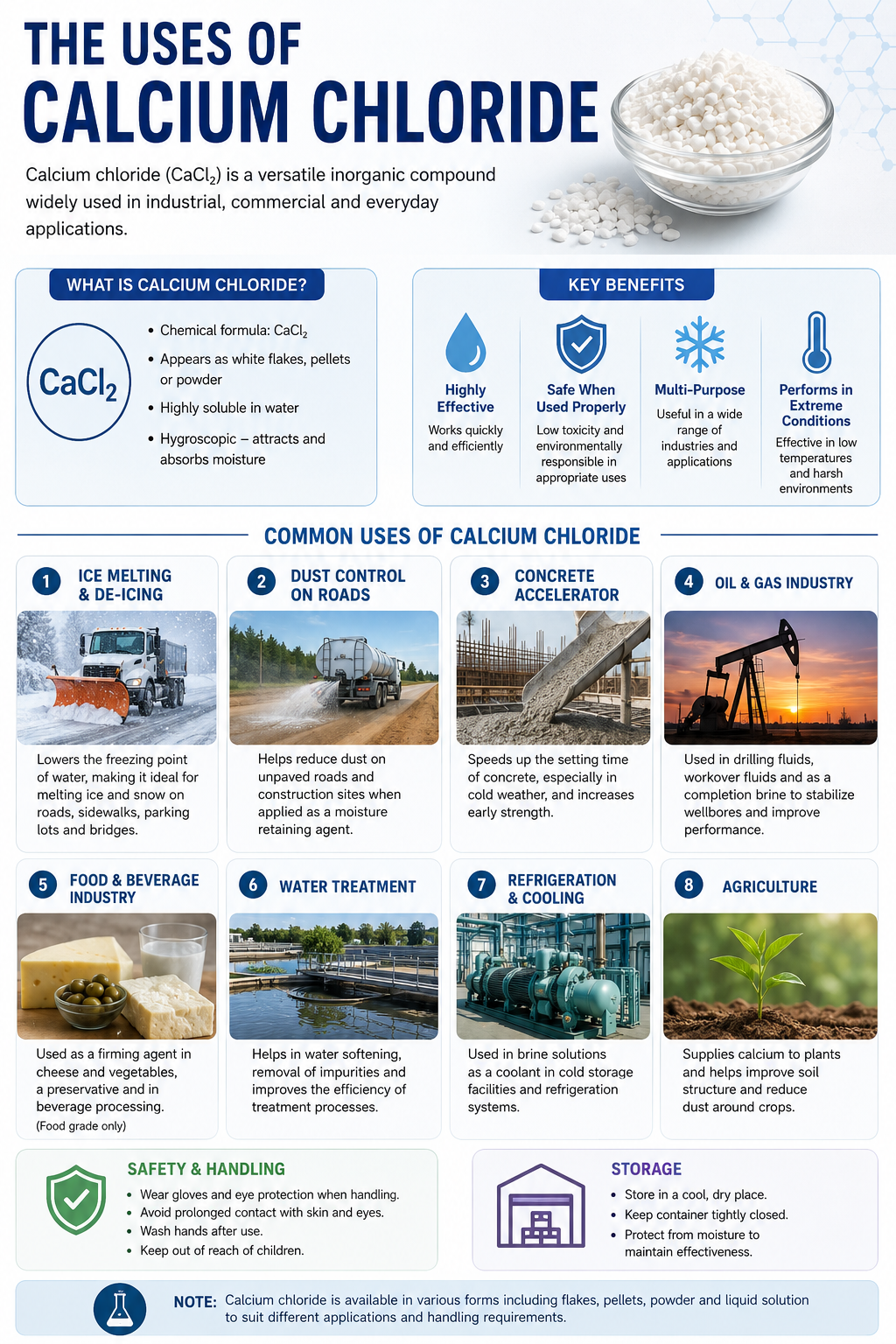
Usage of Calcium Chloride
Calcium chloride plays an important role in various industries owing to its characteristics. What are its uses, you might ask? Here are some of its main uses:
1. De-Icing and Road Safety
Calcium chloride is commonly employed for deicing roads, sidewalks, parking lots, and airports. It is more effective in melting ice compared to sodium chloride since it functions at low temperatures and emits heat as it dissolves.
| Benefits | Risks |
|
|
2. Dust Control and Moisture Management
It can absorb water, making it suitable for dust control in gravel roads, construction sites, storage facilities, and unpaved areas. The advantages include:
- Prevents dust particles from becoming airborne.
- Helps with surface stabilization.
- Enhances air quality in arid environments.
3. Construction and Concrete
Calcium chloride is used as a concrete accelerator, especially in cold weather, because it speeds up curing and helps projects stay on schedule. And the benefits are the following:
- Faster setting time.
- Better performance in cold conditions.
- Useful in time-sensitive construction work.
Also, there's an associated risk, which is that the compound can increase the risk of corrosion in steel reinforcement if misused.
4. Food Industry
In food processing, calcium chloride is used as a firming agent and processing aid. It is found in canned vegetables, cheese production, and some beverages. The usage includes:
- Firming canned produce.
- Supporting cheese coagulation.
- Maintaining texture in processed foods.
Importantly, food-grade calcium chloride must be used within regulatory limits, such as those for E509 applications.
5. Water Treatment
Calcium chloride is used in water treatment to adjust hardness and support treatment processes. It may also be used in wastewater systems and certain industrial water applications.
Benefits:
- Helps balance mineral content.
- Supports process efficiency.
- Useful in controlled treatment systems.
Industrial and Chemical Applications
It is also used as a desiccant and in chemical processes where moisture control is critical. In some settings, it is used in brines and refrigerant systems.
| Property | Calcium Chloride | Sodium Chloride | Magnesium Chloride |
| Effective temperature | Very low | Moderate | Low |
| Heat generation | High | None | Moderate |
| Speed | Fast | Slow | Medium |
| Cost | Higher | Low | Medium |
| Corrosion | Moderate | High | Lower |
Hazards of Using Calcium Chloride
Although calcium chloride has many uses, it can be hazardous if not handled properly. Key risks include:
1. Health Risks
a. Skin and Eye Irritation:
Direct contact with calcium chloride can lead to irritation and, with prolonged exposure, may cause burns.
b. Respiratory Issues:
Inhaling calcium chloride dust or mist can irritate the respiratory system, causing coughing and breathing difficulties.
c. Digestive Issues:
Swallowing calcium chloride can irritate the digestive tract, resulting in nausea, vomiting, and stomach pain.
2. Environmental Concerns
a. Water Contamination:
When released into water bodies, calcium chloride can raise water hardness levels and may negatively impact aquatic life.
b. Soil Impact:
Excessive use for de-icing or dust control can degrade soil quality over time, harming plant growth and affecting the ecosystem.
Why SDS Management Matters
Calcium Chloride spills are usually caused by inadequate storage, obsolete documents, or delay in accessing information about safety measures but not the chemical itself. These include:
- Moisture absorption can lead to damage to containers.
- Spilling that leads to a slip hazard or corrosion.
- The lack of current SDSs is causing delays in handling the situation.
- Labeling inconsistency at different locations is important.
Problems You Can Face with Calcium Chloride
Despite its widespread usefulness, calcium chloride presents several significant risks when not managed, stored, or handled properly. These issues span health effects on workers, damage to equipment and structures, and broader environmental consequences.
Health Hazards
- Skin/Eye Contact: Severe irritation; causes redness, dryness, and chemical burns (hygroscopic desiccation of tissues).
- Inhalation: Respiratory irritation, coughing, breathing issues; chronic exposure risks bronchitis.
- Ingestion: Exothermic heat burns the mouth/throat/stomach; causes nausea, vomiting, pain, hypercalcemia, gastric necrosis, and cardiac issues.
Corrosion and Material Damage
Calcium chloride aggressively corrodes metals like cars, equipment, bridges, and infrastructure, accelerating rusting processes and causing degradation, especially in situations involving de-icing where there is runoff. In construction, excessive use as a concrete accelerator results in faster corrosion of the embedded steel reinforcement and thus causes degradation of the structure.
Environmental Impact
Soil salinity may result from runoff from roads or other locations, causing adverse effects on plant growth, microbial activity, and farming. In water bodies, the presence of sodium leads to increased water hardness and impacts aquatic life, but its biodegradability helps mitigate environmental problems caused by other substances.
Safety Guidelines and OSHA Considerations
Handling calcium chloride safely requires careful control, use of protective equipment, and proper documentation to comply with OSHA Hazard Communication Standard (29 CFR 1910.1200). The employers are required to carry out hazard identification, GHS labeling of containers, and real-time availability of SDSs.
Safe Handling Checklist
- Always wear chemical-resistant gloves, safety goggles, face shields, and protective clothing to prevent skin/eye contact.
- Use local exhaust ventilation or respirators (NIOSH-approved for particulates) in dusty areas to avoid inhalation.
- Never eat, drink, or smoke near handling areas; wash hands thoroughly after use.
- Handle in well-ventilated spaces and avoid generating dust or aerosols.
First Aid Measures
- Skin Contact: Immediately remove contaminated clothing and rinse with plenty of water for 15-20 minutes; seek medical attention for burns or persistent irritation.
- Eye Contact: Flush eyes with water for at least 15 minutes, holding lids open; get immediate medical help.
- Inhalation: Move to fresh air; administer oxygen if breathing is difficult and seek emergency care.
- Ingestion: Do not induce vomiting; rinse mouth and contact poison control immediately, as internal heat generation can worsen damage.
Storage and Spill Response
These chemicals should be stored in dry and cool places inaccessible to moisture, acid, and oxidizing agents to avoid clumping, bursting, and reactions. In the event of spills, neutralization using lime or soda ash, followed by containment and proper disposal as hazardous waste, is required.
Management of proper Safety Data Sheets (SDS) is necessary since they contain information about the dangers involved with such chemicals.
How Can CloudSDS Help?
Exposure to calcium chloride poses dangers, and therefore it is imperative that one abides by the necessary safety measures when dealing with the chemical. Personal protective equipment (PPE) should be used at all times, and one should also adopt suitable storage procedures. Guidance is important, and one can find it in the form of an SDS management tool such as CloudSDS.
The CloudSDS software can provide essential information about the handling, storage, and use of calcium chloride.
1. Easy Access to Safety Data Sheets (SDS)
Getting an accurate SDS for calcium chloride through CloudSDS is very fast and easy. You can start the search process by typing in the product name, such as "Calcium Chloride." They can use other search terms like the manufacturer's name or CAS number to get more accurate results. This guarantees that the employees will have the latest updates on how to handle, store, and stay safe around this chemical.
2. Automated Updates
Using CloudSDS means there is no need for companies to perform manual updates to their safety data sheets. This is because CloudSDS allows users to automate the update process by sending emails. Rules can be set as to how many times the user would like to send reminder emails to manufacturers regarding updates on the safety data sheets.
3. Emergency Preparedness
In case of any spillage or accidental contact, quick access to SDS becomes imperative. CloudSDS fulfills this requirement because the user can retrieve critical safety information in just a few moments. Furthermore, there is an option for an emergency contact list.
4. Access to Hazard Summary
The user is no longer required to browse through the whole document whenever he needs information. Using the "Cabinet Plus" tab available at CloudSDS, the user can easily access all the hazardous information about that particular product.
Regulatory Compliance
The CloudSDS software makes it easy for companies to comply with legislation such as OSHA, REACH, and WHMIS through its updated SDS library. It can also assist in managing other reports, thus making compliance management easier. Users can also design, download, and save label templates, thus passing inspections and avoiding penalties.
Real-Life Incident Example
In an industrial environment, inadequate storage facilities for calcium chloride may result in moisture intake, container damage, and spilling, which causes hazards.
The point is clear that inadequate inventory control systems and poor safety management systems are primarily responsible for accidents.
Final Thoughts
Calcium chloride is one of the most useful and widely applied industrial chemicals, but its benefits come with real handling and compliance responsibilities. Its moisture-absorbing and heat-releasing properties make it valuable, but if someone mismanages the chemical, those same traits can create risks.
For organizations using calcium chloride at scale, safety depends on more than awareness. It depends on systems, documentation, and quick access to accurate information. That is where CloudSDS becomes essential as a practical tool for chemical safety, compliance, and operational control.
FAQ
1. Is calcium chloride better than rock salt?
Yes, in many situations calcium chloride performs better than traditional rock salt. Calcium chloride can continue melting ice in extremely low temperatures, often as low as -25°F (-32°C), whereas regular rock salt becomes much less effective below 15°F (-9°C). This makes calcium chloride a preferred choice in harsh winter climates.
Another advantage is speed. Calcium chloride releases heat when it dissolves in water, allowing it to melt snow and ice much faster than rock salt. Because of this rapid action, it is commonly used on highways, airport runways, parking lots, and industrial sites where safety is critical.
However, calcium chloride is generally more expensive than rock salt. It may also leave residue and can increase corrosion on metals if used excessively. Many organizations choose it when performance matters more than cost.
2. Is calcium chloride safe for pets?
Calcium chloride should be used carefully around pets. While it is effective for de-icing, direct contact with the pellets or treated surfaces can irritate a pet’s paws, skin, nose, and eyes. If pets lick the chemical from their paws, it may also cause stomach discomfort or digestive issues.
To reduce risks:
- Wipe your pet’s paws after walks
- Avoid letting pets eat snow from treated areas
- Store calcium chloride products out of reach
- Consider using pet-safe de-icing alternatives in areas frequently used by animals
Short-term exposure is usually manageable, but repeated or heavy exposure can lead to dryness, cracking, or irritation.
3. Can calcium chloride damage concrete?
Yes, excessive or improper use of calcium chloride can contribute to concrete damage over time. While calcium chloride itself does not instantly destroy concrete, repeated freeze-thaw cycles combined with chemical exposure may weaken the surface.
In reinforced concrete structures, calcium chloride can accelerate corrosion of embedded steel reinforcement bars. This corrosion may eventually lead to cracking, spalling, and structural deterioration.
The risk is higher when:
- Too much de-icer is applied repeatedly
- Concrete is old or poorly sealed
- Surfaces experience constant freezing and thawing
- Reinforced concrete is exposed for long periods
To minimize damage, it is recommended to:
- Use the correct application amount
- Seal concrete surfaces regularly
- Remove excess slush after melting
- Use alternative de-icers on sensitive concrete surfaces
4. Is calcium chloride environmentally friendly?
Calcium chloride is considered more efficient than some traditional de-icing materials because it works quickly and often requires smaller quantities to achieve results. This can reduce the total amount of chemical needed for ice control.
However, it is not completely environmentally harmless. Excessive use can affect:
- Soil quality
- Groundwater and nearby water bodies
- Plant growth and vegetation
- Aquatic ecosystems
Runoff from roads and industrial areas may increase chloride levels in rivers and lakes, which can impact aquatic life over time.
Responsible usage is important. Best practices include:
- Applying only the necessary amount
- Preventing over-spreading
- Storing chemicals properly
- Using eco-friendly alternatives where possible
When used in moderation and according to safety guidelines, calcium chloride can be an effective and manageable solution for de-icing and industrial applications.

Simplify Your SDS Management
CloudSDS gives your team instant access to 23M+ safety data sheets with AI-powered search, automated updates, and full OSHA/GHS compliance — all from one platform.
Leave A Comment