
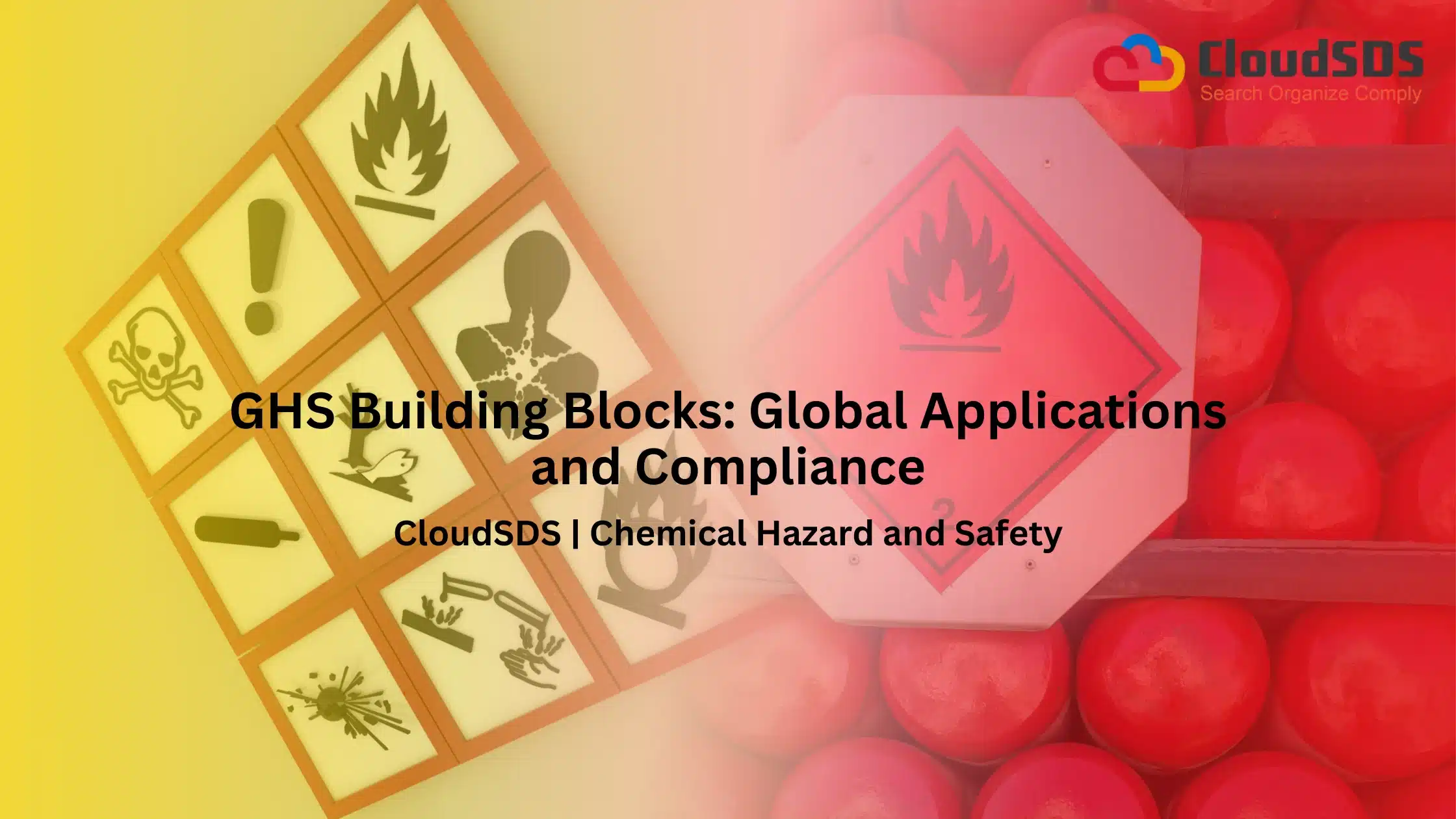
What Is GHS Building Blocks?
The GHS building blocks are like a set of Lego elements. The United Nations developed a large number of hazard classes, categories, pictograms, and labelling requirements. They can form a GHS system when combined. But no country is compelled to use every piece. Instead, each country adapts the elements that suit its own laws, industries, and safety requirements and assembles them in its own way. That's why the system is "modular", it's made up of smaller, distinct sections, not a fixed set of rules.
In fact, this flexibility is one of GHS's biggest qualities. A country with a high emphasis on chemical safety in the workplace might use the full detail for the health hazard building blocks and not include some of the environmental hazard categories that are less important to them. As a result, the same chemical might occasionally be classed or labeled slightly differently depending on where it is marketed or used.
Summary
GHS building blocks are the individual, modular components of the Globally Harmonized System, including specific hazard classes, categories, and communication elements like pictograms, signal words, and hazard statements, that countries can adopt on a selective basis rather than implementing the entire system at once. This modular design allows nations to align with international hazard communication standards while still tailoring adoption to their existing regulatory frameworks, giving GHS its flexibility as a global system. In short: GHS building blocks are the customizable pieces of the GHS framework that let each country pick and apply only the hazard classes and elements relevant to its own regulations.
Key takeaways
- GHS building blocks are modular components (hazard classes, categories, and labeling elements) that make up the full GHS framework.
- Countries are not required to adopt every building block; they can implement GHS partially based on national or regional regulatory priorities.
- This selective adoption is why GHS compliance can vary from country to country, even though the underlying system is "globally harmonized."
- Building blocks cover both physical, health, and environmental hazard classes, as well as communication tools like labels and SDS formats.
- For EHS and compliance teams, understanding which building blocks a target market has adopted is critical for accurate labeling, classification, and SDS authoring.
Quick facts about GHS building blocks
| Topic | Details |
| Full Name | Globally Harmonized System of Classification and Labelling of Chemicals |
| Developed By | United Nations (UN) |
| Primary Purpose | Standardize chemical hazard communication worldwide |
| Core Components | Hazard Classification, Labels, Pictograms, Safety Data Sheets (SDSs) |
| Main Users | Manufacturers, Importers, Distributors, Employers, Laboratories |
| Used In | Chemical manufacturing, healthcare, construction, transportation, pharmaceuticals, laboratories |
| Flexible Feature | Building Block Approach |
| Regulatory Goal | Improve workplace safety and international trade |
Understanding the Globally Harmonized System (GHS): purpose, structure, and global adoption
-
Purpose:
The GHS was developed by the United Nations. The purpose was to provide a consistent, worldwide framework for classifying chemicals and conveying their risks through standardized labels and safety data sheets. Thus, it was also planned to replace the patchwork of contradictory national systems that had previously been in place.
-
Core structure:
Hazards are divided into three basic groups: physical hazards (e.g., flammability and explosiveness), health hazards (e.g., toxicity and carcinogenicity), and environmental hazards (e.g., aquatic toxicity) and are further subdivided into specific types and categories.
-
Standardized communication tools:
GHS harmonizes the pictograms, signal words (“Danger” or “Warning”), hazard statements, and precautionary remarks. This means that a hazard symbol on a label will signify the same thing, regardless of what country the label is used in.
-
16-section SDS format:
GHS also standardizes the Safety Data Sheet format into 16 sections, helping EHS personnel find crucial information irrespective of the manufacturer and location of origin.
-
Voluntary, modular adoption:
GHS is not an international rule that is binding; it is a model framework that different countries and regions (the U.S. through OSHA’s HazCom Standard, for example, or the EU through CLP Regulation) implement into their own legal systems, usually with country-specific changes.
-
Ongoing revisions:
The GHS is revised by the UN periodically (now on its numerous editions), and countries adopt updated versions on their own timeframes, which is why keeping up-to-date on building block adoption by area is important for compliance.
-
Why this matters for compliance teams:
The same chemical may need to be classified, labeled, or have varying SDS content depending on the country version of GHS that applies. Because adoption is not consistent, building blocks are an important notion for international compliance strategies.
Why were GHS building blocks introduced?
1. Facilitates global trade
Manufacturers often sell chemical products in more than one country. Hazard communication is standardized. This reduces confusion and helps with doing business in other countries, as the same danger information is being used in all markets.
2. Improves worker safety
In a facility, a chemical is produced and stored anywhere. The workers can grasp typical hazard pictograms, signal phrases, and preventive comments. This consistency helps identify hazards more easily and reduces the opportunity for chemicals to be mishandled.
3. Follows national laws
Laws differ from country to country, and so do enforcement goals. Building blocks allow regulators to introduce hazard classes without rewriting their entire chemical safety system.
4. Allows for progressive adoption
Instead, countries can add to the hazard classes as legislation changes, instead of rolling out all the classes at once.This phased approach has hastened the global diffusion of GHS.
GHS hazards building blocks in details
GHS organizes hazards into three groups: physical, health, and environmental, each divided into classes and severity categories.
1. Physical Hazards
Intrinsic properties that can cause explosions, pressure incidents, or dangerous reactions during storage, handling, or transport.
- Explosives: Release gas/energy rapidly under heat, shock, or friction (TNT, dynamite, ammonium nitrate explosives). Used in mining, construction, defense, and fireworks. Store in authorized magazines, away from ignition sources and restricted access.
- Flammable gases: Ignite when mixed with air near an ignition source (hydrogen, methane, acetylene, propane). Common in oil & gas, welding, and chemical manufacturing. Requires leak detection, ventilation, and non-sparking equipment.
- Flammable liquids: Emit ignitable vapor below their flash point (ethanol, acetone, toluene, xylene, gasoline). Risks: vapor ignition, flash fires, and static discharge. Store in flammable cabinets, bond/ground containers, and remove ignition sources.
- Oxidizing substances: Not flammable themselves but intensify fires by releasing oxygen (hydrogen peroxide, potassium permanganate, and sodium nitrate). Keep away from combustibles and flammable liquids; store cool and dry.
- Pressurized gases: Hazardous from compression alone, flammable or not (nitrogen, oxygen, CO₂, argon). Risks: cylinder rupture, projectile injury, oxygen displacement, cryogenic frostbite. Secure uprightly, use valve caps, and inspect regulators.
- Corrosive to metal: Degrade containers and equipment, risking leaks (hydrochloric, sulfuric, and nitric acids). Causes equipment damage, chemical burns, and environmental release.
- Self-reactive materials: Decompose dangerously without oxygen, producing fire, explosion, or toxic gas (certain organic peroxides used as polymerization initiators).
- Pyrophoric chemicals: Ignite spontaneously in air (white phosphorus, some organometallics). Require airtight, specialized storage.
- Self-heating chemicals: Slowly oxidize and generate heat; poor ventilation can trigger spontaneous combustion (charcoal products, oil-soaked rags, metal powders).
- Water-reactive chemicals: Release flammable gas on contact with moisture (sodium, potassium, calcium carbide). Must stay strictly dry.
2. Health Hazards
Effects of chemical exposure on the human body: some don’t appear until years after exposure.
- Acute toxicity: Damage from a single or brief repeated exposure via inhalation, skin, eyes, or ingestion; severity ranges from mild discomfort to life-threatening poisoning.
- Skin corrosion/irritation: Tissue damage or inflammation on contact (strong acids/bases, industrial cleaners). Gloves and protective clothing are the primary control.
- Eye irritation/damage: Ranges from mild irritation to permanent injury depending on corrosivity. Requires eye protection and emergency eyewash stations.
- Respiratory sensitization: Allergic reactions in the airways from repeated low-level exposure, potentially leading to occupational asthma (isocyanates, certain epoxies, lab reagents).
- Skin sensitization: Allergic skin reactions from repeated contact (adhesives, resins, rubber accelerators, some preservatives).
- Germ cell mutagenicity: Potential to alter genetic material; a key indicator for long-term health risk even without immediate disease.
- Carcinogenicity: Substances linked to elevated cancer risk in human or animal studies (benzene, formaldehyde, vinyl chloride, chromium VI, and some nickel compounds). Long latency makes engineering controls, ventilation, and PPE essential.
- Reproductive toxicity: Risks to fertility or fetal development (heavy metals, organic solvents, industrial chemicals, pharmaceuticals). Employers should assess exposure for employees who are or may become pregnant.
- Specific Target Organ Toxicity (STOT): Organ-specific damage (liver, kidney, lungs, nervous system, blood, heart) from single or repeated exposure; classification depends on severity seen in toxicology studies.
- Aspiration hazard: Lung damage from liquid entering airways during ingestion or vomiting (hydrocarbon solvents, mineral oils, some fuels); even small amounts can cause serious harm, making correct first aid critical.
3. Environmental Hazards
GHS also addresses ecological risk from hazardous substances.
- Hazardous to aquatic life (acute/chronic): Toxicity to fish, algae, and invertebrates, factoring in persistence, bioaccumulation, and degradation. Requires spill-prevention measures.
- Ozone-depleting substances: Damage the atmospheric ozone layer; not universally adopted as a hazard class, but relevant for businesses using regulated refrigerants or industrial chemicals.
How does the GHS building block approach operate?
GHS is flexible yet has a rational general approach that helps to ensure that hazards are communicated consistently.
1. UN GHS releases
The UN routinely updates the Globally Harmonized System, incorporating new hazard classes, altered criteria, and updated guidance as science develops and international agreement is reached.
2. Examination of the framework by national authorities
Regulatory agencies will evaluate the new revision of GHS and select which hazard classifications and categories to adopt into their national legislation.
3. Select appropriate building blocks
Countries do not use all the various classifications, but just those building blocks that are relevant for their legal demands, industrial sectors, and governmental purposes.
4. Manufacturers classify chemicals
Then the manufacturers compare their substances with the recognized classification criteria to determine the relevant hazards.
5. Labelling and safety data sheets are developed
Hazard classifications are subsequently translated into standardized labels, pictograms, signal words, hazard statements, precautionary statements, and Safety Data Sheets (SDSs).
6. Employer notifies all workers of hazards
Labels, SDSs, employee training, and workplace guidelines are used by firms to guarantee that staff understand chemical dangers and know how to utilize such objects safely.
7. Compliance and regular updates
To stay compliant with GHS, an organization needs to conduct regular updates. So, organizations need to review classifications, update SDSs, revise labels, and provide proper training to workers.
GHS Hazard Building Blocks
GHS organizes hazards into three groups: physical, health, and environmental, each divided into classes and severity categories.
1. Physical Hazards
Intrinsic properties that can cause explosions, pressure incidents, or dangerous reactions during storage, handling, or transport.
- Explosives: Release gas/energy rapidly under heat, shock, or friction (TNT, dynamite, ammonium nitrate explosives). Used in mining, construction, defense, fireworks. Store in authorized magazines, away from ignition sources, restricted access.
- Flammable gases: Ignite when mixed with air near an ignition source (hydrogen, methane, acetylene, propane). Common in oil & gas, welding, chemical manufacturing. Requires leak detection, ventilation, non-sparking equipment.
- Flammable liquids: Emit ignitable vapor below their flash point (ethanol, acetone, toluene, xylene, gasoline). Risks: vapor ignition, flash fires, static discharge. Store in flammable cabinets, bond/ground containers, remove ignition sources.
- Oxidizing substances: Not flammable themselves but intensify fires by releasing oxygen (hydrogen peroxide, potassium permanganate, sodium nitrate). Keep away from combustibles and flammable liquids; store cool and dry.
- Pressurized gases: Hazardous from compression alone, flammable or not (nitrogen, oxygen, CO₂, argon). Risks: cylinder rupture, projectile injury, oxygen displacement, cryogenic frostbite. Secure upright, use valve caps, inspect regulators.
- Corrosive to metal: Degrade containers and equipment, risking leaks (hydrochloric, sulfuric, nitric acid). Causes equipment damage, chemical burns, environmental release.
- Self-reactive materials: Decompose dangerously without oxygen, producing fire, explosion, or toxic gas (certain organic peroxides used as polymerization initiators).
- Pyrophoric chemicals: Ignite spontaneously in air (white phosphorus, some organometallics). Require airtight, specialized storage.
- Self-heating chemicals: Slowly oxidize and generate heat; poor ventilation can trigger spontaneous combustion (charcoal products, oil-soaked rags, metal powders).
- Water-reactive chemicals: Release flammable gas on contact with moisture (sodium, potassium, calcium carbide). Must stay strictly dry.
2. Health Hazards
Effects of chemical exposure on the human body: some don’t appear until years after exposure.
- Acute toxicity: Damage from a single or brief repeated exposure via inhalation, skin, eyes, or ingestion; severity ranges from mild discomfort to life-threatening poisoning.
- Skin corrosion/irritation: Tissue damage or inflammation on contact (strong acids/bases, industrial cleaners). Gloves and protective clothing are the primary control.
- Eye irritation/damage: Ranges from mild irritation to permanent injury depending on corrosivity. Requires eye protection and emergency eyewash stations.
- Respiratory sensitization: Allergic reactions in the airways from repeated low-level exposure, potentially leading to occupational asthma (isocyanates, certain epoxies, lab reagents).
- Skin sensitization: Allergic skin reactions from repeated contact (adhesives, resins, rubber accelerators, some preservatives).
- Germ cell mutagenicity: Potential to alter genetic material; a key indicator for long-term health risk even without immediate disease.
- Carcinogenicity: Substances linked to elevated cancer risk in human or animal studies (benzene, formaldehyde, vinyl chloride, chromium VI, some nickel compounds). Long latency makes engineering controls, ventilation, and PPE essential.
- Reproductive toxicity: Risks to fertility or fetal development (heavy metals, organic solvents, industrial chemicals, pharmaceuticals). Employers should assess exposure for employees who are or may become pregnant.
- Specific Target Organ Toxicity (STOT): Organ-specific damage (liver, kidney, lungs, nervous system, blood, heart) from single or repeated exposure; classification depends on severity seen in toxicology studies.
- Aspiration hazard: Lung damage from liquid entering airways during ingestion or vomiting (hydrocarbon solvents, mineral oils, some fuels); even small amounts can cause serious harm, making correct first aid critical.
3. Environmental Hazards
GHS also addresses ecological risk from hazardous substances.
- Hazardous to aquatic life (acute/chronic): Toxicity to fish, algae, and invertebrates, factoring in persistence, bioaccumulation, and degradation. Requires spill-prevention measures.
- Ozone-depleting substances: Damage the atmospheric ozone layer; not universally adopted as a hazard class, but relevant for businesses using regulated refrigerants or industrial chemicals.
Why do countries adopt different GHS building blocks?
GHS provides a global framework, but execution is not uniform around the world. Each country assesses the UN proposals and selects which hazard types and categories will be incorporated in the national regulations. The building block approach is all about this adaptability.
The adoption is driven by:
- Current chemicals legislation
- Industries
- Environmental priorities
- Policies on worker protection
- Trade needs
- Regulatory ability
These variances are important for multinationals to consider when producing labels and Safety Data Sheets (SDSs) for different markets.
Examples of GHS building block adoption
| Country/Region | Regulatory Framework | Notable Adoption Characteristics |
| United States | OSHA Hazard Communication Standard | GHS-aligned for workplace hazard communication with country-specific implementation requirements. |
| European Union | CLP Regulation | Broad implementation of GHS with additional EU-specific obligations under CLP. |
| Canada | WHMIS | GHS was incorporated into the Workplace Hazardous Materials Information System with Canadian-specific requirements. |
| Australia | Model WHS Regulations | GHS adopted through national workplace health and safety regulations. |
| Japan | Industrial Safety and Health Act | GHS implemented with industry-specific guidance and ongoing updates. |
| South Korea | K-OSHA & related regulations | GHS integrated into national chemical safety requirements. |
Benefits of the GHS building block approach
1. Improved worker safety
Standardized risk categories, labels, and SDSs can assist workers in identifying chemical hazards and encourage safe practices for handling chemicals.
2. Expansion of foreign trade
Manufacturers can utilize such a system for labeling products so that they may sell their products around the world without the need to build a different system for each place.
3. More regulatory flexibility
Governments may select risk classes according to national legislation and then gradually increase the application as regulations progress.
4. Better consistency in hazard communication
Standardized pictograms, signal words, and SDS formats help communication in the supply chain between manufacturers and end users.
5. Enhanced emergency response
Standardized labels and SDSs allow emergency responders to rapidly recognize chemical hazards and establish the required protection and response.
6. Improved regulatory compliance
Proper application of GHS categories by a corporation can better meet workplace safety regulations and respond to regulatory inspections or audits.
Challenges of implementing GHS building blocks
Although GHS has significantly improved global hazard communication, implementation is not without challenges.
1. Various national requirements
Where countries implement various GHS revisions or distinct building blocks, producers will need to prepare market-specific labels and SDSs.
2. Standard regulatory updates
The UN routinely updates GHS to take account of new scientific evidence. Businesses will have to keep an eye on these changes and update documents as requirements change.
3. Multiple versions of SDS
Companies exporting items to numerous countries may need multiple versions of SDS so that they may meet the local requirements and language regulations.
4. Training of employees
Even when standardized labels are used, employees need to be trained regularly to comprehend hazard classifications, pictograms and safe work practices.
5. Data handling
Large corporations often have thousands of chemicals spread over several sites. Managing all of the documentation manually is laborious and might result in obsolete or conflicting information.
Best practices for GHS compliance
1. Maintain a detailed chemical inventory
Maintain an up-to-date inventory of all hazardous substances used, stored, or transported in the organization. Routine assessments help to discover unnecessary goods and reduce excess chemical inventories.
2. Review of hazard classification periodically
Scientific truths and regulatory requirements may change over time. Regularly review categories to make sure labels and SDSs are still relevant.
3. Provide ongoing employee training
Provide proper training to all employees to:
- Understand the meaning of GHS pictograms
- Understand signal words and hazard statements
- Learn how to access and use Safety Data Sheets
- Understand and obey safe handling procedures.
- Respond appropriately to spills and emergencies.
Training should be refreshed whenever new chemicals are introduced or regulations change.
4. Verify labels before distribution
Poor or incorrect labeling can be an issue in terms of regulatory compliance and occupational hazards. Quality assurance procedures are employed to verify label accuracy before leaving the factory.
5. Perform internal compliance checks
Regular audits can uncover the need to change paperwork, labeling, worker training, and chemical storage methods before they become problems with regulators.
6. Digitization of chemical safety information
Centralized digital systems for SDS and chemical inventory management enable improved access, lessen administrative burden, and help guarantee accuracy of documentation across several sites.
Conclusion
GHS building blocks are vital to organizations involved in international trade because they assist in ensuring consistency in the supply chain.
A chemical manufacturer may have one product that is supplied to customers in multiple nations. The chemical composition remains the same; however, the classification, labeling, or documentation regulatory requirements may alter depending on the target market.
To help organizations achieve worldwide compliance, they must:
- Be aware of regulatory changes in the markets you service
- Check the classification criteria of each country
- Prepare localized SDSs as required
- The label shall conform with the requirements of the national standards concerned.
A protective measure is more necessary here to improve the confidence of customers, reduce the risk of shipment delays, and minimize compliance challenges.
FAQs
1. What are GHS building blocks?
GHS building blocks are flexible components within the Globally Harmonized System that allow countries to adopt specific hazard classes and categories while maintaining standardized hazard communication through labels and Safety Data Sheets.
2. Who developed the GHS?
The Globally Harmonized System was developed by the United Nations to improve the consistency of chemical classification and hazard communication worldwide.
3. Are GHS building blocks mandatory?
The GHS itself is not a law. Individual countries decide how to incorporate GHS building blocks into their national chemical safety regulations.
4. Why don't all countries adopt the same building blocks?
Countries have different legal systems, industrial sectors, environmental priorities, and regulatory frameworks. The building block approach allows flexibility while preserving global consistency.
5. How do GHS building blocks affect safety data sheets?
Hazard classifications determine the information included in SDSs, including hazard identification, PPE recommendations, first-aid measures, firefighting guidance, storage requirements, and transportation information.
6. How often is GHS updated?
It's periodically published by the United Nations. The revised edition of the GHS helps to reflect advances in scientific knowledge and international regulatory practices.
7. Do GHS building blocks apply to every chemical?
They apply to chemicals that fall within the scope of applicable national GHS regulations. Some products, such as pharmaceuticals or consumer products, may be subject to additional sector-specific requirements.
8. What is the difference between a hazard class and a hazard category?
A hazard class describes the type of hazard (for example, flammable liquids or carcinogenicity), while a hazard category indicates the severity of that hazard within the class.

Simplify Your SDS Management
CloudSDS gives your team instant access to 23M+ safety data sheets with AI-powered search, automated updates, and full OSHA/GHS compliance — all from one platform.
Leave A Comment