
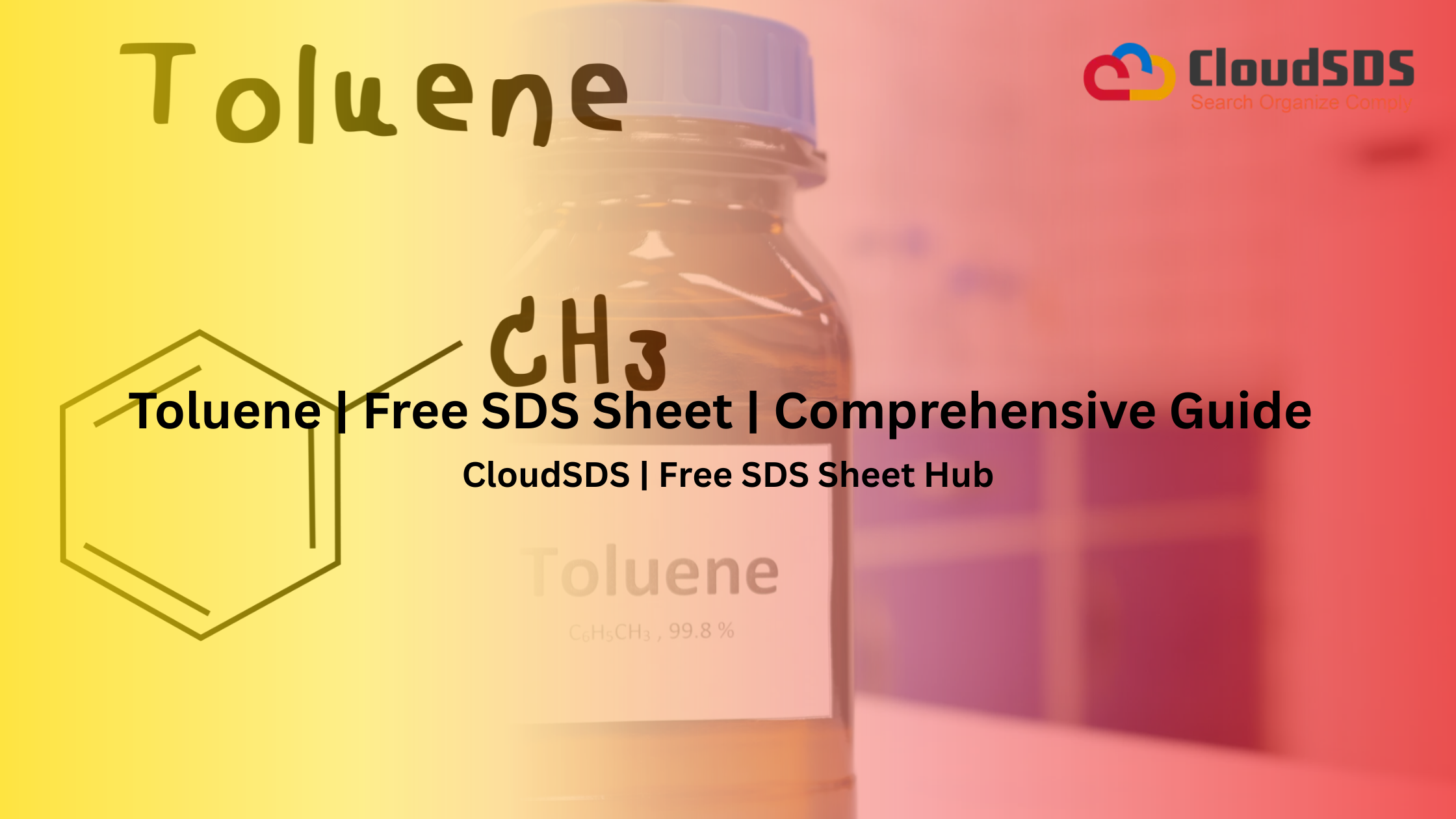
This is a versatile organic compound that's far more than just a ubiquitous solvent. Toluene is a clear, sweet-smelling liquid, also known as methylbenzene. It is a key aromatic hydrocarbon critical to everything from manufacturing paints, adhesives, and even pharmaceuticals to its less savory reputation in certain industrial processes. It is found naturally in crude oil and the tolu tree. Its synthetic production makes it a cornerstone of modern chemistry. Now, take a closer look at this powerhouse compound and explore other aspects.
What Is Toluene and Why Is It Important?
Core SDS & Identification
In most modern GHS-style SDS for toluene, Section 1 ("Identification of the substance or mixture and of the supplier") and Section 2 ("Hazard identification") are treated together as the "core" SDS identification block because they explain what the substance is, who is responsible for it, and how it is classified for hazard communication.
Regulatory identifiers:
- CAS Registry Number: 108‑88‑3 (unique numeric identifier for toluene in chemical databases, SDS, and regulatory submissions).
- UN number: UN1294 (for "Toluene, flammable liquid"; required for transport under ADR/RID/IMDG/ICAO‑TI, including labeling, packaging, and emergency response guidance).
- Packaging group: typically, PG II (medium hazard) for flammable liquids under UN‑TDG, based on flash‑point and boiling point criteria.
Responsible supplier data:
- SDS must list the name, address, and 24-hour emergency response telephone number of the manufacturer or importer.
- This forms the legal nexus for product stewardship, incident reporting, and regulatory obligations under REACH, OSHA, or local frameworks.
CAS Number: 108‑88‑3
The CAS Registry Number 108‑88‑3 is the globally recognized, non-generic identifier for toluene and is the bedrock of chemical safety and regulatory tracking.
GHS Flammable Liquid Classification
Toluene is classified as a flammable liquid under GHS / CLP, which directly drives storage, ventilation, ignition of source control, and fire response planning.
GHS classification (typically):
Flammable liquids are classified as category 2 or category 1 depending on the flash point source data and regional interpretation.
- Flash point ≈ 4°C (closed cup).
- Boiling point ≈ 111°C, which places it in Class IB flammable liquid per NFPA/OSHA fire hazard frameworks.
Label elements driven by this classification:
- Signal word: DANGER (flammable liquids, categories 1–2).
- Pictogram: Flame (GHS02).
- Hazard statements: H225: "Highly flammable liquid and vapor."
- Precautionary statements:
- P210: "Keep away from heat, hot surfaces, sparks, open flames, and other ignition sources. No smoking."
- P233: "Keep container tightly closed."
- P243: "Take precautionary measures against static discharge."
Operational consequences:
- Requires the use of flammable liquid storage cabinets, bonding and grounding of containers, explosion-proof electrical equipment, and vapor detection systems in confined spaces.
- Fire response: foam or dry chemical extinguishers; never use water jets directly on burning liquid (risk of splash and vapor dispersion).
GHS Health Hazard Classification
The health hazard classification for toluene reflects its acute CNS effects, skin irritation, reproductive concerns, and chronic exposure to neurotoxicity, which are critical for exposure control planning. The typical GHS classifications (CLP-aligned) include:
- Acute toxicity (oral) – Category 4 (harmful if swallowed).
- Specific target organ toxicity – single exposure (STOT SE) – Category 3 (narcotic effects).
- Skin irritation – Category 2 (irritant).
- Reproductive toxicity – Category 2 (suspected of damaging fertility or the unborn child).
- Specific target organ toxicity – repeated exposure (STOT RE) – Category 2 (central nervous system).
- This substance is hazardous to the aquatic environment, both acutely and chronically (Category 2).
- Health hazard implications for EHS:
| Topic | Details |
|---|---|
| Exposure-limit compliance — ACGIH | TLV-TWA ≈ 20 ppm (≈ 75–85 mg/m³ by inhalation); skin notation (dermal absorption) |
| Exposure-limit compliance — EU / other jurisdictions | Typical OELs often around 50 ppm TWA / 100 ppm STEL; skin notation |
| Control measures |
|
| Medical surveillance focus |
|
Synonyms & Identifiers (methylbenzene, toluol, phenylmethane)
The use of multiple synonyms reflects historical usage, regional preferences, and IUPAC/industry nomenclature, all of which must be reconciled in SDS databases and labeling systems.
Common synonyms:
- Methylbenzene: IUPAC-style name, emphasizing the methyl substituent on the benzene ring.
- Toluol: An older or European trade‑style name, still encountered in literature and legacy labels.
- Phenylmethane: Highlights the phenyl group attached to methane, underscoring the aromatic–aliphatic hybrid character.
Molecular Formula (C₇H₈):
The molecular formula C₇H₈ is not merely a chemical descriptor. Rather, it underpins physical properties, toxicokinetics, and risk assessment models. This formula is used in occupational hygiene and environmental fate analysis.
Structural property links:
- Aromatic ring (C₆H₅–) plus a methyl group (–CH₃) yields a non‑polar, volatile organic liquid with moderate water solubility (≈ 0.5 g/L at 20 °C) and high lipophilicity (logP ≈ 2.7).
- This property drives the following:
- Vapor generation occurs at room temperature (high vapor pressure).
- Dermal absorption and bio‑accumulation potential in fatty tissues.
Exposure assessment utility:
- In industrial hygiene modeling, C₇H₈ is used to calculate molecular weight-based conversions between ppm and mg/m³ (factor ≈ 3.8 at 25 °C), which is essential for interpreting air-monitoring data against OELs.
- Molecular weight and structure inform toxicokinetic models (e.g., metabolism via CYP450 to benzaldehyde and benzoic acid, excreted in urine), which support biological monitoring strategies.
UN Number: UN1294
The UN number UN1294 links the chemical identity to transport regulation systems (TDG, ADR, IMDG, IATA‑TI), ensuring that safety controls in transit align with on‑site SDS‑driven controls.
Regulatory context:
a. The substance is classified under the UN Model Regulations as “Toluene, flammable liquid, UN1294, Class 3, PG II.”
b. This classification dictates the following:
Proper shipping name on consignments.
Packaging specifications (tightly sealed, UN‑tested packaging).
Labeling: Diamond-shaped Class 3 flammable liquid label and GHS-compatible hazard labels when applicable.
Emergency response function:
First responders use UN1294 in the ERG (Emergency Response Guidebook) to identify the substance and access:
Initial isolation and protective action distances.
Firefighting and spill containment guidance includes vapor hazards, no waterjet constraints, and static discharge risks.
Crosswalk to SDS:
The UN1294 entry in Section 14 (Transport information) of the SDS must match the transport document data to avoid compliance gaps during audits or inspections.
Industrial Uses
-
Paints, coatings, and thinners
Toluene is one of the solvent workhorses used in paints, coatings, and thinners, being prized for its strong solvency, relatively low volatility, and compatibility with resins and oils.
-
Adhesives and sealants
In adhesives and sealants, toluene functions as a formulation solvent and application processing agent, not as a structural component.
-
Chemical intermediate production
Toluene is a key aromatic building block in the petrochemical value chain, serving as a feedstock for a wide range of derivatives rather than an end-use product. The major derivative pathways include:
-
Fuel additive and octane enhancer
Toluene is used as a high-octane component in gasoline and specialty fuels, exploiting its aromatic structure to suppress knocking in spark-ignition engines.
-
Explosives manufacturing (TNT precursor)
Toluene is the primary aromatic precursor for TNT (trinitrotoluene) via sequential nitration under controlled conditions.
-
Printing and ink industries
In printing and inks, toluene is used mainly as a solvent for flexographic, gravure, and some specialty inks, although its use has declined in favor of less toxic alternatives in many regions.
-
Pharmaceuticals and cosmetics
In pharmaceuticals and cosmetics, toluene is used sparingly and under strict controls, mainly as a process solvent or formulation carrier, not as a final product active ingredient.
-
Rubber and polymer manufacturing
Toluene serves multiple roles in rubber and polymer manufacturing, from reaction solvent to polymer solution carrier and cleaning agent.
Health Hazards
Central Nervous System (CNS) Depression
Toluene is a volatile organic solvent with high lipophilicity, so it rapidly crosses the blood–brain barrier and interferes with neuronal membrane function, producing dose-dependent CNS depression.
a. Mechanistic basis:
- Acts as a non‑specific neurodepressant similar to anesthetics, enhancing GABAergic inhibition and reducing excitatory neurotransmission (NMDA-type effects), leading to impaired coordination, judgment, and reaction time.
- Effects are rapidly reversible at low–moderate exposures, but repeated high-dose exposure can cause cumulative CNS fatigue and subtle cognitive deficits.
b. Occupational exposure context:
- In spray painting, coating, or adhesive application, airborne concentrations near or above OELs can produce impaired vigilance, poor motor control, and "binge‑like" sensorial effects, increasing accident risk.
- In confined space work (tanks, booths, ducts), even short-duration high-peak exposures can mimic acute intoxication symptoms such as euphoria, incoordination, and dysarthria, which are sometimes misclassified as "drunkenness" in incident reports.
c. Control implications:
- Compliance with exposure limits (e.g., 20 ppm ACGIH TLV with skin notation) and the implementation of behavioral safety programs are critical for preventing accidents that arise from CNS-driven performance degradation.
- Emergency response plans must treat high-vapor situations as simultaneously CNS‑toxic and flammable, requiring ventilation plus respiratory protection plus ignition source control.
2. Acute Inhalation Toxicity
Inhalation is the primary route of entry for acute toluene toxicity in industrial settings, given its high vapor pressure and moderate boiling point.
a. Toxicokinetic profile:
- Rapid uptake via lungs; toluene partitions into blood and then distributes to fat-rich tissues (brain, adipose, and liver).
- Acute inhalation exposure generates dose-dependent narcosis, with headache, dizziness, nausea, and impaired coordination being hallmark signs.
b. Acute toxicity grading:
Under GHS, toluene is typically classified as the following:
- Acute toxicity (inhalation) – Category 4 (harmful, but not highly acutely lethal under typical occupational conditions).
- Hazard statement H336: "May cause drowsiness or dizziness."
Very high-level exposures (e.g., unventilated tanks, large spills) can cause profound CNS depression, respiratory depression, and even coma, though fatal respiratory failure is rare compared with other solvents (e.g., benzene or methanol).
c. Exposure scenario focus:
- Open tank dipping, confined space cleaning, and emergency spill situations are high-risk scenarios for acute inhalation toxicity.
- Monitoring strategy: Real-time VOC detectors, short-term exposure assessments, and immediate action thresholds (e.g., 50–100 ppm STEL triggers evacuation plus fresh air resuscitation).
3. Skin and Eye Irritation
Although toluene is not a strong corrosive, it is a mild but clinically significant irritant to skin and mucous membranes, especially with repeated or prolonged contact.
a. Skin effects:
- Defatting action: dissolves sebum and intercellular lipids, disrupting the skin barrier and leading to contact dermatitis, xerosis, fissuring, and secondary infection risk.
- Dermal absorption: toluene is absorbed through intact skin, contributing to systemic exposure even when respiratory controls appear adequate.
- GHS classification typically includes Skin irritation Category 2 (H315: “Causes skin irritation”).
b. Eye effects:
- Vapors and splashes can cause conjunctival irritation, lacrimation, and transient corneal haze; prolonged exposure or high-concentration vapor may lead to chemical conjunctivitis.
- Although not a strong corneal necrotizing agent, toluene is still listed under Eye Irritation Category 2 (H319: “Causes serious eye irritation”) in many SDSs.
c. Control and PPE strategy:
- Chemical-resistant gloves (e.g., nitrile, butyl, or laminated materials) with change-frequency protocols, plus impermeable aprons in high-contact scenarios.
- Splash goggles or face shields, eyewash stations, and immediate wash-and-rinse procedures are nonnegotiable in areas with open-surface handling.
4. Chronic Neurological Effects
Repeated or prolonged exposure to toluene—even at levels only modestly above OELs—can lead to subtle but persistent neurobehavioral changes, generically termed "chronic solvent encephalopathy" or "chronic CNS solvent syndrome."
a. Clinical manifestations:
- Neuropsychological deficits: impaired attention, short-term memory, executive function, and processing speed.
- Motor effects: fine motor coordination deficits, mild tremors, and reduced manual dexterity.
- Mood and affect: anxiety, irritability, symptoms resembling depression, and sleep disturbances.
b. Mechanistic basis:
- Chronic exposure may cause axonal neuropathy-like changes and white matter alterations in the CNS, driven by oxidative stress, lipid peroxidation, and astrocytic dysfunction.
- Cognitive deficits are often dose- and duration-dependent, with some recovery after exposure of cessation, but residual impairment is documented in heavily exposed workers.
c. EHS and medical surveillance implications:
- Baseline and periodic neurobehavioral screening (where available) for high-exposure groups.
- Exposure reduction programs (LEV, automation, and closed systems) and medical reassignment policies for workers with documented cognitive or neurologic deficits.
5. Liver and Kidney Toxicity
Toluene is metabolized primarily in the liver and excreted via the kidneys, so chronic or high-dose exposure can stress these organs, although overt clinical hepatotoxicity or nephrotoxicity is less common than with certain other solvents (e.g., carbon tetrachloride or chlorinated hydrocarbons).
a. Metabolic pathway and hepatotoxicity:
- Toluene undergoes oxidation by CYP2E1 to benzyl alcohol, then to benzaldehyde, and finally to benzoic acid, which conjugates with glycine to form hippuric acid (major urinary metabolite).
- High-level exposures can saturate metabolic pathways, increase oxidative stress burden, and potentially cause mild hepatocellular injury (elevated transaminases) in heavy industrial users.
b. Nephrotoxicity considerations:
The hippuric acid load increases renal workload; while overt nephrotoxicity is rare, chronic high-exposure scenarios may contribute to subtle tubular or metabolic acidosis-like patterns, especially with co‑exposure to other solvents or nephrotoxic agents.
c. Biological monitoring linkage:
- Urinary hippuric acid (or o‑cresol) is classically used as a biological exposure index (BEI) surrogate, though modern interpretation stresses urinary creatinine-adjusted values and correlation with air monitoring.
- Abnormal hepatic enzymes or renal function markers should trigger medical reassessment and exposure verification (air sampling and PPE compliance audits).
6. Reproductive and Developmental Concerns
Toluene is classified as a suspected reproductive toxicant, with evidence pointing to risks for fertility, fetal development, and postnatal neurodevelopment under high-dose exposure scenarios.
c. Reproductive toxicity (adults):
- Animal and limited human data suggest altered spermatogenesis, reduced sperm count/motility, and hormonal axis perturbations in males with high-level exposure.
- In females, high-dose occupational exposure has been associated with menstrual cycle irregularities and potential fertility impairment, though evidence is less robust than in males.
b. Developmental and prenatal effects:
- Case reports and cohort studies describe intrauterine growth restriction, low birth weight, and developmental delay patterns in children of heavily exposed mothers (e.g., glue sniffing, high-exposure industrial settings without controls).
- Experimental data indicate neurodevelopmental effects (impaired learning, altered motor development) following gestational exposure.
c. GHS class and workplace policy implications:
- Reproductive toxicity Category 2 (H361: "Suspected of damaging fertility or the unborn child") is standard in many toluene SDSs.
- This justifies special exposure control policies for pregnant or potentially pregnant workers, including re‑assignment from high-exposure tasks, rigorous PPE enforcement, and medical surveillance consultations.
7. Aspiration Hazard Risk
Liquid toluene can pose an aspiration hazard if ingested or regurgitated, as low-viscosity, volatile organic solvents can enter the lungs and cause chemical pneumonitis rather than being safely handled in the GI tract.
a. Aspiration mechanism profile:
- Upon aspiration, toluene irritates the alveolar epithelium, inducing inflammatory exudation, pulmonary edema, and secondary infection risk.
- Symptoms include dyspnea, cough, chest pain, and hypoxemia, with potential progression to acute respiratory distress syndrome (ARDS) in severe cases.
b. GHS classification and first aid linkage:
- Many toluene SDSs include Aspiration hazard Category 1 (H304: "May be fatal if swallowed and enters airways").
- First aid instructions must forbid inducing vomiting and emphasize immediate medical care or hospitalization if ingestion is suspected, even if the patient initially appears well.
c. Engineering and procedural controls:
No eating/drinking/smoking policies near toluene-handling areas, coupled with secondary containment and clean spill procedures, reduce the risk of accidental ingestion.
8. High-Dose Narcotic Effects
At very high exposure levels, toluene behaves as a potent narcotic, producing effects that clinically resemble acute solvent intoxication or alcohol-like anesthesia.
a. Clinical spectrum:
- Mild–moderate: euphoria, dizziness, lightheadedness, impaired coordination, and ataxia.
- High dose: profound sedation, confusion, amnesia, hallucinations, and, in extreme cases, respiratory depression, coma, and fatal outcomes, particularly when combined with other CNS depressants (alcohol, opioids, and sedatives).
b. Occupational and emergency response implications:
- In confined space or spill response scenarios, high-dose narcotic effects are a key triage criterion: any worker showing significant CNS depression must be removed to fresh air immediately and treated as a medical emergency, even if vital signs appear stable.
- Employers must design entry permit systems with continuous monitoring, rescue rope protocols, and on‑site emergency oxygen for high-risk toluene areas (tanks, pits, and sumps).
c. Behavioral safety linkage:
- Narcotic effects can impair risk perception and judgment, increasing the likelihood of unsafe acts (e.g., ignoring alarms, removing PPE, or prolonging task duration).
- Training should explicitly teach workers to recognize early symptoms (dizziness, metallic taste, "lightheaded" feeling) and immediately evacuate to fresh air.
Exposure & Monitoring
-
Occupational Exposure Limits (OSHA, ACGIH, NIOSH)
Occupational exposure limits (OELs) for toluene are not interchangeable; each reflects a different risk-management philosophy and evidence base, and their use must be mapped explicitly into your SDS management and monitoring program.
-
Air Exposure Risks in Confined Spaces
Confined spaces (tanks, pits, vessels, ducts, silos, and sumps) are exposure-critical environments for toluene because vapors can accumulate rapidly, combine with oxygen deficiency, and create dual CNS-toxic / flammable atmosphere hazards.
-
Vapor Inhalation Monitoring Methods
Monitoring vapor inhalation to measure toluene exposures requires both sampling over time and real-time continuous monitoring.
-
Biological Exposure Indicators
The biological testing of toluene exposure involves the measurement of urinary hippuric acid (uHA), which is the biomarker indicating the presence of toluene in a person's body.
-
Personal Air Sampling Techniques
Sampling personal air for exposure to toluene is considered the best approach to measuring the levels of exposure and proving compliance with OELs.
-
Indoor Air Quality Concerns
Toluene's exposure indoors is not limited only to the "high-risk" industrial operations but might occur in offices, laboratories, or R&D facilities when toluene-containing substances are stored there.
-
Short-Term vs. Long-Term Exposure Assessment
Exposure assessment for toluene must differentiate between short-term high-peak events and long-term chronic exposure, as the risk profile and control strategies differ.
First Aid & Emergency Measures
1. Inhalation Treatment Procedures
Inhalation is the dominant exposure route for acute toluene toxicity, so inhalation first aid must be rapid, situationally adaptive, and medically defensible.
a. Immediate field intervention:
- Remove the exposed person to fresh air immediately, keeping the path upwind and away from vapor accumulation zones.
- If the worker is conscious but dazed, ataxic, or incoherent, treat them as CNS depressed. Keep them seated or recumbent, monitor their airway and respiration, and prevent exertion that could worsen CNS effects or trigger falls.
b. Medical response Escalation criteria:
- Call emergency services without delay if:
- Loss of consciousness, confusion, respiratory distress, cyanosis, or seizures occur.
- Multiple workers report similar symptoms in a confined space or booth, implying elevated vapor concentration.
- In clinical settings, toluene has no specific antidote; treatment is supportive: oxygen, airway management, and monitoring respiratory depression and secondary injuries (e.g., aspiration, trauma from falls).
c. Process-specific nuances:
- In confined space or tank entry incidents, rescue without a self-contained breathing apparatus (SCBA) is strictly prohibited due to secondary victim risk; preplanned tripod hoist systems, gas-monitored entry procedures, and standby rescue teams are non‑negotiable.
- Olfactory fatigue must be emphasized in training: workers may “stop smelling toluene” within minutes, which does not indicate safe level conditions.
2. Skin Contact Decontamination
Toluene is both a skin irritant and a significant dermal absorber, so skin contact decontamination must be systematic, rapid, and thorough, not cursory.
a. Immediate response protocol:
- Remove contaminated clothing, shoes, and gloves without spreading the solvent across the body; cut garments if necessary to avoid dragging them over the skin.
- Immediately flush affected skin with copious, lukewarm water (≥15 minutes), paying attention to folds, creases, and under jewelry.
b. Decontamination mechanics and limits:
- After flushing, use mild soap or detergent to remove any leftover lipid-soluble toluene; do not use strong solvent-based degreasers, as they can make the skin more permeable and increase dermal uptake.
- After washing, inspect the skin for persistent oiliness, erythema, or burning sensation; repeat decontamination if any residual solvent feel remains.
c. Medical and follow-up actions:
- Refer cases with blistering, ulceration, or extensive body-surface exposure to occupational health or emergency care providers for systemic exposure assessment (e.g., symptom review and possible biomonitoring).
- Record skin-contact events in exposure-tracking systems because repeated or prolonged dermal exposure can contribute to chronic toxicity even when air sampling suggests a low-level TWA.
3. Eye Exposure Response
Toluene vapors or splashes can cause acute irritation, chemical conjunctivitis, and, in severe cases, corneal injury, so eye exposure response must be immediate, mechanical, and standardized.
a. Immediate field management:
- Irrigate the affected eye(s) with clean, lukewarm water or sterile saline for at least 15 minutes, holding the eyelid open and sweeping the stream from inner to outer canthus.
- Use plumbed eyewash stations or portable eyewash units configured for hands-free activation, not just sink taps where the victim cannot reliably hold the eyelid open.
b. Post‑irrigation and triage:
- Even if the worker reports relief, seek immediate ophthalmologic evaluation because subclinical corneal damage may be present.
- Avoid topical anesthetics or “home remedy” drops that can mask ongoing injury or delay proper diagnosis.
c. Engineering and training linkages:
- Eyewash stations must be within 10 seconds of travel from all toluene-handling points, with clear signage, test logs, and seasonal checks ensuring operability.
- Training should emphasize “flush first, then talk”: delaying irrigation to call a supervisor is unacceptable given the risk of corneal surface damage within minutes.
4. Accidental Ingestion Protocol
Accidental ingestion of toluene is rare but high-risk, primarily because of aspiration hazard and CNS depression, not just GI effects.
a. Immediate field actions:
- Do not induce vomiting under any circumstance; toluene aspiration into the lungs can cause chemical pneumonitis, which is often more severe than oral mucosal effects.
- If the person is conscious and able to swallow, provide small sips of water to dilute residual solvent in the mouth, but avoid large volumes that may provoke gagging or regurgitation.
b. Clinical monitoring and triage:
- Watch for dyspnea, cough, chest pain, or cyanosis, which may indicate aspiration; treat such cases as pulmonary critical care emergencies.
- Monitor for CNS depression (drowsiness, confusion, ataxia); even small-volume ingestion can produce narcotic-like effects due to rapid absorption and distribution to fat-rich tissues.
c. Medical care parameters:
- In hospitals, management is supportive and respiratory-focused: high-flow oxygen, airway support, and monitoring for ARDS-like patterns if aspiration is suspected.
- Provide the tox‑profile, CAS 108‑88‑3, and SDS to clinicians so they can tailor hepatic, renal, and neurologic surveillance appropriately.
5. Firefighting Procedures for Flammable Liquids
Toluene's flammable liquid classification (Class IB, flash point ≈ 4°C) necessitates firefighting procedures that simultaneously manage vapor flashback, static discharge, and explosive range control.
a. Fire behavior fundamentals:
- Vapor is heavier than air, so it can travel along floors to distant ignition sources and cause unexpected flashbacks.
- Small-area spills ignite easily; large-area spills can generate vapor clouds that, when ignited, resemble explosive detonations.
b. Extinguishing agents and tactics:
- Use dry chemical, CO₂, or alcohol-resistant foam on liquid-phase fires; avoid direct water jets onto burning toluene, which can splash the liquid and spread the fire.
- Water‑spray mist is acceptable for cooling exposed structures and suppressing vapor generation, but it is not the primary extinguishing agent.
c. Firefighter protection requirements:
- Approach from upwind, wearing SCBA and chemical-resistant turnout gear, because vapor toxicity and heat stress are concurrent risks.
- In tank‑fire or confined-space-fire scenarios, specialized hazmat teams should manage suppression; untrained personnel must evacuate and remain at a safe standoff distance.
6. Spill Containment and Cleanup
Spill containment and cleanup must control fire risk, vapor release, dermal exposure, and environmental contamination in a single, coordinated sequence.
- Initial containment sequence
- Vapor control and material recovery
- Waste disposition and decontamination
7. Emergency Evacuation Guidelines
Emergency evacuation guidelines for toluene must be hierarchy-based (alarm, notification, route, and accountability) and scenario-specific, recognizing that CNS depression can impair judgment and escape responses.
- Trigger thresholds and decision logic:
- Execution and navigation:
- Reentry and post-incident review:
Conduct post-incident reviews focusing on alarm response time, rescue readiness, PPE compliance, and communication breakdowns, then update site-specific emergency plans accordingly.
PPE & Safety Controls
-
Respiratory Protection Requirements
Respiratory protection is the last line of defense but often the most critical in sporadic peak or high-risk task scenarios involving toluene.
- Hierarchy positioning and linkage
- Programmatic requirements
- Task-specific emphasis
Spray painting, painting, coating, tanking, and high-pressure cleaning are classic respiratory protection-required tasks; PAPRs, or powered air systems, are often preferred over tight-fit APRs due to fit, comfort, and continuous flow assurance.
-
Chemical-Resistant Gloves
Glove selection is a dermal exposure control linchpin because toluene crosses intact skin and contributes to systemic burden even when air monitoring appears acceptable.
-
Protective Clothing and Goggles
Body coverage and eye protection are non‑negotiable in any toluene-handling task involving splash, spray, or high-vapor environments.
-
Explosion-Proof Ventilation Systems
Toluene’s flammable liquid classification and vapor density >1 make explosion-proof ventilation a core engineering control, not an optional add-on.
-
Engineering Controls for Vapor Reduction
Beyond LEV, multi-layer vapor-reduction controls are critical for minimizing both health and flammability risk in toluene-intensive processes.
-
Static Discharge Prevention
Toluene’s low conductivity and non‑polar nature make it prone to static accumulation, so static discharge prevention is a process safety imperative in handling, transfer, and storage.
-
Workplace Hygiene Measures
Workplace hygiene is the administratively engineered layer that links process design, PPE use, and individual behavior into a coherent exposure control strategy.
Storage & Handling
1. Flammable liquid storage requirements
Toluene must be stored as a Class IB flammable liquid (flash point <23°C, boiling point <38°C), which drives flammable liquid cabinet requirements, room design, and segregation.
- Use flammable liquid storage cabinets (FM‑, UL-rated) with self-closing doors, double-walled construction, and a 1-inch sill for secondary containment.
- Storage rooms must have explosion‑proof ventilation, no ignition sources, bonding/grounding infrastructure, and fire separation distance from occupied or sensitive areas.
- Maximum quantities per storage area must comply with fire code occupancy limits (e.g., NFPA 30) and site-specific fire hazard classifications.
2. Recommended storage temperatures
Toluene vapor pressure and flammability risk increase with temperature, so storage temperature control is an implicit exposure control measure.
- In hot climates or high-sunload areas, cool sheds, shaded bays, or refrigerated rooms should be used to store toluene below 30–35°C, as this reduces vapor buildup and flashover risk.
- Avoid temperature cycling (e.g., day‑time solar heating / night‑time cooling) in vented drums to prevent breathing losses and continuous VOC releases.
-
Grounding and bonding precautions
Toluene’s low electrical conductivity makes it prone to static charge accumulation; grounding and bonding are non‑negotiable in any transfer or handling step.
- Bond drums to tanks and connect all metal components (pipes, funnels, pumps) to a common ground before transfer begins; bonding clamps must be visibly inspected for rust or looseness.
- Implement flow rate limits (especially at start‑up) and avoid free‑fall pouring or splash filling to minimize electrostatic generation.
-
Incompatibilities (oxidizers, acids, nitrates)
Incompatibility-driven reactions are process safety red lines; mixing toluene with strong oxidizers or nitrating agents risks uncontrolled exothermic reactions, fires, or explosions.
- Strong oxidizers (e.g., hydrogen peroxide, nitric acid, peroxides) can oxidize or nitrate aromatic rings, potentially generating heat, pressure, and reactive byproducts similar to those in TNT-type nitration.
- Oxidizing acids (e.g., concentrated HNO₃) can initiate violent nitration; mixed-material spills (toluene plus oxidizer) require separate containment, NO mixing, and specialized haz‑mat response.
-
Safe transfer and dispensing methods
Manual transfer is a high-risk exposure node; procedures must emphasize containment, vapor control, and static safety.
- Use closed transfer systems (dip tubes, pump systems, and closed funnel assemblies) instead of open pouring whenever possible.
- Drum-to-container filling should occur in LEV-controlled areas, with grounding clips applied before opening bungs and spark‑proof tools used for bung removal.
-
Container material compatibility
Containers must resist chemical attack, permeation, and permeability-driven losses over service life.
- Steel drums (international type, UN certified) and HDPE/fluoropolymer-lined containers are standard for bulk; always use thick-walled plastics or containers rated for aromatic solvents.
- Check for swelling, cracking, or discoloration; discard containers showing degradation because they can leak or fail catastrophically.
-
Handling in confined or hot environments
Confined space and hot environment handling multiply both toxicity and fire risk.
- In confined spaces, continuous monitoring (O₂, LEL, VOC), mechanical ventilation, tripod rescue systems, and SCBA-equipped entry teams are mandatory.
- In hot environments, increase air exchange rate, shorten individual exposure durations, and rotate workers to prevent heat strain plus solvent intoxication synergy.
Environmental Impact
-
Volatile organic compound (VOC) contribution
Toluene is a Class I VOC influencing photochemical oxidant formation; fugitive emissions contribute directly to ground-level ozone and secondary PM precursors. Regulatory programs (e.g., U.S. VOC trading, EU VOC framework) track toluene-equivalent VOC emissions from industrial processes, solvents, and coatings.
-
Air pollution and smog formation
Toluene reacts with NOx in sunlight to form ground-level ozone, contributing to urban smog and respiratory health burdens. Coating, printing, and adhesive sectors are heavily regulated for VOC content limits and emission controls (RTOs, RCOs, carbon beds).
-
Soil and groundwater contamination
Spills, leaks, or tank failures can lead to subsurface contamination because toluene has moderate water solubility and low sorption in many soils. Once in groundwater, it forms DNAPL-like plumes; monitoring wells, pump-and-treat systems, and in situ bioremediation are common remediation strategies.
-
Aquatic toxicity effects
Toluene is very toxic to aquatic life (GHS Aquatic Acute/Chronic Category 2). LC50 values for fish and invertebrates are low; spill response must prevent runoff into storm drains, rivers, or lakes through booms, berms, and containment.
-
Environmental persistence and biodegradation
- Moderately persistent in aerobic surface‑water and soil; anaerobic biodegradation is slower, leading to longer‑term plumes in anoxic aquifers.
- Aerobic biodegradation (via methyl‑group oxidation and ring‑cleavage) can occur but may be inhibited by co‑contaminants (e.g., chlorinated solvents, heavy metals).
-
Bioaccumulation potential
Toluene has moderate log‑P and lipophilicity, so it can bioaccumulate in the fatty tissues of aquatic organisms and biomagnify up food chains. Tissue residue monitoring in fish and benthic organisms is used in ecotoxicological risk assessments near industrial outfalls.
-
Industrial emission controls
- End-of-pipe controls: thermal oxidizers, catalytic oxidizers, carbon adsorption systems, and condensers reduce VOC emissions from spray booths, reactors, and solvent recovery units.
- Source reduction: solvent substitution (lower VOC formulations), closed-loop systems, and process enclosures are preferred over relying solely on abatement.
Simplify Your SDS Management
CloudSDS gives your team instant access to 23M+ safety data sheets with AI-powered search, automated updates, and full OSHA/GHS compliance — all from one platform.
Leave A Comment