
- Understanding the Changes: Key Revisions Driving the 2026 Update
- Phase One: Comprehensive Inventory and Classification Audit
- Action Planning: Updating and Generating Compliant Documentation
- Training and Implementation: Ensuring Workforce Readiness by 2026
- Conclusion: Securing Long-Term Hazard Communication Excellence
Imagine it’s April 2026, and the countdown to June 1 is underway. That’s when the new rules for Safety Data Sheets (SDS) and labels kick in for good. OSHA’s Hazard Communication Standard (HCS) update means every workplace handling chemicals must comply with the latest Globally Harmonized System (GHS) changes.
This isn’t like past extensions—it’s the final push. Get it right to keep your team safe and avoid fines that can hit six figures. This guide walks you through every step. You’ll learn how to check your stock, classify hazards, update docs, and train staff. By the end, you’ll have a plan to hit the deadline without stress.
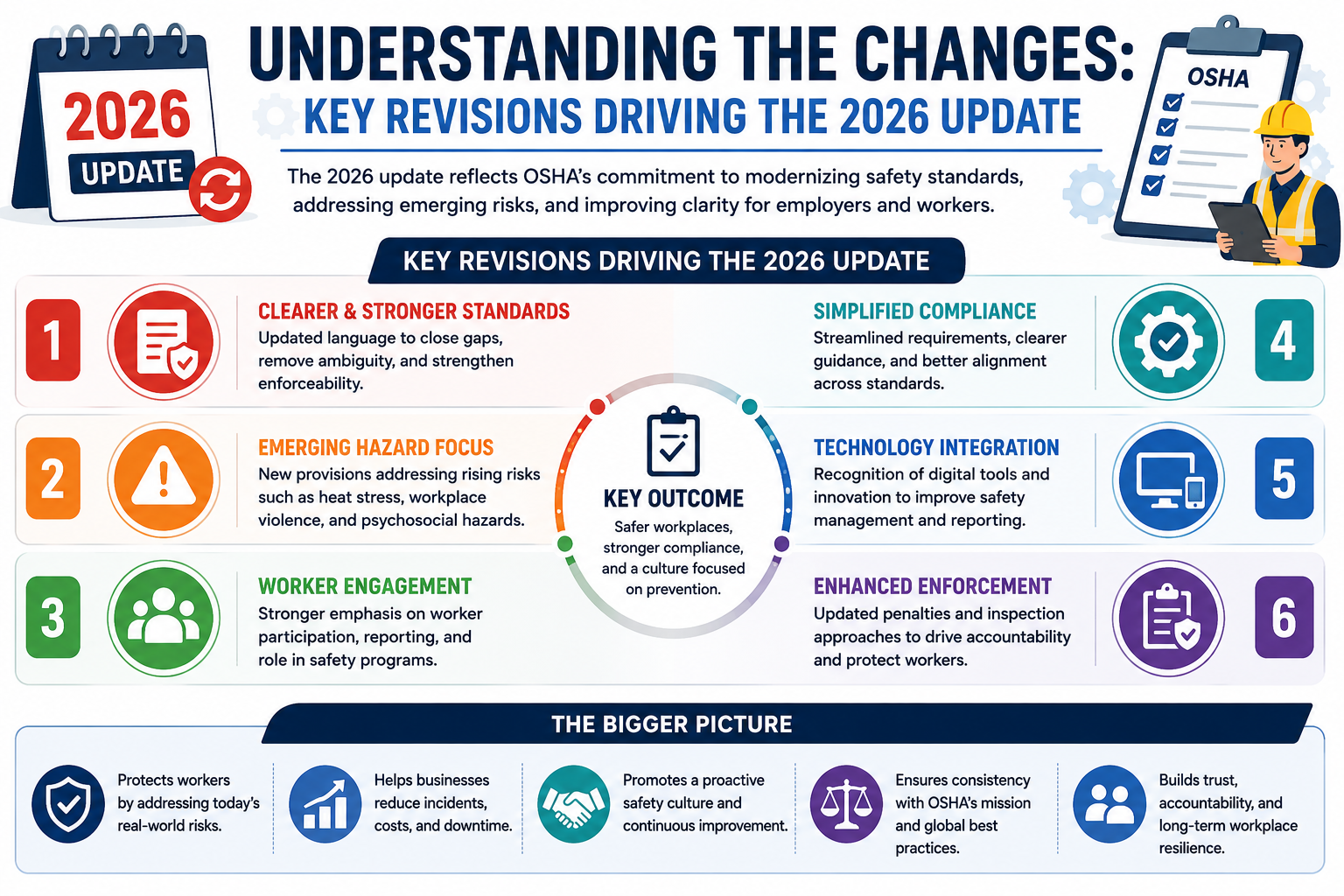
Understanding the Changes: Key Revisions Driving the 2026 Update
Final GHS Revisions Integrated into HCS (The “What’s New”)
The latest HCS tweaks build on GHS version 9. They add sharper hazard categories for things like skin corrosion and eye damage. Labels now demand clearer pictograms and signal words, such as “Danger” for severe risks. Precautionary statements got a refresh too—they’re more precise about storage and disposal. OSHA’s official docs spell it out in their Federal Register notice from 2024. Verify that for the full list. These shifts aim to match how chemicals act in real life, cutting mix-ups on the job. Take flammable liquids. Old rules lumped them broadly; now, categories split by flash points. This helps workers spot dangers faster.
Distinguishing Between Previous Revisions and the Final Compliance Target
Back in 2012, HCS first adopted GHS basics like 16-section SDS formats. The 2016 update added trade secret rules and better pictogram specs. But 2026 seals it—no more delays. The big difference? New thresholds for physical hazards, like aerosols and gases under pressure. Your old labels might miss these. Run a quick audit: Compare your current SDS to the 2024 OSHA alignment doc.
Here’s a simple gap analysis checklist:
- Does Section 2 list all new GHS hazard classes?
- Are the transport information updates included in Section 14?
- Do labels use the exact signal words from the final rule?
This tool spots weak spots fast. Companies that previously skipped it received warnings—do not repeat that mistake.
Impact Assessment on Different Workplace Sectors
Factories deal with tons of solvents, so they’ll wrestle with bulk SDS updates. Labs face tricky mixes, where small batches need exact labels. Construction sites juggle paints and adhesives, often in dusty conditions that hide faded tags. Think about enforcement. In 2023, OSHA hit a manufacturer with $150,000 in penalties for outdated labels on cleaners. That shows the stakes. Your sector’s volume matters—start early to dodge surprises.
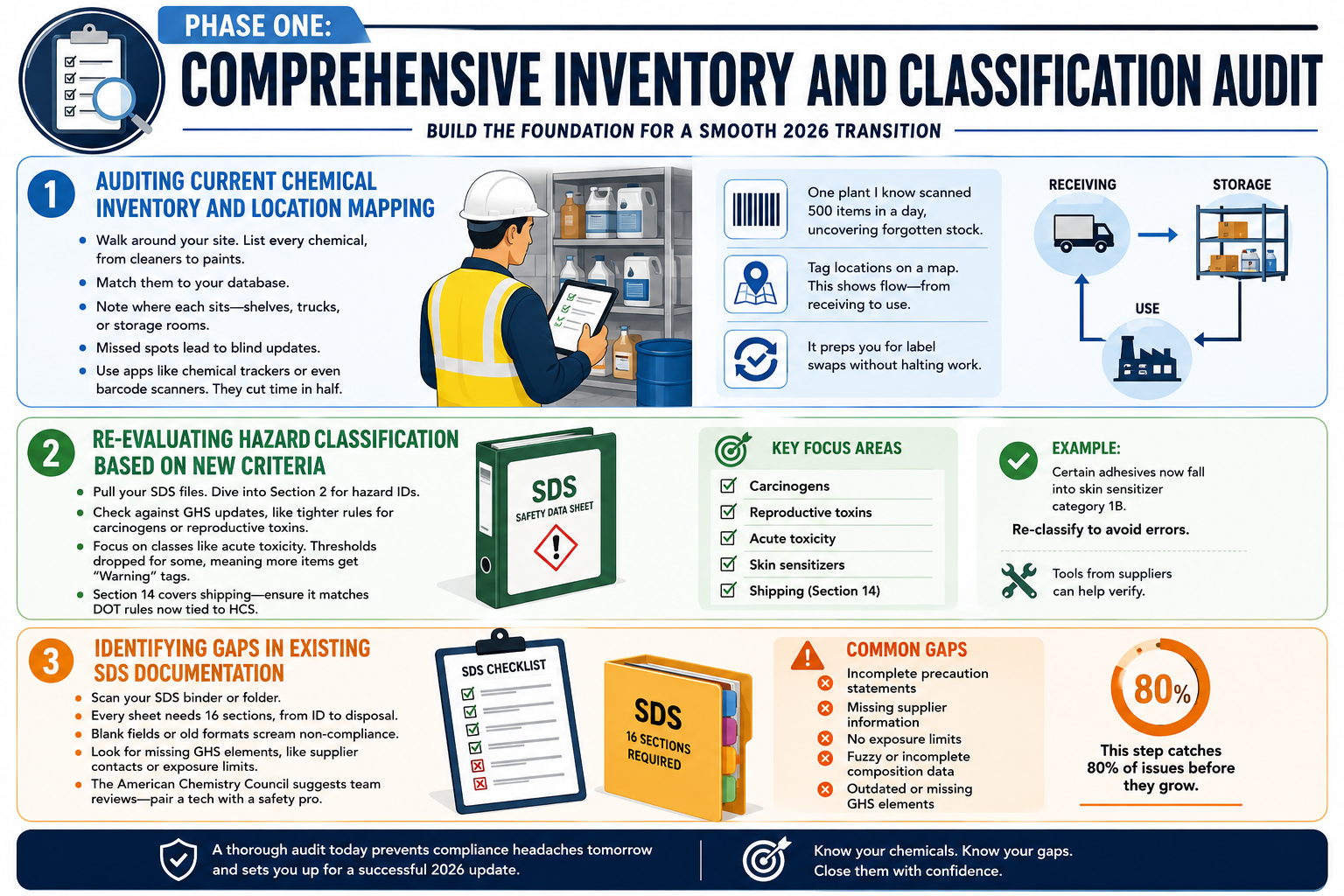
Phase One: Comprehensive Inventory and Classification Audit
Auditing Current Chemical Inventory and Location Mapping
Start by walking around your site. List every chemical, from cleaners to paints. Match them to your database. Note where each sits—shelves, trucks, or storage rooms. Missed spots lead to blind updates. Use apps like chemical trackers or even barcode scanners. They cut time in half. One plant I know scanned 500 items in a day, uncovering forgotten stock. Tag locations on a map. This shows flow—from receiving to use. It preps you for label swaps without halting work.
Re-evaluating Hazard Classification Based on New Criteria
Pull your SDS files. Dive into Section 2 for hazard IDs. Check against GHS updates, like tighter rules for carcinogens or reproductive toxins. Focus on classes like acute toxicity. Thresholds dropped for some, meaning more items get “Warning” tags. Section 14 covers shipping—ensure it matches DOT rules now tied to HCS.
For example, certain adhesives now fall into skin sensitizer category 1B. Re-classify to avoid errors. Tools from suppliers can help verify.
Identifying Gaps in Existing SDS Documentation
Scan your SDS binder or folder. Every sheet needs 16 sections, from ID to disposal. Blank fields or old formats scream non-compliance. Look for missing GHS elements, like supplier contacts or exposure limits. The American Chemistry Council suggests team reviews—pair a tech with a safety pro.
Common gaps: Incomplete precaution lists or fuzzy composition data. Fix them now. This step catches 80% of issues before they grow.
Action Planning: Updating and Generating Compliant Documentation
Strategies for SDS Generation and Revision Workflow
You have choices. Update in-house software like SDS authoring tools—they pull from GHS databases. Alternatively, hire experts who are well-versed in the 2026 rules. Suppliers might send new SDS, but verify them. Vet partners by asking for sample compliance sheets and OSHA certs. One firm saved thousands by switching to a service that handled 1,000 revisions.
Set a workflow: Assign teams, set deadlines, and track progress in a shared sheet. This keeps things moving smoothly.
Specific Labeling Requirements Under the Final Rule
Labels must pop—red-bordered pictograms for flames or skulls. Signal words lead: "Danger" or "Warning." Hazard statements explain risks, like "Causes serious eye damage." Precautions tell what to do, such as "Wear gloves." Format matters: White background, black text, no clutter. Small containers? Use tags or fold-outs. For secondary ones, like poured solvents, add basic GHS info. Test prints to ensure readability from afar.
Managing and Distributing Updated Documentation
Swap old SDSs for new ones right away. Go digital—apps let workers scan QR codes for instant access. Keep paper backups in high-traffic spots. Stats show poor access links to 20% of chem mishaps, per NIOSH. Place binders near stations. Train folks to verify updates monthly. Distribute to all shifts. Email alerts or posters remind everyone.
Training and Implementation: Ensuring Workforce Readiness by 2026
Developing Targeted Employee Training Modules
Don't just show new labels—explain them. Why did that pictogram change? How does it affect daily tasks? Use short videos or hands-on sessions. Cover reading SDS sections step-by-step. Scenario drills work wonderfully: "What if this spill happens?" Tailor to roles. Operators learn handling; managers get oversight. Aim for 2-hour sessions, refreshed yearly.
Integrating New Procedures into Standard Operating Protocols (SOPs)
Update your SOPs across the board. Purchasing? Demand compliant SDSs from vendors. Storage? Adjust for new ventilation needs. Take acetone. Its updated SDS might call for nitrile gloves over cotton. Rewrite emergency plans too—include new first-aid steps. Roll out changes in phases. Test with a pilot team, then go site-wide. This builds habits without chaos.
The Final Verification Checkpoint Before June 2026
In May, do a full sweep. Every jug, drum, or bottle needs a fresh label. Pair it with the right SDS nearby. Chase suppliers now—ask for their 2026 versions. Downstream users, like you must confirm. Spot-check 10% randomly. If gaps pop up, fix them fast. This checkpoint locks in readiness.
Conclusion: Securing Long-Term Hazard Communication Excellence
You've got the roadmap; audit your inventory, revise SDS and labels, train your team, and verify everything. Meeting June 1, 2026, the deadline ensures the safety of your workplace and prevents fines. Proactive steps now pay off big—fewer accidents; smoother ops.
Key takeaways for the next few months:
- Run a full inventory audit by the end of April to spot all chemicals.
- Update at least half of your SDS by May, partnering with pros if needed.
- Schedule training sessions as soon as possible to cover the new label reads.
Ready to act? Grab your checklist and start today. Your team will thank you when compliance feels easy.
Simplify Your SDS Management
CloudSDS gives your team instant access to 23M+ safety data sheets with AI-powered search, automated updates, and full OSHA/GHS compliance — all from one platform.
Leave A Comment