
Xylene is a high-volume aromatic solvent with significant flammability, neurotoxicity, and VOC air-quality implications, so a guide for EHS professionals needs to go deep. To keep this focused, the structure below follows your 12-topic outline and emphasizes SDS-critical content, occupational limits, and regulatory hooks. If you work in chemicals, coatings, or plastics, you know xylene. It is a workhorse in the modern industry. Xylene, or xylol, is an aromatic hydrocarbon. You find it as a mixture of three isomers: ortho-xylene, meta-xylene, and para-xylene. Most of it comes from petroleum refining and catalytic reforming. You use it as a powerful solvent and a key chemical building block. But this utility comes with real risks. You must balance its high performance with strict health and safety protocols. Knowing the facts about xylene is not just the best practice. It is essential for protecting your people and your facility.
All About Xylene: A Comprehensive Usage and Safety Guide for Industry Professionals
Xylene is a clear, colorless liquid. It has a sweet, distinctive odor that many recognize instantly. It is volatile and highly flammable. Its boiling point ranges from roughly 138 to 144 degrees. Celsius. Because it is hydrocarbon, it mixes well with other organic compounds but resists water.
Chemical Profile and Isomer Differentiation
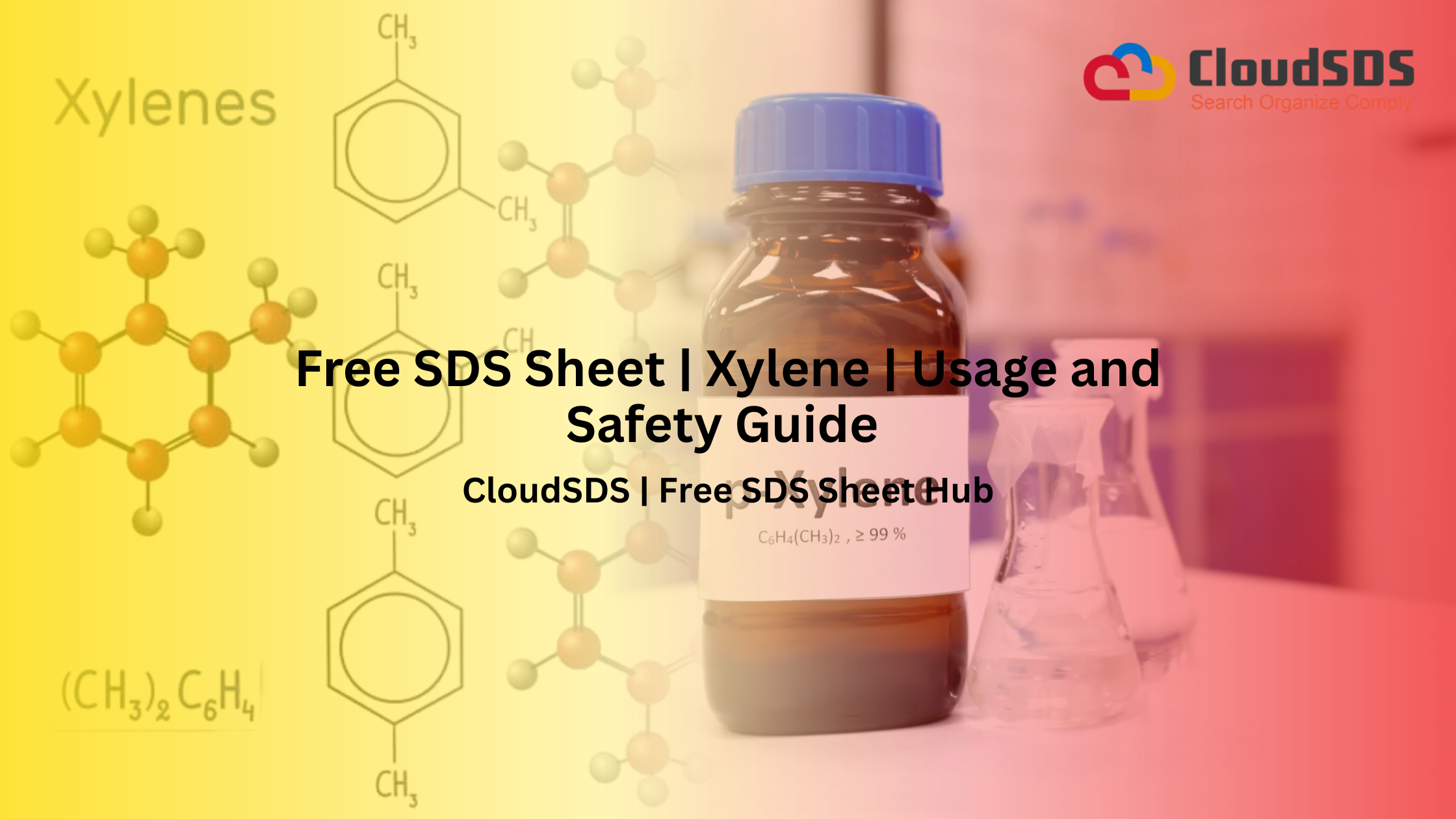
The chemical structure defines how you use it. Each isomer consists of a benzene ring with two methyl groups attached. The position of these groups changes the name and the use:
- Ortho-xylene: The methyl groups sit next to each other.
- Meta-xylene: The groups are separated by one carbon atom.
- Para-xylene: The groups sit opposite each other.
Para-xylene is the most important factor for the global market. It is the raw material for terephthalic acid (TPA) and dimethyl terephthalate (DMT). These are the precursors for polyester fibers and polyethylene terephthalate (PET) plastics. Most commercial xylene is produced via the BTX extraction process, which pulls benzene, toluene, and xylene from crude oil streams. Millions of tons are produced every year to feed the plastic and textile industries.
1. Core SDS & Identification
Substance identity and CAS numbers
- o-Xylene: CAS 95-47-6
- m-Xylene: CAS 108-38-3
- p-Xylene: CAS 106-42-3
- Mixed xylenes (typically 40–65% m‑, 20–25% p‑, 10–15% o,‑ plus ethylbenzene): CAS 1330-20-7.
Common names: xylene, xylenes, dimethylbenzene, xylol.
GHS classification (typical for mixed xylenes)
Exact classification can vary by supplier, but for mixed xylenes, you will typically see the following:
- Flammable liquid, Category 3 (H226: Flammable liquid and vapor)
- Acute toxicity Category 4 (inhalation, dermal, sometimes oral)
- Skin irritation category 2
- Specific target organ toxicity (single exposure) Category 3 – narcotic effects (CNS depression)
- Aspiration hazard category 1
- It is hazardous to the aquatic environment, a chronic category 2 or 3.
The corresponding pictograms are a flame, an exclamation mark, a health hazard (silhouette), and occasionally an environment symbol.
Key SDS identifiers and signal word
- Signal word: usually "Danger" due to aspiration, hazard, and flammability.
- NFPA 704 (typical mixed xylenes): Health 2, Flammability 3, Reactivity 0.
- Product use descriptors: industrial solvent, intermediate, fuel component, lab reagent.
From an SDS-management standpoint, xylene should be indexed under aromatic hydrocarbon solvents and cross-referenced to all trade names used on site (e.g., "xylol" and "aromatic 100" if applicable).
2. Physical & Chemical Properties
Structure and isomerism
Xylenes are dimethyl-substituted benzenes with the molecular formula C₈H₁₀; the two methyl groups occupy ortho (1,2‑), meta (1,3‑), or para (1,4‑) positions on the aromatic ring.
The isomers share similar physicochemical behavior but have slightly different melting and boiling points that can be relevant in process design and GC separation.
Key physical constants (approximate, mixed xylenes)
Values vary slightly by isomer and mixture; typical SDS ranges for mixed xylenes are
- Molecular weight: ~106.2 g/mol
- Boiling point range: about 137–143 °C
- Melting point: typically, below −25 °C (mixed)
- Density: ~0.86–0.88 at 20 °C (lighter than water)
- Vapor pressure: roughly 6–9 mmHg at 25 °C
- Vapor density (air = 1): ~3.7–3.9 (heavier than air).
These properties drive hazardous behavior: vapors can accumulate in low areas and travel to ignition sources.
Flammability and thermodynamic data
- Flash point (closed cup, mixed xylene): typically around 25–30 °C (NFPA Class IC flammable liquid).
- Autoignition temperature: around 460–530 °C.
- Flammable limits in air: lower explosive limit ~1.0–1.1% vol; upper explosive limit ~7% vol.
Solubility and partitioning behavior
- Solubility in water: very low (tens to a few hundred mg/L), but sufficient to cause odor and aquatic toxicity at low ppm levels.
- It is highly miscible with most organic solvents (alcohols, ketones, ethers, and other aromatics) and readily dissolves many resins and polymers, which drives its use in coatings and inks.
- Log Kow in the 3 range indicates moderate hydrophobicity and potential for bioaccumulation in aquatic organisms, though volatilization and biodegradation often dominate environmental fate.
3. Chemical Behavior
Aromatic hydrocarbon stability
The benzene ring confers high thermodynamic stability toward mild oxidants and bases; xylene is generally stable under normal storage and processing conditions.
It is non-corrosive to common metals but can attack certain elastomers and plastics, especially in long-term contact.
Combustion characteristics
Xylene burns with a sooty, smoky flame typical of aromatics and generates carbon monoxide, carbon dioxide, and incomplete combustion products at lower oxygen or high loading conditions.
In confined fires, toxic combustion gases and oxygen depletion can be as significant a hazard as the flame itself.
Oxidation and degradation reactions
In industrial chemistry, xylene isomers can be oxidized to corresponding phthalic acids (e.g., p-xylene to terephthalic acid), which is a core step in PET production.
In the environment and in biological systems, oxidation primarily yields methylbenzoic acids and further yields carbon dioxide and water over time.
Solvent behavior
Xylene is a nonpolar, aromatic solvent with good solvency for
- Alkyd, acrylic, and epoxy resins
- Oils, greases, and many hydrophobic organics
Its aromaticity improves solvency for high-molecular-weight resins compared to aliphatics like hexane.
Incompatible materials
Xylene can react violently with strong oxidizers (e.g., nitric acid, perchlorates, and chromic acid), leading to fire or explosion risk.
It should not be stored with chlorinated oxidizers or strong nitrating agents; standard SDSs stress segregation.
Industrial Uses
Paints, coatings, and inks
Xylene is widely used as a solvent and diluent in architectural and industrial coatings, marine paints, and high-solids alkyd and epoxy systems due to its medium evaporation rate and strong solvency. In printing inks, xylene contributes to viscosity control and drying behavior, especially in flexographic and gravure processes.
Adhesives, rubber, and leather
Many contact adhesives, sealants, and rubber cements rely on xylene (alone or with toluene) for dissolving elastomers and tackifiers. In leather finishing, xylene helps apply and level polymeric coatings and dyes.
Petrochemical intermediate and fuel component
Ortho-, meta-, and para-xylene are key intermediates for phthalic anhydride and terephthalic acid production, which underpins polyester and plasticizer manufacturing. Mixed xylenes also serve as high-octane components in gasoline blending, improving knock resistance.
Laboratory and specialty uses
In histology, xylene has been widely used as a clearing and deparaffinizing agent, although some labs are transitioning to less toxic substitutes. Xylene is also used as a reference solvent in analytical methods (e.g., GC standards) and as a diluent for oil and grease extraction tests.
From an EHS program perspective, xylene exposures typically arise from coating operations, fuel handling, printing, rubber/adhesive manufacturing, and histology labs.
Health Hazards (Critical Cluster)
Acute CNS and respiratory effects
Xylene is a central nervous system depressant; acute inhalation can cause headache, dizziness, drowsiness, incoordination, and, in higher exposures, unconsciousness.
Vapor is irritating to eyes and the upper respiratory tract, causing burning, coughing, and sore throat at higher concentrations.
Skin and eye irritation
Liquid xylene defats skin, leading to dryness, cracking, and dermatitis with repeated contact.
Eye splashes cause redness, pain, and transient corneal irritation; high vapor concentrations can also cause eye irritation.
Aspiration hazard
Due to low viscosity and high volatility, xylene presents a serious aspiration hazard: ingestion followed by vomiting can pull liquid into the lungs and cause chemical pneumonitis, which can be life-threatening. This risk drives the GHS hazard statement "May be fatal if swallowed and enters airways" and the strong "Do not induce vomiting" instructions.
Chronic neurological and systemic effects
Repeated or prolonged exposure has been associated with chronic headaches, memory impairment, and subtle neurobehavioral changes in exposed workers, particularly where controls are poor. Long-term exposure at levels above current occupational limits may contribute to liver and kidney function changes, typically reversible when exposure stops.
Carcinogenicity and reproductive toxicity
Major agencies do not classify xylene as a proven human carcinogen; evidence is limited or inadequate. At occupational levels within standards, reproductive effects in humans are not clearly established, though high exposures in animals have produced developmental effects; precautionary language is still recommended for pregnant workers.
When writing SDS health sections, it is important to distinguish xylene's non-genotoxic CNS and organ toxicity profile from benzene's leukemogenic risk (see FAQ section).
Exposure & Monitoring
Occupational exposure scenarios
The dominant route is inhalation in painting, coating, printing, and lab use, especially in poorly ventilated or confined spaces.
Dermal exposure is significant when workers handle solvent-wet materials, clean equipment, or have splash potential without adequate gloves.
Regulatory exposure limits (United States)
- OSHA PEL for xylene (mixed isomers): 100 ppm (435 mg/m³) as an 8-hour time-weighted average.
- NIOSH REL: 100 ppm TWA; 150 ppm STEL (short-term exposure limit).
- Many organizations (e.g., ACGIH TLV) set an 8-hour limit of 100 ppm and a 15-minute STEL of 150 ppm (check current year documentation for local adoption).
For a serious EHS program, these values should be integrated into your site exposure control plan and air monitoring strategy.
Air monitoring methods
You can measure vapor-phase xylene by personal sampling with charcoal sorbent tubes and then analyze it using gas chromatography (for example, NIOSH Method 1501 for aromatic hydrocarbons). Real-time VOC monitors (PID/FID) can provide screening data but are less specific; confirmation via lab analysis is recommended for compliance decisions.
Biological monitoring
Metabolites of xylene (methyl hippuric acids in urine) are widely used as biological exposure indices.
ACGIH's biological exposure index (BEI) is 1.5 g methyl hippuric acid per gram of creatinine in an end-of-shift urine specimen for workers exposed around the TLV.
Indoor air and community concerns
In indoor settings, xylene can off-gas from paints, adhesives, and building materials, contributing to VOC profiles and odor complaints. Near facilities or spill sites, xylene can be detected in ambient air and groundwater wells, prompting community right-to-know and remediation considerations.
First Aid & Emergency Measures
Always align site procedures with SDS Section 4 and local regulations.
Inhalation
- Move the person to fresh air immediately and keep them at rest; monitor for breathing difficulty or reduced consciousness.
- If breathing is difficult, provide oxygen by trained personnel; if not breathing, begin CPR and seek urgent medical attention.
Skin contact
- Remove contaminated clothing and shoes; rinse affected skin with plenty of water and mild soap for at least 15 minutes.
- Do not use solvents or thinners to clean skin; this increases absorption and irritation.
Eye contact
- Rinse cautiously with water for at least 15 minutes, keeping eyelids open and moving the eye; remove contact lenses if easy to do.
- Seek medical attention if pain, redness, or vision changes persist.
Ingestion
- Do not induce vomiting due to aspiration risk; rinse the mouth gently with water if the person is conscious.
- Please call a poison center or physician immediately; the priority is to prevent lung exposure and monitor for respiratory distress.
Firefighting measures
- Suitable extinguishing media: foam, dry chemical, or carbon dioxide; water spray can be used to cool containers, but straight streams may spread burning liquid.
- Firefighters require full protective gear and positive-pressure SCBA due to toxic combustion products and high vapor concentrations.
Spill response and containment
- Eliminate all ignition sources; ventilate the area and stop the leak if safe.
- Contain non-combustible absorbents (sand, vermiculite), prevent entry into drains, and collect in labeled containers for disposal as hazardous waste.
For EHS documentation, it is critical to link these measures to site-specific spill tiering (small, medium, large) and emergency response team activation criteria.
PPE & Safety Controls
Engineering controls
- Local exhaust ventilation at points of emission (spray booths, mixing tanks, printing lines) is the primary control measure.
- General dilution ventilation may be acceptable for low-use areas but must be designed to maintain vapor concentrations below exposure limits and 25% of the LEL for fire safety.
Respiratory protection
- Where air monitoring indicates potential overexposure or during short-term higher-risk tasks (e.g., confined-space coating), use NIOSH-approved respirators for organic vapors.
- Selection: Typically half-mask or full-face air-purifying respirators with organic-vapor cartridges; supplied air or SCBA for emergencies, high concentrations, or unknown levels.
Skin and eye protection
- Chemical-resistant gloves (e.g., nitrile, butyl rubber) are preferred; thin latex or PVC may provide insufficient breakthrough resistance depending on exposure duration.
- Safety goggles are recommended for splash risk; use face shields plus goggles for high-volume transfer or high-pressure spray.
Process safety and equipment
- Use explosion-proof or intrinsically safe electrical equipment in areas where xylene vapors can form flammable atmospheres.
- Bonding and grounding during transfer reduce static ignition risk (see Section 9).
PPE should be integrated into a hierarchy of controls framework: substitution (where feasible), engineering controls, administrative controls, and then PPE.
Storage & Handling
Storage conditions
- Store in cool, well-ventilated areas away from heat, hot surfaces, sparks, and open flames.
- Use approved flammable-liquid storage cabinets and tanks to meet applicable fire codes; keep containers tightly closed when not in use.
Segregation and incompatibilities
- Segregate from strong oxidizing agents, acids capable of nitration, and oxidizing metal salts.
- Avoid storing with strong oxidizers such as nitric acid, chromic acid, and peroxides to reduce fire and explosion potential.
Static discharge and transfer
- Xylene can accumulate static charge; bond and ground containers during transfer, especially when filling drums, totes, or portable tanks.
- Use metal piping and containers or ensure conductive pathways and proper grounding of flexible hoses.
Handling practices
- Prohibit smoking and ignition sources in handling areas; implement hot-work permits for maintenance.
- Use closed systems or pump transfer rather than open pouring where feasible to minimize vapor release and splash.
Labeling and hazard communication
- All containers (including secondary containers) must be labeled with product identifier, appropriate hazard pictograms, signal word, hazard statements, and supplier information under OSHA Hazard Communication Standard (29 CFR 1910.1200).
- For in-plant blends, ensure workplace labeling ties back to the primary SDS(s) for xylene-containing mixtures.
Transport & Regulations
UN, DOT, and packing group
- UN number: UN1307 – Xylenes or Xylene.
- U.S. DOT hazard class: 3 (flammable liquid), typically Packing Group III.
- Typical shipping name: "Xylenes" with appropriate labels and placards for flammable liquids.
OSHA Hazard Communication
- Xylene is classified as a hazardous chemical under the OSHA Hazard Communication Standard, requiring SDSs, labeling, and worker training wherever it is used above de minimis thresholds in mixtures.
- Mixture classification must account for xylene's flammability, acute toxicity, aspiration hazard, and STOT effects.
EPA and Clean Air Act status
- The Clean Air Act says that xylene (mixed isomers and individual isomers) is a hazardous air pollutant (HAP). This means that MACT standards apply to some source categories.
- As a VOC, xylene emissions are also regulated in ozone nonattainment and VOC control areas through permitting and RACT requirements.
REACH and global frameworks (high level)
- In the EU, xylene is registered under REACH, with harmonized classification as a flammable liquid, acute toxicant, skin irritant, and STOT (CNS).
- Other jurisdictions (e.g., Canada, Australia) maintain similar classifications and require SDS and WHMIS/GHS labeling.
For multi-jurisdictional SDS libraries, you will generally manage separate regional SDSs due to differing regulatory references, but the core hazard profile is consistent.
Environmental Impact
1. VOC and air quality
As a volatile organic compound, xylene contributes to ground-level ozone and photochemical smog formation when released into the atmosphere. This drives inclusion in VOC caps, solvent-use NESHAPs, and coating-content limits.
2. Environmental fate
Xylene released to soil or surface water tends to volatilize (especially from surface layers) and also undergoes biodegradation by indigenous microorganisms. In groundwater, xylene can be relatively mobile and form contaminant plumes, requiring pump-and-treat, air sparging, or bioremediation approaches.
3. Aquatic toxicity and bioaccumulation
Xylene exhibits moderate acute toxicity to aquatic organisms (fish and invertebrate LC50s in the low mg/L range) and has the potential for chronic effects at lower concentrations. While log Kow suggests some bioaccumulation potential, volatilization and biodegradation typically limit persistent buildup in most scenarios.
4. Regulatory controls on emissions
Controls include solvent-management plans, incineration or carbon adsorption of vent gases, low-VOC formulation requirements, and leak detection and repair (LDAR) for equipment handling aromatics. Local industrial pretreatment limits and NPDES permits usually control the release of wastewater that contains xylene.
For environmental compliance documentation, xylene should be treated as both a fire hazard and an air/water contaminant requiring integrated spill prevention and emission-control planning.
Targeted FAQs (EHS-Oriented)
-
What is xylene used for?
Xylene is used primarily as a solvent in paints, coatings, printing inks, adhesives, and cleaning formulations and as an intermediate for terephthalic and phthalic acid production in the petrochemical industry. It is also used as a fuel-blending component and as a laboratory solvent, especially in histology and analytical chemistry.
-
Is xylene more dangerous than benzene?
From a chronic toxicity and carcinogenicity standpoint, benzene is clearly more dangerous because it is a known human carcinogen linked to leukemia, while xylene is not classed as a proven human carcinogen. However, xylene is still a significant hazard: it is a flammable liquid, can cause pronounced CNS depression, and can damage the liver and kidneys with prolonged high exposure, so it should not be regarded as "safe," only "less carcinogenic" than benzene.
-
Can xylene exposure cause long-term health effects?
Yes, chronic exposure above recommended limits can lead to persistent headaches, cognitive or memory issues, mood changes, and dermatitis, as well as reversible liver and kidney function changes. Controlling exposures to at or below established occupational limits and verifying via air and biological monitoring substantially reduces the risk of long-term effects.
-
Where is xylene commonly found?
Xylene is found in many industrial and commercial products: solvent-based paints and varnishes, certain adhesives and sealants, printing inks, degreasers, and gasoline. Laboratories, automotive shops, and industrial coating operations are common workplaces where significant xylene exposure potential exists.
-
How should xylene spills be cleaned safely?
For small spills, remove ignition sources, ventilate the area, contain the liquid with non-combustible absorbent, and collect waste in labeled, sealed containers for hazardous disposal while wearing appropriate PPE. Larger spills may require diking to prevent entry into drains, use of foam to suppress vapors, and activation of site emergency response plans, including possible notification of environmental authorities.
Simplify Your SDS Management
CloudSDS gives your team instant access to 23M+ safety data sheets with AI-powered search, automated updates, and full OSHA/GHS compliance — all from one platform.
Leave A Comment