
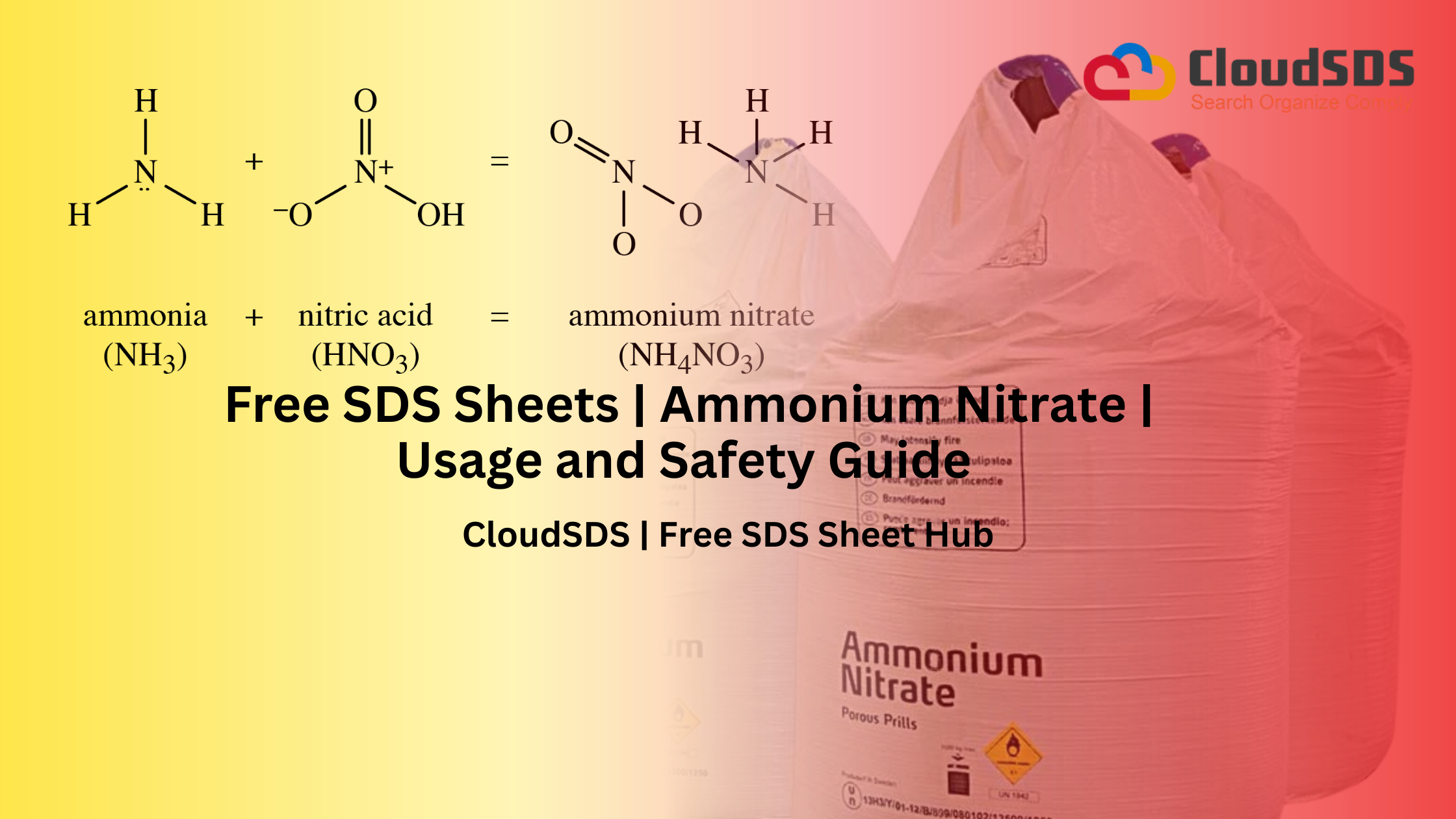
Ammonium nitrate is one of the most widely used inorganic compounds. It is known to be vital to the agricultural and industrial industries. It is primarily used as a high-nitrogen fertilizer for maintaining agricultural yields and current food production systems globally. In addition to the agriculture industry, ammonium nitrate is used in mining and metallurgy as an ingredient of industrial explosives to carry out blasting operations. It is also used in pharmaceuticals, cold packs, chemical synthesis, and specialty manufacturing. Ammonium nitrate is important to industry but dangerous due to its oxidizing properties and potential for heat breakdown or explosion if stored improperly. Hence, proper handling, transportation, storage, and compliance to regulatory measures are critical to reduce occupational, environmental, and fire hazards.
Chemical Identity and Physical Properties
Ammonium nitrate is an inorganic chemical compound having a chemical formula of NH₄NO₃.. It is widely employed in fertilizers and industrial explosives. It is usually a white crystalline solid or granules and is highly soluble in water. It is hygroscopic and will absorb moisture from the surrounding atmosphere on storage. It is a potent oxidizer and speeds up the combustion of combustibles. It is reacting under situations of contamination, pressure, or high temperature; thus, it is important for industrial safety to handle and store it carefully.
Chemical Identity and Physical Properties
Chemical Composition and Formula
- The chemical formula of ammonium nitrate is NH₄NO₃.
- It is composed of ammonium ion and nitrate ion.
- It is often used as a nitrogen-rich fertilizer.
- Ammonium nitrate is an oxidizing agent that is used in industrial explosives and in mining.
- The compound is available in the agricultural, industrial, and technical sectors. Due to its high nitrogen concentration, it is more important for crop nutrition.
Physical Characteristics
- This chemical compound is a white, crystalline, or granular solid.
- No odor is under normal conditions.
- It is very soluble in water.
- This chemical compound is hygroscopic in that it adsorbs moisture from the air
- It can be a strong oxidizer and increase the risk of fire. This chemical compound can be decomposed at high temperatures and emit toxic fumes.
- It is noncombustible, but it can increase the combustion of other materials.
Chemical Structure and Reactivity
- This chemical compound has an ionic chemical structure and good chemical stability at standard storage conditions.
- Strong oxidant in reactions
- There was a violent reaction with fuels, flammable materials, and reducing agents.
- Heating or pollution can cause rapid breakdown.
- Decomposition can cause the emission of nitrogen oxides and ammonia gas.
- If it is stored or confined poorly, the risk of explosions could be higher.
- It is widely used in fertilizer production and blasting applications.
Industrial Production of Ammonium Nitrate
1. Raw Materials Used
Ammonia (NH₃)
Ammonia is the main source of nitrogen used in the industrial process. It is usually made in big industrial operations by the Haber-Bosch process (in this process, direct reaction of gaseous nitrogen with gaseous hydrogen over an iron-based catalyst at high temperatures such as 400-500°C, and pressure, i.e., 100-200 atm).
Nitric Acid (HNO₃)
Nitric acid and ammonia react together to generate ammonium nitrate. Strong acidic and oxidizing qualities of industrial-grade nitric acid are the reasons for its common use.
Process chemicals and water
Water regulates concentration and temperature in the manufacturing process. Some chemicals are added to improve storage stability and decrease caking.
2. Manufacturing Process
Process of Neutralization
Ammonia is treated with nitric acid in a controlled reactor. The reaction is very exothermic and creates a solution of ammonium nitrate and a lot of heat.
Concentration period
The solution obtained is concentrated by evaporation of excess water. This process boosts the ammonium nitrate concentration before solidification.
Cooling and drying
The final product is kept cooled and dried to ensure chemical stability. Proper drying also decreases moisture pick-up in storage.
3. Chemical Reaction
Industry produces ammonium nitrate by the reaction of ammonia and nitric acid (neutralization reaction):
NH₃ + HNO₃ → NH₄NO₃.
This reaction is fast and extremely exothermic and requires careful temperature control in industrial plants.
4. The Safety Precautions in Production
Control of temperature and pressure
Manufacturing systems frequently inspect the working conditions to avoid overheating. Decomposition or explosion at high temperatures.
Preventing contamination
Workers must avoid contact with flammable items, oils, and metal particles. Contamination can substantially raise the likelihood of a hazardous reaction.
Emissions control and ventilation
Ventilation systems at industrial plants control ammonia and nitrogen oxide emissions. That's why it is essential to have proper emission controls safeguard both the worker and the environment.
Safe storage habits
It is necessary that the supervisor keep an eye on maintaining the storage facilities. These facilities must be dry and well-ventilated. Store in large quantities away from incompatible substances and ignition sources.
Industrial Applications of Produced Ammonium Nitrate
-
Fertilizers for Agriculture
Ammonium nitrate helps in crop growth and production. It is soluble in water. In this way, the nutrients become quickly available in the soil.
-
Explosives for mining and blasting
This chemical is a frequent component of ANFO explosives used in mining and construction operations. Its oxidizing qualities make it useful in blasting activities where controlled blasting is required.
-
Civil construction work
Ammonium nitrate is useful for excavation and the construction of infrastructure. It is widely utilized in tunneling, quarrying, and road building.
-
Chemical production
It is also used in the production of industrial chemicals. Its oxidizing properties are of use in many industrial applications.
Hazard Classification & Safety Identification
GHS classification of the substance or mixture
- Ammonium nitrate is classified as an oxidizing solid in the Globally Harmonized System (GHS).
- May exacerbate fire in contact with combustible or flammable items.
- Eyes and respiratory systems can be irritants in some exposure situations.
- During handling, dust or smells from decomposition may irritate personnel.
- Heating under containment may cause explosion-related hazards.
- In industrial facilities, proper storage and process management are vital.
Signal Word and Hazard Statements
Signal Word:
- Warning or danger as dictated by concentration and regulation classification.
- Signal words show the seriousness of the chemical hazard.
Hazard Statement:
- 'Oxidizer may intensify fire'—this warning shows the powerful oxidizing tendency of ammonium nitrate.mmonium Nitrate.
Additional Hazard Statements:
- May explode if heated in a fire
- Harmful if inhaled in excessive quantities of vapor
- Contact with combustible substances may cause fire intensity.
GHS Symbols Pictogram:
Oxidizer Pictogram
Indicates materials that may cause or enhance a fire.
Exclamation point symbol
It is used for the effects of irritation from dust or decomposition gases.
NFPA Classification about Health:
Health Hazard-2
Moderate exposures may result in temporary irritation or discomfort.
Flammability: 0
Ammonium nitrate does not ignite under ordinary conditions.
Reactivity: 3
Substances may disintegrate or react violently if heated or polluted.
Safety Documentation & Regulatory Compliance
Requirements for Safety Data Sheets (SDS)
- A full Safety Data Sheet (SDS) must accompany ammonium nitrate at all locations where the chemical is present.
- The SDS contains thorough information on dangers, handling procedures, storage requirements, and emergency response measures.
- SDS paperwork shall comply with prescribed GHS formatting standards.
- This document establishes a standardized hazard communication standard for all businesses and all countries.
OSHA Hazard Communication Compliance
- Employers must comply with the Occupational Safety and Health Administration Hazard Communication Standard (HazCom).
- Workers should be fully instructed in the risks of ammonium nitrate and safe handling practices.
- Chemical inventory, warning signs, and hazard labels must be the latest and accurate.
- Effective communication on hazards reduces the risk of accidents and exposure at work.
Compliance For GHS Label
- Containers must come with hazard pictograms, signal words, and preventive remarks according to GHS labeling.
- With the help of these, workers can detect chemical dangers when handling and storing.
- Labels should be legible and intelligible over the life of the product.
- Missing or damaged labels may increase the risk of mishandling.
Storage and Transportation Management
- Supervisors must ensure that ammonium nitrate is stored in a cold, dry, and properly ventilated place. The place must be away from combustible objects.
- Inappropriate storage conditions may lead to an increased risk of breakdown and explosion.
- When it comes to transport, it shall be carried out in accordance with national and international rules for hazardous products.
- They must be packed and separated correctly to prevent inadvertent contamination or ignition.
Occupational Safety and Employee Training
- Those employees who work with ammonium nitrate shall be instructed on safety and emergency measures periodically.
- Emergency equipment such as fire suppression systems, eyewash stations, and spill reaction kits should be readily available.
- Training programs promote knowledge of fire threats, spill response, and safe operating methods.
- Regular inspections and drills facilitate readiness in the workplace and conformity with regulations.
Use of Ammonium Nitrate in Agriculture
Fertilizers for Crops with Nitrogen
- It is also commonly used in agriculture as fertilizer with a lot of nitrogen.
- It provides the necessary nitrogen nutrients for the healthy growth of plants and for agricultural output.
- It contains nitrogen in the form of both ammonium and nitrate.
- Plants can take in nutrients both quickly and slowly.
Water Solubility and Quick Nutrient Availability
- Ammonium nitrate dissolves easily in water. As a result, plants can take up their nutrients.
- This chemical compound is appropriate for a wide range of soils and temperatures.
- It is widely utilized in dryland and irrigated agriculture systems.
Use in compound fertilizers
- Ammonium nitrate is a component in blended fertilizers with other nutrients.
- These are formulations designed to meet the nutritional needs of the soil and crops.
- Some fertilizer mixes also contain phosphorus and potassium and micronutrients as well as nitrogen.
Safety Considerations in Agriculture
- Store fertilizer away from heat, gasoline, and other combustible items.
- Proper storage will reduce the chances of decomposition and inadvertent fire threats.
- Too much fertilizer can lead to soil degradation and water pollution.
- Good farming practices assist in lessening the impact on the environment as well as reducing fertilizer run-off.
Uses of Ammonium Nitrates in Metallurgy and Metal Processing
Use in Mining and Iron Ore Treatment
- Ammonium nitrate is a typical component of industrial explosives used in mining.
- It helps to break dense rock formations in mining and excavation operations.
- It is often used with fuel oil to make ANFO explosives.
- These explosives are used extensively in large-scale mining and quarrying.
Role in Metal Recovery Process
- Ammonium nitrate is used in mining explosives to reach precious metal ores.
- Efficient rock fragmentation promotes the recovery of minerals such as iron, copper, and gold.
- Controlled blasting is useful for both underground and surface mining operations.
- This results in increased output and an effective extraction of metal.
Industrial Explosives Applications
- Ammonium nitrate is a strong oxidizing agent used in explosive combinations.
- It has oxidizing characteristics that make blasting materials more efficacious in an industrial sectors. These explosives are used in road building, tunneling, and other massive infrastructure projects.
- For safety in the workplace, safe handling and controlled explosions are necessary.
Metal Surface Treatment Support
- Certain industrial chemical processes involving ammonium nitrate might be suitable for metal treatment activities.
- It may be used indirectly in procedures when oxidizing chemical conditions are required.
- Similar nitrate compounds are also used in metal processing industries for cleaning and preparing surfaces. The proper application of chemicals can improve the quality of metal polishing.
Metallurgical Industries:
- Supervisors must monitor that workers keep ammonium nitrate away from fuels, sources of heat and combustible materials.
- Contamination during mining or metal processing may further increase explosive dangers.
- Workers must follow strict norms of industrial safety when they transport and blast.
Storage and Stability Management
Recommended Storage Conditions
Ammonium nitrate in cold, dry, and properly ventilated places. Store away from heat, sunshine, and moisture.
Separation from Incompatible Materials
Do not come into contact with fuels, oils, flammable materials, and reducing agents. Do not mix with organic compounds, metal particles, and acids.
Control of Moisture
Ammonium nitrate being hygroscopic, it will collect moisture from the air. Store in sealed containers to prevent caking and loss of quality.
Heat Stability and Thermal Decomposition
Stable under typical conditions of storage. Thermal breakdown releases poisonous gases. High temperatures
Safety and Emergency
Procedures, ventilation, and fire prevention systems shall be provided in storage facilities. Workers are to follow proper handling and emergency procedures.
Emergency Response Procedures
Fire Emergency Response Plan
- Keep ammonium nitrate away from fire and heat.
- Large quantities of ammonium nitrate are used to control water fires.
Spill and Leak Response
- Isolate the area involved and keep it free of combustible material.
- Collect spillage. Use clean non-sparking instruments.
First Aid Measures
- If inhaled:
Remove the individual to fresh air and keep them comfortable for breathing.
- Skin Contact:
Wash the skin with soap and water. Eye Contact: Rinse with water for at least 15 minutes.
Evacuation Procedures
- Evacuate personnel in the vicinity during severe fire or explosion-danger circumstances.
- Do not allow access until emergency responders have cleared the area.
Personal Protective Equipment (PPE)
- Workers should wear gloves, safety goggles, and protective clothes.
- Respiratory protection may be needed where dust or fumes are produced.
Transport and Logistics
Transportation Classification
- Ammonium nitrate is a dangerous good for transport.
- Transport operations must meet national and international safety laws.
Packaging General Requirements
- Materials shall be transported in approved sealed containers with correct labeling.
- Packaging should be used to prevent contamination or inadvertent leakage of moisture.
Handling During Transport
- Ammonium nitrate should be kept away from fuels, combustible objects, and sources of heat during transport.
- Spills and pollution are minimized by careful loading and unloading.
Storage during logistics operations
- Temporary storage rooms should be cool, dry, and well-ventilated.
- At the time of warehousing, adequate segregation from incompatible materials is required.
Emergency Preparedness for Transport
- Vehicles transporting ammonium nitrate should be equipped with emergency response information and firefighting equipment.
- Hazardous material safety training for train drivers and handlers.
Conclusion
However, ammonium nitrate is used in agriculture, mining, construction, and industrial manufacturing because of its high nitrogen content and strong oxidizing properties. However, although widely used in the industry, the chemical presents great safety and environmental concerns if not properly handled or stored. Continuous safety monitoring, hazard communication and training of personnel are effective ways of preventing accidents, contamination, and explosion dangers. Good storage, transport, and disposal practices are good for workplace safety and also reduce impact on the environment. For safe operation, industry must observe regulations on GHS labeling, transport of hazardous materials, and pollution management. The future improvements in the manufacture of ammonium nitrate will likely see greater safety technology, tighter regulation, more sustainable fertilizer techniques, and better risk management systems for handling ammonium nitrate around the world.
Simplify Your SDS Management
CloudSDS gives your team instant access to 23M+ safety data sheets with AI-powered search, automated updates, and full OSHA/GHS compliance — all from one platform.
Leave A Comment