
Last Updated on August 15, 2025
- Introduction
- Cyanuric Fluoride: A Brief Introduction
- 1. Chemical and Physical Properties
- 2. Industrial and Laboratory Uses
- 3. Hazard Identification
- 4. Exposure Limits
- 5. Engineering and Administrative Controls
- 6. Personal Protective Equipment (PPE)
- 7. First-Aid Measures
- 8. Spill and Leak Response
- 9. Storage and Disposal
- 10. Transportation
- 11. Regulatory Considerations
- 12. Emergency Planning
Introduction
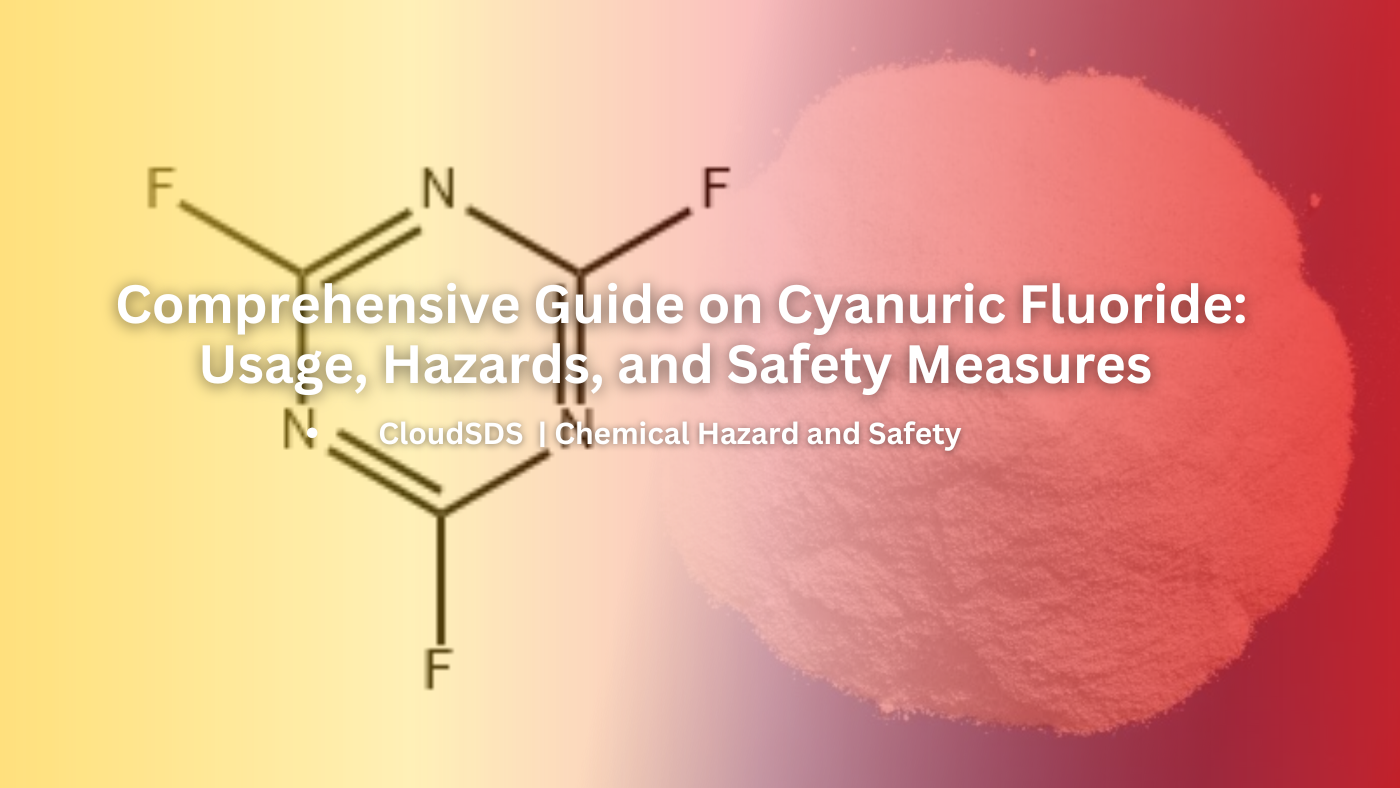
Cyanuric fluoride (2,4,6-trifluoro-1,3,5-triazine; CAS 675-14-9) is a colorless, volatile liquid used primarily as a mild fluorinating agent in organic synthesis and specialty chemical production. Due to its high toxicity and corrosivity, meticulous handling and robust safety measures are essential. This guide covers its chemical properties, industrial uses, potential hazards, and recommended safety protocols.
Cyanuric Fluoride: A Brief Introduction
Cyanuric fluoride (2,4,6-trifluoro-1,3,5-triazine; CAS 675-14-9) is a colorless, volatile liquid used primarily as a mild fluorinating agent in organic synthesis and specialty chemical production. Due to its high toxicity and corrosivity, meticulous handling and robust safety measures are essential. This guide covers its chemical properties, industrial uses, potential hazards, and recommended safety protocols.
1. Chemical and Physical Properties
- Molecular formula: C₃N₃F₃
- Molecular weight: 135.05 g/mol
- Appearance: Colorless liquid
- Boiling point: ~73 °C
- Melting point: –38 °C
- Density: 1.57 g/cm³ at 25 °C
- Vapor pressure: 119 mm Hg at 25 °C
- Water solubility: 1.04 × 10⁵ mg/L at 25 °C (estimated)
- log Kₒw: 0.40 (estimated)
- Decomposes in water to form hydrofluoric acid (HF) and cyanuric acid, releasing free fluoride ions
2. Industrial and Laboratory Uses
- Fluorinating Agent: Used in organic synthesis to replace hydroxyl or other leaving groups with fluorine, often yielding high selectivity with minimal byproducts.
- Dye Manufacturing: Functions in the production of specialty dyes by facilitating fluorinated intermediates that impart desired colorfastness and stability.
- Pharmaceutical Intermediates: Employed on laboratory scale for selective fluorination steps in API synthesis.
- Research Reagent: Widely used in academic laboratories for mechanistic studies of fluorination reactions.
3. Hazard Identification
Cyanuric fluoride presents acute and chronic health hazards, as well as reactivity concerns:
3.1 Acute Toxicity
- Dermal and Inhalation: Category 2 dermal toxicity; Category 1 inhalation toxicity. Fatal upon skin contact or inhalation of vapors.
- Skin Corrosion: Category 1A – Causes severe skin burns and tissue destruction.
- Eye Damage: Category 1 – Can cause irreversible eye damage in as little as 15 minutes.
- Respiratory Irritation: May provoke coughing, wheezing, and pulmonary edema upon inhalation.
3.2 Chronic Effects
- Sensitization: Repeated exposure may increase skin sensitivity and exacerbate corrosive effects.
- Reproductive/Cancer Hazard: Not classified due to lack of data; no current evidence for carcinogenicity or reproductive toxicity.
3.3 Reactivity and Decomposition
- Reacts vigorously with water to yield hydrofluoric acid and cyanuric acid; contact with moisture liberates corrosive HF, posing additional inhalation and contact hazards.
- Stable under dry, inert conditions; avoid contact with strong bases, oxidizers, or moisture.
5. Engineering and Administrative Controls
5.1 Ventilation
- Use in a dedicated chemical fume hood rated for corrosive/highly toxic substances.
- Ensure local exhaust with acid-resistant ductwork and scrubbers to neutralize HF and nitrogen-containing volatiles.
- Maintain negative room pressure relative to adjoining areas.
5.2 Enclosure
- Perform transfers and reactions within closed systems or gloveboxes if possible.
- Use inert-gas blanketing (dry nitrogen or argon) to prevent moisture ingress.
5.3 Work Practices
- Prohibit eating, drinking, and smoking in handling areas.
- Implement strict “no-anticipation” policies: always assume equipment is pressurized and sealed.
- Provide comprehensive training on handling, spill response, and first-aid procedures.
6. Personal Protective Equipment (PPE)
When handling cyanuric fluoride—even in trace amounts—proper PPE is non-negotiable:
- Respiratory Protection: Supplied-air respirator (Type C) or full‐facepiece air‐purifying respirator with acid gas cartridges and HF pre‐filter when airborne concentrations may exceed 1 ppm.
- Skin Protection: Impervious chemical-protective suit, boots, and gloves of multilayer laminate (e.g., SilverShield®/4H) with documented breakthrough time > 8 hours.
- Eye/Face Protection: Full-face shield plus chemical safety goggles (indirect vent, splash-resistant).
- Hand Protection: Double-glove technique using inner nitrile and outer Viton® or neoprene gloves checked for integrity before each use.
7. First-Aid Measures
7.1 Inhalation
- Evacuate victim to fresh air immediately; avoid self-exposure.
- Administer humidified 100% oxygen or artificial respiration if breathing stops.
- Monitor vital signs; prepare for pulmonary edema treatment.
- Transport to hospital with ongoing respiratory support.
7.2 Dermal Exposure
- Remove contaminated clothing and shoes promptly; contain runoff.
- Rinse skin under lukewarm water and wash thoroughly with mild detergent for at least 15 minutes.
- Do not apply neutralizing agents; avoid abrasion.
- Seek immediate medical attention for burn management.
7.3 Eye Contact
- Flush eyes continuously with gentle, lukewarm water for a minimum of 15 minutes, holding eyelids apart.
- Remove contact lenses if present and easy to do.
- Continue rinsing while en route to an ophthalmologist or emergency department.
7.4 Ingestion
- Do not induce vomiting.
- If conscious and alert, rinse mouth and administer small sips of water or milk (adults: 250 mL; children under 12: 200 mL; infants: 125 mL) to dilute.
- Transport to medical facility immediately; treat for potential chemical burn to the gastrointestinal tract.
7. First-Aid Measures
7.1 Inhalation
- Evacuate victim to fresh air immediately; avoid self-exposure.
- Administer humidified 100% oxygen or artificial respiration if breathing stops.
- Monitor vital signs; prepare for pulmonary edema treatment.
- Transport to hospital with ongoing respiratory support.
7.2 Dermal Exposure
- Remove contaminated clothing and shoes promptly; contain runoff.
- Rinse skin under lukewarm water and wash thoroughly with mild detergent for at least 15 minutes.
- Do not apply neutralizing agents; avoid abrasion.
- Seek immediate medical attention for burn management.
7.3 Eye Contact
- Flush eyes continuously with gentle, lukewarm water for a minimum of 15 minutes, holding eyelids apart.
- Remove contact lenses if present and easy to do.
- Continue rinsing while en route to an ophthalmologist or emergency department.
7.4 Ingestion
- Do not induce vomiting.
- If conscious and alert, rinse mouth and administer small sips of water or milk (adults: 250 mL; children under 12: 200 mL; infants: 125 mL) to dilute.
- Transport to medical facility immediately; treat for potential chemical burn to the gastrointestinal tract.
9. Storage and Disposal
9.1 Storage
- Store under anhydrous inert gas in tightly sealed, corrosion-resistant containers (fluoropolymer-lined steel or PTFE bottles).
- Maintain in cool (≤ 25 °C), dark place away from moisture, heat sources, and incompatible materials (bases, oxidizers).
- Store within a ventilated cabinet designated for acid gases.
9.2 Disposal
- Treat small quantities by cautious hydrolysis under controlled conditions in a fume hood, adding to excess cold water with agitation and neutralizing resultant HF with sodium hydroxide.
- Dispose of neutralized solution and spent absorbents as hazardous waste per local regulations (e.g., EPA, OSHA, DOT) as toxic corrosive materials.
10. Transportation
- UN 1935, Class 6.1 (Toxic Substances), Packing Group I
- Ship in approved corrosive-resistant inner packaging within a rigid outer container.
- Mark shipments with “Toxic” and “Corrosive” hazard labels; notify carriers of potential for HF generation.
11. Regulatory Considerations
- Report as a highly hazardous chemical under EPA’s Risk Management Program (Threshold: ≥ 100 lb) due to potential for catastrophic release of HF.
- Subject to OSHA Hazard Communication Standard (29 CFR 1910.1200) and NJ Right‐to‐Know requirements.
- DOT regulation as a poisonous and corrosive substance.
12. Emergency Planning
- Facilities handling > 100 lb must develop Risk Management Plans (RMPs) covering worst-case release scenarios of HF.
- Coordinate with local emergency responders for joint training exercises on chemical release and medical countermeasures.
Automate Your Tier II Reports
CloudSDS auto-generates Tier II and EPCRA reports from your chemical inventory — no spreadsheets, no missed deadlines.
Leave A Comment