
Last Updated on March 31, 2026
Imagine this, a factory worker picking up a cleaning solution on a store shelf, reading the label, and considering whether it is safe. The safety information for that particular compound is buried in a dusty old book or an outdated computer program. Not a very reassuring picture, right! One small mistake, and it could lead to injury or worse. As we head deeper into 2026, rules around chemical safety are getting tougher. Companies face bigger fines and more inspections. Manual methods for managing Safety Data Sheets (SDS) are no longer sufficient.
SDS management software fixes this. It stores, updates, and shares these vital documents digitally. No more hunting through files. The main point here is clear: in 2026, you need this tool to stay safe, meet laws, and keep operations smooth. It's not a luxury to have—it's essential for your business.
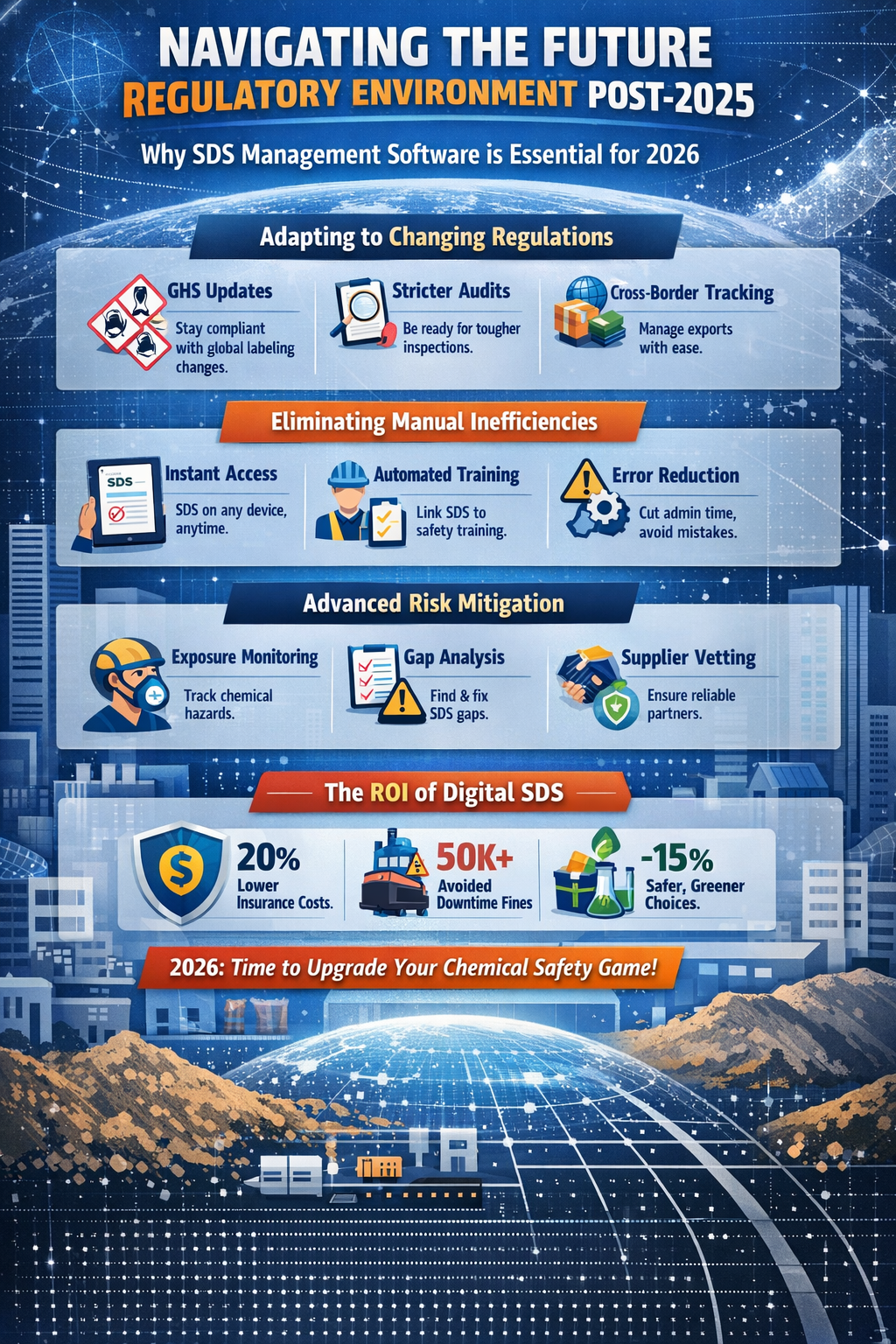
Navigating the Future Regulatory Environment Post-2025
Regulations continue to shift, and 2026 brings even further adjustments. Global standards demand better tracking of chemicals. Without smart tools, companies struggle to keep up. SDS management software steps in to handle these updates automatically.
1. Adapting to GHS revisions and global harmonization updates
The Globally Harmonized System (GHS) sets rules for labeling and classifying hazards. By 2026, expect tweaks to how risks are described, like new ways to mark skin irritants or eye dangers. Spreadsheets can't track these shifts across countries. But SDS software pulls in the latest versions right away. It adjusts labels and info for places like the EU or Asia. This means your team always has the right details, regardless of where you operate.
Take a paint maker shipping to multiple nations. Manual checks might miss a GHS update on flammability. Software flags it and updates all files. By avoiding mix-ups, you ensure compliance with the law.
2. Preparing for increased enforcement and stricter audits
As inspections ramp up in 2026, agencies like OSHA in the US or REACH in Europe plan more frequent checks. They look for up-to-date SDS and proof of training. As a consequence, fines hit hard—last year, one firm paid $150,000 for missing docs. Software creates a central hub for all records. Auditors see everything in seconds, from access logs to version history. This setup cuts your risk. No scrambling during surprise visits. Instead, you show clear trails of compliance. It's akin to having a safety net that demonstrates your proactive approach.
3. Managing cross-border chemical tracking and export documentation
Supply chains span borders, and each country has its own rules. Exporting chemicals? You need translated SDS and transport papers. If you miss one detail, shipments will be held up. SDS management software handles translations in key languages, like Spanish or Mandarin. It also generates forms for customs.
Consider a chemical supplier sending goods to Canada and Mexico. The tool ensures SDS matches local hazard codes. It tracks changes in import laws too. This keeps your exports moving without delays or extra costs.
Eliminating operational inefficiencies of manual SDS handling
Old methods waste time and invite errors. Workers search for hours or use wrong info. Automation changes that. SDS management software accelerates the whole process, from storage to sharing.
-
Real-time inventory synchronization and accessibility
Ever deal with "SDS drift"? That's when your stock of chemicals doesn't match the safety docs. A supplier swaps a formula, but your binder stays old. Cloud-based software links to inventory systems. It shows the current SDS for every item, right on a phone or tablet. Shop floor staff pull it up instantly. Remote managers also access it from anywhere. No more lost papers or outdated lists. This keeps everyone informed and safe.
-
Streamlining employee training and hazard communication (HazCom)
Training ties straight to SDS details. Workers need to know the risks for each chemical they touch. Software connects docs to training plans. It prompts quizzes on hazards like toxicity or reactivity.
Here's a tip: add SDS links to your onboarding list. New hires review them before starting. This builds better habits and meets HazCom rules. You cut accidents and boost confidence on the job.
-
Reducing administrative overload and data entry errors
Manual filing eats for hours. Someone types the exposure limits wrong, and it spells trouble. Software automates retrieval and updates. Version control tracks every change, so no duplicates. Studies show automation saves up to 40% of admin time. Errors drop too—think fewer mix-ups on safe handling levels. Your team focuses on real work, not paperwork piles.
Advanced risk mitigation through data-driven insights
SDS software goes beyond storage. It analyzes data to spot dangers early. This turns compliance into a safety shield. You predict issues before they hit.
-
Comprehensive exposure monitoring and health surveillance integration
Track worker exposure with SDS data on fumes or skin contact. Software pulls in hazard codes and physical traits, like boiling points. It links to air monitors or health checks. Tailor PPE based on this—gloves for one chemical, masks for another. Schedule doctor visits if risks build up. One plant cut exposures by 25% this way. Health stays strong, and you meet surveillance laws.
-
Automated gap analysis for existing chemical inventories
Scan your stock for holes. The software checks if SDS is missing or outdated. It flags chemicals without full hazard plans. Run this quarter to stay ahead.
Tip: Use reports to focus on safety reviews. Prioritize high-risk items first. This prevents surprises and ensures full coverage.
-
Supply chain visibility and supplier vetting capabilities
Vendors vary in quality. Some vendors provide incomplete SDS, while others are slow to provide updates. Software scores them on document accuracy and speed. See compliance records briefly. This helps pick up reliable partners. Shift risks upstream. A tool like this saved one company from a disastrous batch recall. Your chain runs smoother and safer.
The economic imperative: Calculating the ROI of digital SDS management
Compliance isn't just about rules—it's about money. SDS management software pays for itself fast. Cut costs and avoid losses that hurt your bottom line.
-
Decreasing insurance premiums through documented protocols
Insurers love proof of strong safety. Show them digital SDS trails and training logs. They see lower risks, so premiums drop. In 2026, expect 10-20% savings for compliant firms.
It's simple: better docs mean fewer claims. Negotiate harder with clear evidence. Your wallet thanks you.
-
Avoiding costly downtime from regulatory shutdowns
A failed audit? Fines start at $10,000, plus shutdown days. Lost production adds up quick—think $50,000 a week for a mid-size plant. Software costs $5,000 a year, tops.
Contrast that: one inspection pass keeps doors open. No interruptions. The math favors going digital now.
-
Leveraging data for strategic procurement and substitution
Pull SDS data to spot patterns. Find safer swaps for toxic chemicals. Often, they're cheaper too. "Green chemistry" trends push this—experts say it cuts long-term costs by 15%. Procurement teams use insights to buy smart. Less waste, fewer hazards. This builds a leaner, greener operation.
Conclusion: Future-proofing chemical safety in 2026
Regulations are tightening, operations are demanding efficiency, and technology is making it possible. Manual SDS handling falls short in 2016. SDS management software directly addresses the needs. It safeguards workers, streamlines work, and saves cash.
- SDS software keeps you ready for any rule of change.
- Automation frees up time and slashes safety slip-ups.
- Central data shifts you from fixing problems to stopping them.
- Start now for a safety edge that lasts.
Ready to upgrade? Check out SDS management software options today. Your team—and your business—will thank you.
Simplify Your SDS Management
CloudSDS gives your team instant access to 23M+ safety data sheets with AI-powered search, automated updates, and full OSHA/GHS compliance — all from one platform.
Leave A Comment