
Last Updated on March 26, 2026
Dimethoate sneaks into lives like an uninvited guest at a farm party. This organophosphate pesticide is ubiquitous in agriculture, ranging from apple orchards to cotton fields, yet its potent effects can quickly compromise your health. Workers and even bystanders face real dangers if they don’t know the main ways it enters the body: through skin contact, breathing it in, or swallowing it by mistake. Knowing these routes helps you stay safe and cut down risks.
Dimethoate is a systemic insecticide, which means it goes into plants and kills bugs from the inside. Farmers use it to keep fruits, vegetables, and grains safe. But it works by messing with the nerve system, which is why being around it may be quite bad. Reports showed more than 5,000 pesticide poisonings in the U.S. in 2025 alone, and many of these were organophosphates like dimethoate. This makes learning its exposure paths key for anyone around farms or gardens.

Dimethoate’s Chemical Profile and Toxicological Mechanism
Chemical Classification and Agricultural Use
Dimethoate belongs to the organophosphate family of pesticides. It acts as a systemic insecticide, traveling through plant tissues to kill bugs that feed on leaves or sap. People commonly use it to keep aphids and other bugs away from fruit trees, cotton plantations, and vegetable patches. Its principal job is to stop cholinesterase, an enzyme that controls nerve transmissions. Without it, nerves fire all the time, which makes the body go crazy.
Farmers mix it into sprays or apply it as granules, but one wrong move can turn it from helper to hazard. This chemical’s wide use keeps it in high demand, yet regulations push for careful handling. In places like California, where farming booms, applicators must follow strict rules to avoid spills.
Understanding Acute vs. Chronic Toxicity
Acute exposure occurs when a large dose is taken at all times. You might feel nausea, sweating, or blurred vision within minutes. In serious cases, it leads to seizures or trouble breathing, which requires quick medical help. Chronic exposure builds slowly from small doses over time. It can cause memory issues, shaky hands, or long-term nerve damage.
Workers who handle it daily without full protection face higher chances of these effects. Organophosphate poisoning often targets the brain and muscles first. Studies link repeated contact to higher risks of Parkinson’s-like symptoms later in life. Spotting the difference helps you act right away or change habits to prevent buildup.
Dermal Absorption: The Most Common Occupational Exposure Route
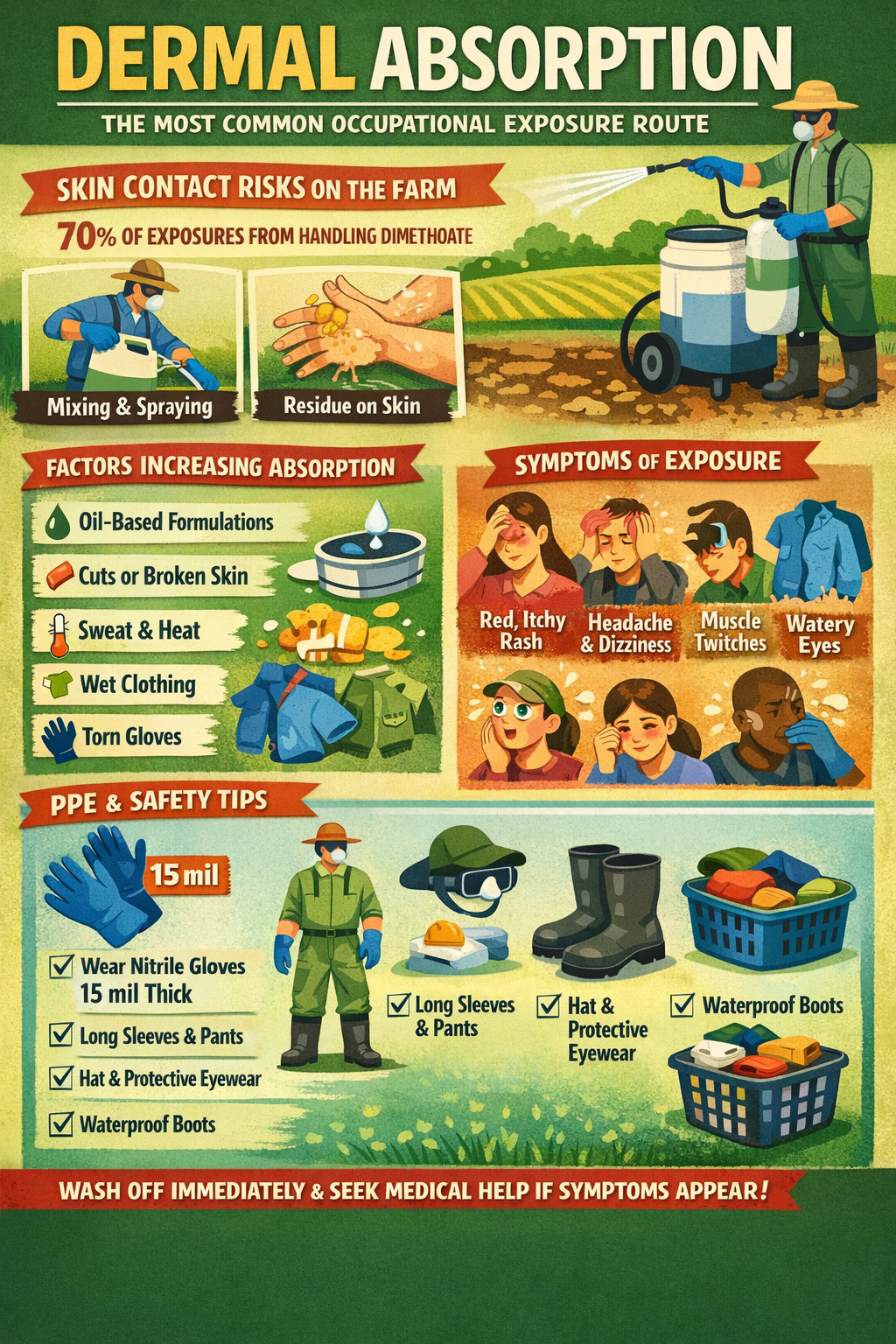
Skin contact tops the list for how dimethoate gets in, especially for farm workers mixing or spraying it. Liquids soak easily, and even dry residues can rub off on hands or arms. This route accounts for about 70% of reported cases in agricultural settings.
✅️ Factors Influencing Skin Penetration Rates
The formula matters a lot—oil-based mixes sink deeper than water ones. Broken skin from cuts or scratches lets it in quicker, like a crack in a dam. Time counts too; a quick splash might wash off, but hours of wet clothes trap it against your body. Temperature plays a role, warming the skin to open pores. Thick formulations stick longer, raising absorption odds.
Workers often overlook how sweat mixes with the chemical, speeding up the process. Clothing soaks it up, turning barriers into carriers. Gloves tear easily if they are not tough enough. These factors add fast in hot fields.
✅️ Identifying Symptoms of Dermal Dimethoate Exposure
At first, you notice red, itchy skin or a burning feeling where it touched. Rashes or blisters show up if it stays on too long. Then, if enough gets absorbed, headaches or dizziness kick in as it spreads inside. Watch for muscle twitches or watery eyes next. In severe spots, breathing gets hard, and confusion sets in.
These signs demand immediate treatment with soap and water, as well as a visit to a doctor. Localized irritation fools some into thinking it’s just a rash. But systemic clues like sweating or vomiting mean more is at play. Early spotting saves lives.
✅️ Actionable Tips for Personal Protective Equipment (PPE) Selection
Pick nitrile gloves over latex—they hold up better against oils and chemicals. Go for gloves thick enough for your task, like 15 mil for mixing. Wear long sleeves and pants made from cotton or synthetic blends that don’t snag. Cover your head with a hood or hat during sprays. Boots with good seals keep legs safe from splashes. Change into clean gear daily, and store dirty stuff away from living areas. Test PPE fit before use; loose spots invite trouble. Follow label guides for the best match.
Inhalation Risks in Agricultural and Industrial Settings
Breathing in Dimethoate vapors or droplets ranks high in danger, especially during spray jobs. Fine mists float in the air, easy to pull into lungs without noticing. This path leads to quick uptake since the lungs have thin walls.
1. Aerosolization and Vaporization During Application
High-pressure sprayers break it into tiny drops that hang around. Wind whips them further, turning fields into foggy traps. Heat from the sun speeds up vapor release, making summer days riskier. Mixing indoors without fans builds up fumes fast. Tractor cabs with poor seals let it seep in. Even ground applications kick up dust that carries the chemical. These processes create hidden clouds. One gust can send it your way before you react.
2. The Respiratory System as a Direct Entry Point
Nose hairs and mucus catch big particles, but small ones slip past to the lungs’ depths. There, they dissolve into blood, hitting the whole body in seconds. Coughing or throat burn signals trouble early. Deep deposits cause inflammation, leading to wheezing or chest pain. Re-entering treated areas too soon exposes you to settling dust. Kids near farms face extra risks from playing in drifts. This direct line bypasses the skin’s defenses. It explains why inhalations spark rapid symptoms.
3. Mitigating Airborne Exposure Through Ventilation and Respiratory Protection
- Open windows or use exhaust fans in mixing rooms to clear air. Work upwind during sprays to keep mists away. Wait the full re-entry interval before going back in—often 24 hours or more.
- Fit-test respirators yearly; half-masks with organic vapor cartridges work best. Add particulate filters for dust-heavy jobs. Train in proper usage to avoid leaks.
- Store tanks outside to cut indoor vapors. These steps drop risks by up to 90%, per safety studies.
Accidental Ingestion: High-Risk Scenarios
Swallowing Dimethoate by accident hits hardest, causing severe poisoning fast. Just a teaspoon can overload your system. This route often stems from sloppy habits in busy workdays.
1. Unintentional Oral Intake in Occupational Settings
Eating lunch with dirty hands transfers residue straight to your mouth. Storing drinks near spray tanks risks mix-ups. Poor washing after handling turns meals into hazards. Field workers grab quick bites without thinking. Contaminated tools are wiped onto food wrappers. These slips happen more than you think—over 20% of cases tie to this. Simple rules like no-food zones help. But lapses keep it common.
2. Intentional Ingestion and Public Health Concerns
- Some misuse it on purpose, leading to suicides or tampering. Tainted water or food supplies affect entire communities. In rural areas, such pollution spikes emergency calls.
- Accidental spills in wells poison drinking sources. Kids find discarded bottles and sip from curiosity. These events demand community watch.
- Ingestion trumps other routes in terms of deadlines. One incorrect choice affects many people.
3. Emergency Protocols for Suspected Ingestion
- Call poison control or 911 right away—don’t wait. Give details on amounts and times. Avoid making yourself vomit; it can worsen burns.
- Rinse your mouth with water, if conscious. At the hospital, they use atropine to counter effects. Follow up with activated charcoal if advised.
- Act fast; delays raise fatality odds. Training saves seconds.
Environmental and Bystander Exposure Pathways
Dimethoate doesn’t remain stationary; instead, it drifts towards neighbors and homes. This broadens risks beyond workers to everyday folks. Understanding these paths protects everyone.
Pesticide Drift and Contamination Beyond Application Zones
- Wind carries spray miles, landing on playgrounds or ponds. Light droplets travel farthest on breezy days. Schools near fields see kids exposed without knowing.
- Runoff washes it into streams, harming fish and water users. Buffer zones of trees help block drift. Yet violations still occur.
This spread turns local issues globally.
Residue Transfer (Take-Home Exposure)
- Clothes soaked in residue bring it home on boots or hats. Hugs or laundry spread it to family. Children touch toys after parents arrive, raising their dose.
- Skin sheds traces too, contaminating beds. Pets roll in gear, then lick it off. These chains hit vulnerable groups hardest.
Awareness cuts secondary exposures.
Best Practices for Decontamination and Disposal
- Shower with soap right after work—scrub well. Wash hair twice to clear hidden spots. Launder clothes alone in hot water, no softeners.
- Rinse containers three times before tossing; pour rinsate back on fields per rules. Use sealed bags for waste. Check local regulations for safe drop-offs.
These habits protect homes and land.
Conclusion: Prioritizing Prevention Across All Exposure Vectors
Skin contact leads as the top Dimethoate exposure route for workers, but inhalation and ingestion follow close. Each path—dermal, respiratory, oral—demands respect to avoid acute hits or slow poisons. Risks lurk everywhere, from farm fields to family gatherings.
Use safety data sheets as a guide. Practice PPE and procedures often. Keep an eye on your health and let someone know if there are problems early.
Take control now: Check your setup, get new gear, and share what you know. Safe handling protects you and your community from these hidden dangers. The things you do today will make tomorrow better.
Simplify Your SDS Management
CloudSDS gives your team instant access to 23M+ safety data sheets with AI-powered search, automated updates, and full OSHA/GHS compliance — all from one platform.
Leave A Comment