
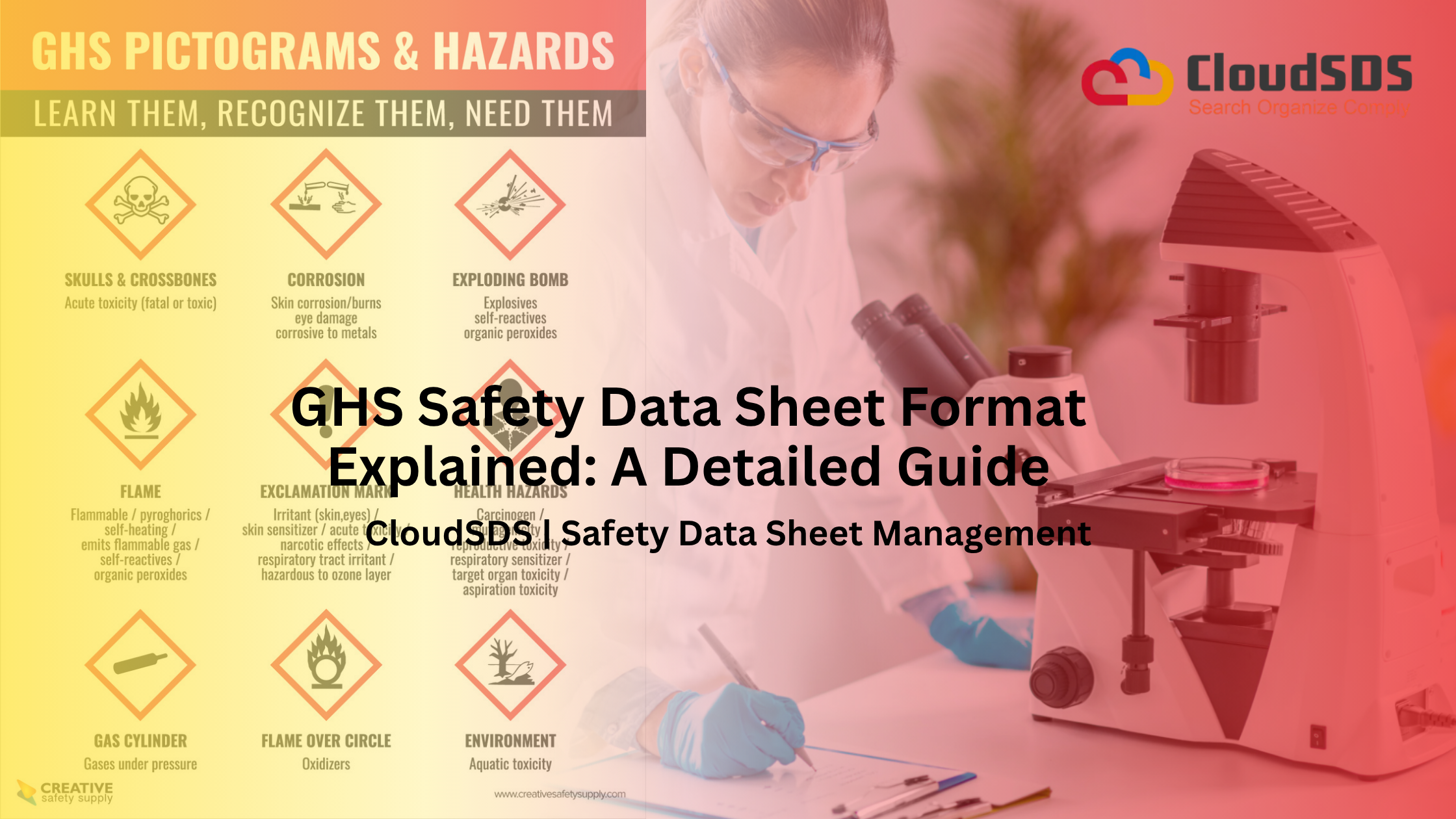
You should never have to guess when it comes to safety when working with chemicals. The GHS Safety Data Sheet (SDS) is very crucial at this point. It gives workers clear and consistent information on chemical hazards, how to handle and store them safely, and what to do in an emergency. This helps keep workers safe and informed.
But a lot of people have trouble understanding SDS documents since they are quite complex and include technical terminology. It can be hard to swiftly obtain the information you need without the right direction, especially when things are urgent.
We’ll explain the GHS Safety Data Sheet format in a clear and easy-to-understand method in this article. You’ll find out how the SDS is set up, what each part signifies, and how to use it correctly to make your workplace safer and more compliant.
What Is the GHS Safety Data Sheet?
A GHS Safety Data Sheet (SDS) is a document that gives you information about a chemical product. It tells you about the risks, how to handle it safely, how to store it, and what to do in an emergency. The SDS has a standard 16-section format that makes it easier for people from different nations and businesses to interpret the same information.
Safety Data Sheets (SDSs) were around long before GHS, but there wasn’t a single format for them. There were different standards in each country, and corporations utilized varied ways to provide safety information. This caused a lot of confusion, especially for companies who did business around the world or worked with chemicals from more than one supplier.
The United Nations came up with the Globally Harmonized System (GHS) to fix this issue. It wanted to develop a standard way to group chemicals and tell people about dangers. A standardized SDS format was created as part of this system so that everyone could use the same structure.
Overview of the GHS SDS 16-section format
1. Similar structure for everyone
The GHS Safety Data Sheet (SDS) has a set format of 16 sections, each with a distinct purpose. For instance, it has advice on how to identify hazards, how to give first aid, and how to handle things safely. This standard layout guarantees that all SDSs appear the same, which makes them easier for consumers to understand and use.
2. Why the sections are important
The 16 sections are meant to cover all the important parts of chemical safety. They give you all the knowledge you need, from how to identify something to how to get rid of it and how to move it. This makes sure that all the information that workers, safety officers, and emergency responders need is in one location.
3. Benefits
-
Simple navigation
Users can readily find what they need because all SDSs follow the same order. You don’t have to look through the whole paper, which saves time during daily operations.
-
Faster response to emergencies
It helps to take quicker actions. At the time of spills or exposure, this information works like a lifesaver. Moreover, the uniform structure makes it easy for users to find emergency instructions right away, including first-aid or firefighting steps, and act quickly.
-
Consistency around the world
Many countries utilize the GHS framework, which makes it a standard way to keep chemicals safe. This helps businesses stay consistent across locations and makes it easy to train workers who handle chemicals in diverse areas.
Detailed breakdown of all 16 sections of a GHS SDS
Section 1: identification
This part teaches you the basics of chemical products. It has the name or code that is used to identify the chemical, as well as the name, address, and phone number of the person or firm who manufactured it. It also gives consumers emergency contact information so they know who to call if something goes wrong. It also talks about the best ways to use the chemical and any rules that limit how it can be used.
Section 2: identification of hazard
This part talks about how deadly the chemical product is. It has a way of telling you what kind of threat it is, like if it’s flammable or hazardous. You will also see terms like “Danger” or “Warning” that tell you how bad the threat is. It gives both risk statements (what the chemical can do) and safety suggestions (how to keep safe). There are also GHS pictograms that show the dangers in images.
Section 3: composition
This part tells you the composition of the chemical product. It has a list of the chemicals that are part of it and their CAS (Chemical Abstracts Service) numbers, which are used to distinguish them apart. It might also specify how much of each ingredient is in it. Some ingredients may be kept secret as trade secrets, although overall safety information is still disclosed.
Section 4: First aid steps
This section tells you what to do if someone comes into contact with the chemical. It talks about a multitude of ways to get exposed, such as breathing it in, touching it with your skin, eye exposure, and eating it. It advises you what to do in each case to give basic first aid. It also speaks about possible symptoms and tells you what to do right away or when to see a doctor.
Section 5: Firefighting measures
This part tells you what to do if there is a fire involving the chemical. It adds that things like water, foam, or dry chemicals can put out fires. It also talks about any added dangers that can happen during a fire, such as toxic gasses. It also instructs firefighters on what safety gear they should wear.
Section 6: accidental release measures
This part teaches you what to do if there is a leak or spill. It tells people how to clean up spills and keep workers safe. There are more ways to protect the environment that keep the air, water, and soil clean. It tells you how to clean up safely so you can handle the situation well.
Section 7: How to handle and store
This is the seventh section of a standard SDS. It’s all about how to securely store and use the chemical. It tells you how to handle a chemical product safely so you don’t get wounded. It also tells you how to store things correctly, such as what temperature and airflow they need. Incompatibilities with other substances are written down to keep adverse interactions from happening.
Section 8: exposure control
This section tells you how to limit your exposure to the chemical. Organizations like OSHA and ACGIH set standards on how much exposure is safe. It also suggests using technical controls, including systems for ventilation. It also mentions the PPE that is needed, including gloves, goggles, or masks.
Section 9: the physical and chemical properties
This section talks about the chemical and physical features of the material. It shares information like the pH level, the color and smell, the flash point, and the boiling or melting points. It also tells you how well the chemical dissolves and other factors that can help you discover and use it.
Section 10: reactivity and stability
This part talks about how stable the chemical is when it isn’t being used. It tells you about any unwanted responses that could happen and things you should keep away from, including heat or dampness. It also talks about chemicals that don’t mix well and could create adverse reactions if they do.
Section 11: information on toxicology
This section tells about how the chemical can be bad for your health. It talks about ways individuals can obtain it, including by breathing it in or ingesting it. It also talks about both short-term (acute) and long-term (chronic) consequences. You can show how harmful the damage is by presenting toxicity data like LD50 or LC50 numbers.
Section 12: facts about the environment
This section informs how the chemical affects the world around it. It tells you how the product damages water and plants and animals. It also talks about bioaccumulation, which is how it builds up in living things, and persistence, which is how long it stays in the environment.
Section 13: disposal consideration
This section tells you how to dispose of a chemical in a safe way. It advises you on the safest and best ways to get rid of trash. It also means following the rules the government sets for safe disposal of chemical products.
Section 14: Information About Transportation
This section has all the information you need to shift the chemical safely. It has the UN number that was used to keep track of it while it was being transferred. It also talks about the packaging group, the hazard class, and whether or not the item is thought to be a marine pollutant.
Section 15: regulatory information
This section talks about the regulation related to the chemical product. People must follow standards for health, safety, and the environment. It might also talk about rules for following the law that are specifically applicable to a location or the country.
Section 16: other information
This last part has more information regarding the SDS. It has a date of revision that shows when it was last changed. It might also have further remarks, references, or disclaimers to help you grasp the topic better.
Benefits of the GHS SDS format for workplace safety
-
Better understanding of hazards
The uniform style makes it easy for workers to grasp the risks of chemicals before they touch them.
-
Better compliance at work
Using the GHS SDS format helps businesses stay safe and stay out of trouble with the law.
-
Making decisions faster
When information is arranged in a consistent fashion, workers may easily discover what they need and do what they need to do without any delays.
-
Better training for employees
The uniform structure makes it easy to train personnel because they just need to learn one way to interpret many compounds.
-
Fewer accidents at work
Clear safety instructions and safeguards assist lower risks, which means fewer accidents and a safer workplace overall.
Conclusion
If your organization is building its SDS database, make sure each document aligns with the GHS format. To make the process of managing all your SDSs simple and organized, take the help of an SDS management software like CloudSDS. This type of software not only ensures that all our documents are compliance -ready but also allows making all your SDSs round-the-clock accessible.
Simplify Your SDS Management
CloudSDS gives your team instant access to 23M+ safety data sheets with AI-powered search, automated updates, and full OSHA/GHS compliance — all from one platform.
Leave A Comment