
The Ultimate Guide to Writing a Comprehensive 16-Section SDS
Chemical mishaps strike workplaces every day. One small error in handling a substance can lead to injuries or worse. That’s why the Globally Harmonized System, or GHS, sets a clear standard for sharing hazard info across borders. It boosts worker safety and smooths international trade in chemicals. Fail to follow it, and you face heavy fines or even business shutdowns from regulators like OSHA. This guide walks you through the 16-section Safety Data Sheet, or SDS, format. It’s a go-to tool for hazard communication. By the end, you’ll know how to create an accurate GHS-compliant SDS from start to finish.
Foundation and Preparation for SDS Authoring
You need a strong base before you draft any SDS. Think of it as mapping out a trip before you hit the road. This step covers key rules and data collection to avoid mistakes later.
Identifying Applicable GHS Revision and Jurisdiction
GHS rules vary by country. In the US, OSHA’s Hazard Communication Standard from 2012 drives it. Europe uses CLP regulations. Select the appropriate version as well, such as Revision 7 or the most recent one. Always remember to check for updates, as rules can change. Create a simple chart for your products. List each market and its GHS needs. This matrix helps you stay on track for multiple countries. It saves time when you export goods.
Comprehensive Hazard Classification and Data Sourcing
Classify hazards using science. Look at physical risks like flammability, health effects such as skin irritation, and environmental harm like water toxicity. Pull data from tests on ingredients or the full mixture. Take a cleaning product mix. If it has 20% alcohol, use that ingredient data to rate the whole thing. Suppliers often blend info from databases like PubChem. Double-verify everything against lab results for accuracy. Gather all toxicological reports early. Note exposure limits and safe handling tips. This prep work makes the rest of the SDS flow better.
The Essential Front Matter (SDS Sections 1-3)
These first sections present quick facts to anyone who picks up the SDS. First responders take them during a crisis. Workers use them daily to stay safe. Ensure that the information is clear and complete here.
Section 1: Identification – Product and Supplier Details
Start with the product name. Add how it’s used, like “solvent paints,” and any limits, such as “do not ingest.” List your company name, address, and phone. Include a 24-hour emergency line. Make contacts easy to reach. Consider adding an email or website if it would be helpful. In an emergency, seconds count, so avoid tiny print or vague numbers. This section sets the tone. It tells users exactly what they’re dealing with right away.
Section 2: Hazard(s) Identification – The Core Warning
This area is an alert zone. Use a signal word like “Danger” for high risks or “Warning” for lower ones. Add hazard statements, such as “Causes serious eye damage.” Include pictograms—those red diamond icons for flames or skulls. List precautionary steps too, like “Wear gloves.” Summarize the main classifications from your earlier work. It’s like a dashboard for risks. Keep it simple. Workers first scan this so they can see the key warnings clearly.
Section 3: Composition/Information on Ingredients
Break down what’s inside. For pure chemicals, provide the name and CAS number. Mixtures need percentages or ranges, like 10-20%. Disclose hazards above 1% for most, or 0.1% for carcinogens. Handle trade secrets with care. Use generic names if needed but still note hazards. This helps users mix safely without full recipes. List all classified parts. It builds trust and meets legal needs.
Emergency Response and First Aid Protocols (SDS Sections 4-6)
Emergencies demand fast action. These sections guide what to do right after an incident. Write them with clear steps that anyone can follow.
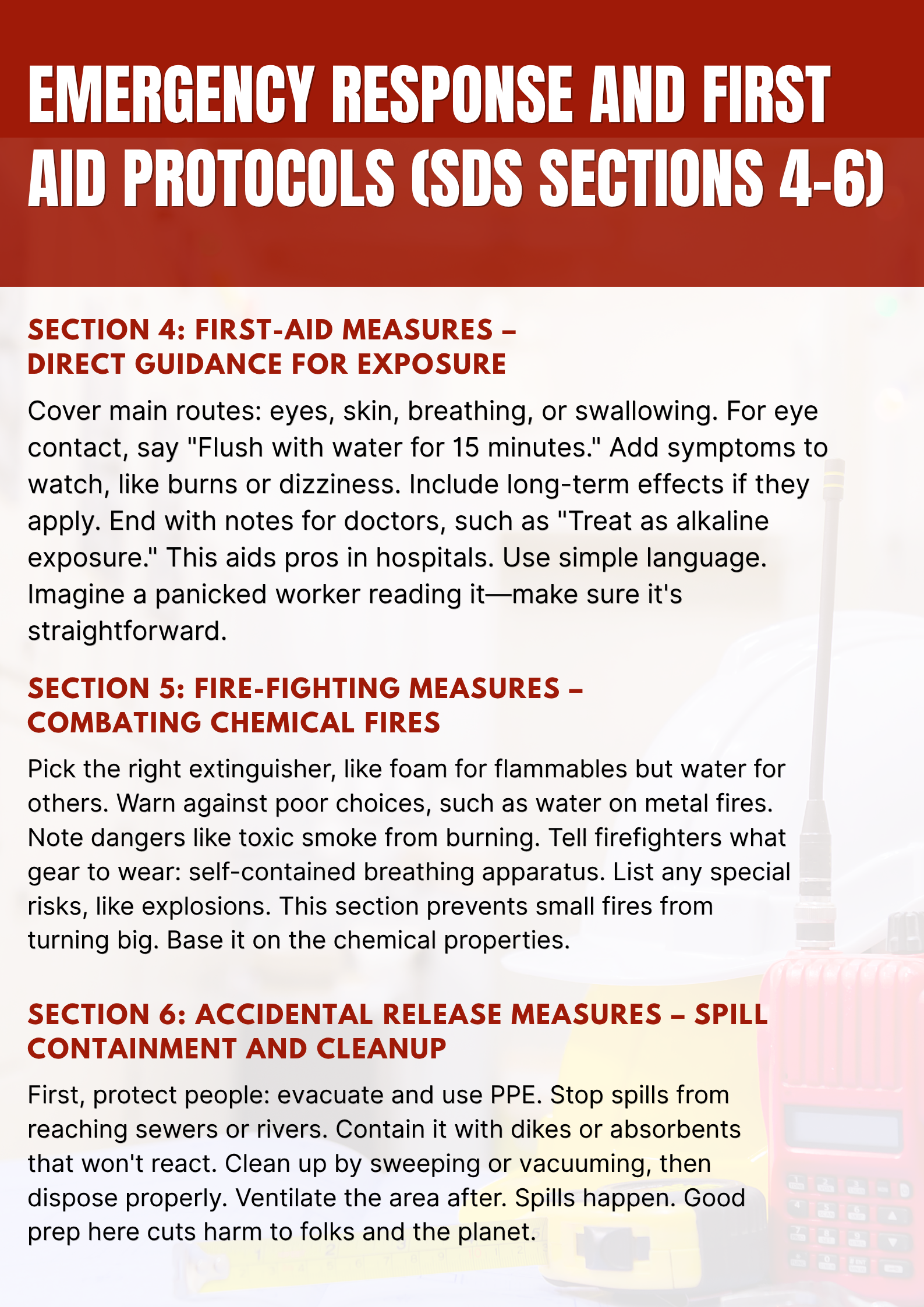
Section 4: First-Aid Measures – Direct Guidance for Exposure
Cover main routes: eyes, skin, breathing, or swallowing. For eye contact, say “Flush with water for 15 minutes.” Add symptoms to watch, like burns or dizziness. Include long-term effects if they apply. End with notes for doctors, such as “Treat as alkaline exposure.” This aids pros in hospitals. Use simple language. Imagine a panicked worker reading it—make sure it’s straightforward.
Section 5: Fire-Fighting Measures – Combating Chemical Fires
Pick the right extinguisher, like foam for flammables but water for others. Warn against poor choices, such as water on metal fires. Note dangers like toxic smoke from burning. Tell firefighters what gear to wear: self-contained breathing apparatus. List any special risks, like explosions. This section prevents small fires from turning big. Base it on the chemical properties.
Section 6: Accidental Release Measures – Spill Containment and Cleanup
First, protect people: evacuate and use PPE. Stop spills from reaching sewers or rivers. Contain it with dikes or absorbents that won’t react. Clean up by sweeping or vacuuming, then dispose properly. Ventilate the area after. Spills happen. Good prep here cuts harm to folks and the planet.
Safe Handling, Storage, and Exposure Controls (SDS Sections 7-10)
Shift to everyday use now. These parts help prevent problems before they start. They cover routines in labs or factories.
Section 7: Handling and Storage – Best Practices for Stability
Advise on safe grips: avoid sparks near flammables. Store away from heat or acids that might mix badly. Keep in cool, dry spots with adequate air flow. Label shelves clearly. Inspect for leaks often. Solid habits here keep chemicals stable and users safe.
Section 8: Exposure Controls/Personal Protection (PPE Mandates)
Set exposure limits, like OSHA’s PEL of 50 ppm for some vapors. Use vents or hoods to cut air contact. Mandate gloves for skin risks, goggles for eyes, and masks for dust. Tie PPE to Section 2 hazards. For corrosives, pick chemical-resistant types. This builds a safety net. Train workers on it, too.
Sections 9 & 10: Physical/Chemical Properties and Stability/Reactivity
Include fundamental properties such as boiling point, color, and smell. Add the flash point for fire risks. For Section 10, note what triggers reactions, like water with metals. Avoid mixing with oxidizers. Watch for self-heating or pressure build-up. These facts help predict dangers. Use them in risk models.
Advanced Toxicological and Ecological Data (SDS Sections 11-12)
Dig into science here. Experts use this information for deep assessments. It’s not for quick reads but is vital for full understanding.
Section 11: Toxicological Information – Understanding Health Impacts
Report acute effects with numbers: LD50 for a swallowing dose that harms half of test animals. Cover irritation tests on skin or eyes. Note if it causes allergies, cancer, or organ damage. Use categories from GHS, like Category 2 for moderate toxins. Add routes and symptoms. This data proves your classifications. Source it from reliable studies.
Section 12: Ecological Information – Environmental Fate and Effects
Share fish toxicity levels, like LC50, in water. Discuss if it breaks down fast or builds up in food chains. Note how it moves in soil or air. Rate persistence: high if it lingers for years. This guides spill responses. Protect nature with honest info. Regulators examine this closely.
Compliance, Disposal, and Regulatory Conformance (SDS Sections 13-16)
Wrap up with end-of-life and legal bits. These ensure full accountability from production to waste.
Sections 13 & 14: Disposal Considerations and Transport Information
For disposal, follow local laws like US RCRA for hazardous waste. The suggested incineration or recycling is only acceptable if it is safe. Never dump trash. For shipping, use UN numbers, like Class 8 for corrosives. Add packing groups: I for high danger. List names like “Flammable Liquid, N.O.S.” Safe transport avoids accidents on roads or seas.
Sections 15 & 16: Regulatory Information and Other Information
In Section 15, note a US TSCA listing or EU REACH status. Flag SARA chemicals that need reports. Cover state rules too. Section 16 tracks changes: date of last update and who wrote it. Add an abbreviations list. Software tools link these sections for easy checks. It creates a clean audit trail.
Conclusion: Ensuring Accuracy Through Continuous SDS Management
The 16-section SDS demands care at every step. From hazard ID to disposal rules, each part protects people and meets laws. Treat it as a living file—review yearly or when new data hits. Crafting one blends chemical knowledge, toxicological facts, and regulatory smarts. Miss that, and risks rise. Commit to top-notch authoring. It safeguards workers and keeps your supply chain strong.
Simplify Your SDS Management
CloudSDS gives your team instant access to 23M+ safety data sheets with AI-powered search, automated updates, and full OSHA/GHS compliance — all from one platform.
Leave A Comment